


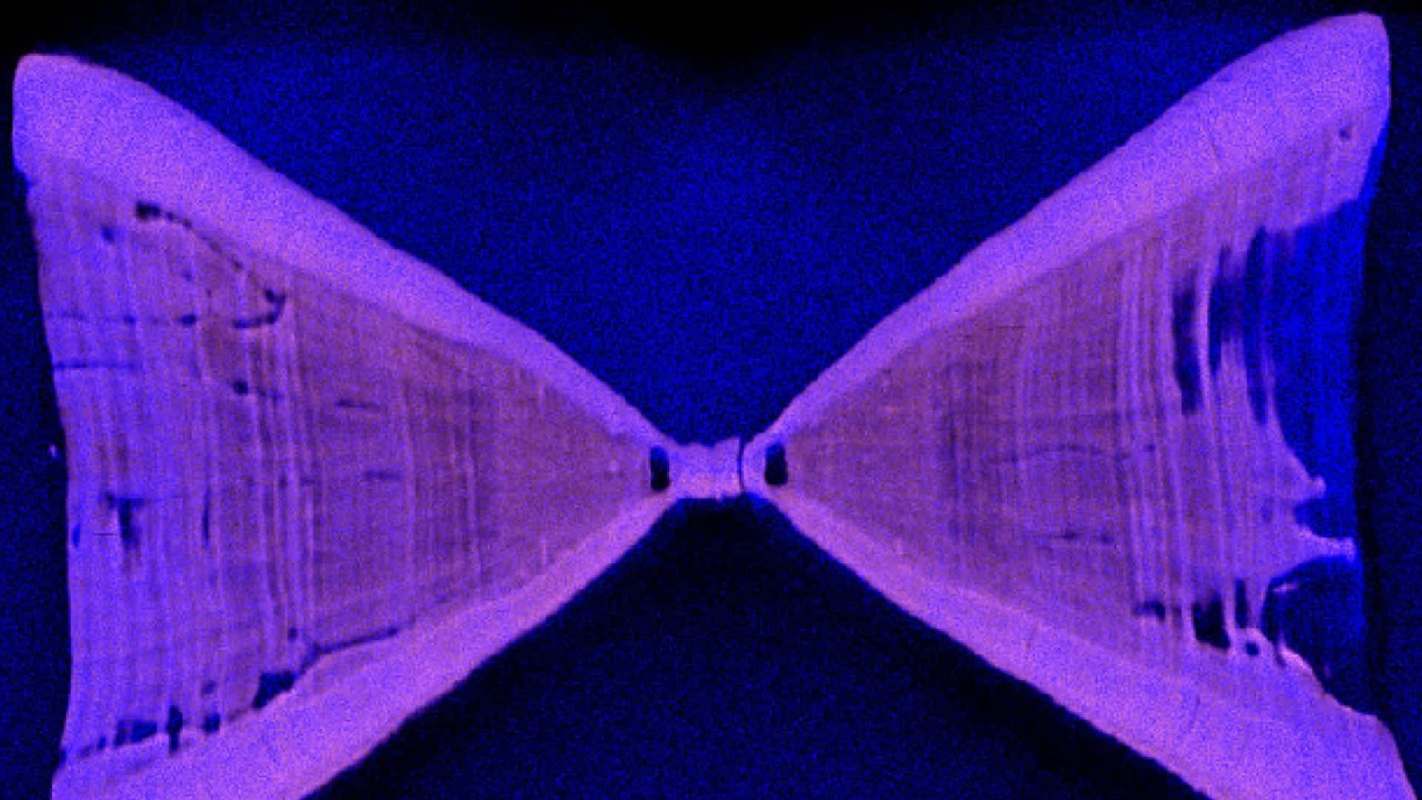
Lasers and sharks might sound like the setup to a B-movie, but researchers in Australia are using this unlikely pairing to answer a critical question: How old are these sharks, really?
The answer could have major implications for conservation, according to Popular Science.
A team studying the vulnerable snub-nosed speartooth shark found that a laser-based technique may be far more accurate than the long-standing method of counting growth bands in shark vertebrae. It could also reveal clues about the environments these animals move through over their lifetimes.
For years, scientists estimated shark age by examining thin vertebra samples under transmitted-light microscopy, typically treating each band as a yearly marker.
However, researchers at the University of Melbourne reported in Marine Ecology Progress Series that this assumption may not hold true for speartooth sharks, a species with only about 2,500 adults remaining in rivers and estuaries across Australia and Papua New Guinea.
To test a more precise method, the team analyzed vertebrae from sharks that died naturally or were accidentally caught by fishers.
TCD Picks » Quince Spotlight
💡These best-sellers from Quince deliver affordable, sustainable luxury for all




They used X-ray imaging with LA-MC-ICP-MS — laser ablation inductively coupled plasma mass spectrometry — a technique that uses a concentrated laser to remove a tiny portion of the sample, turning it into an aerosol for analysis with a mass spectrometer.
Similar tools are already used in fields ranging from archaeology to pollution tracking.
What makes the method especially promising is that it does more than estimate age. Chemicals locked into the vertebrae can act as an environmental record.
One key element is strontium, which accumulates in proportion to the surrounding water. By comparing these levels with local precipitation records data, researchers were able to link changes to seasonal wet and dry periods, effectively matching shark growth to real environmental conditions.
That insight matters beyond the lab. If scientists can determine a shark's true age, they can build more effective recovery plans.
For communities that depend on healthy waterways, better data can support smarter stewardship and more resilient ecosystems.
It also adds to a growing wave of ocean-friendly innovation aimed at protecting species before they slip closer to extinction.
In other words, this is the kind of conservation tool that benefits both people and wildlife. Accurate age estimates offer a clearer picture of population health, while geochemical fingerprints reveal how animals interact with changing environments.
For a species as vulnerable as the speartooth shark, that level of precision could mean the difference between guesswork and truly effective recovery.
"So, in addition to providing a way to estimate shark age, our vertebral geochemical fingerprinting also differentiates between the water environments the shark inhabits during its lifetime," author Brandon Mahan wrote in a university summary.
For threatened species, that kind of insight could prove invaluable.

Get TCD's free newsletters for easy tips, smart advice, and a chance to earn $5,000 toward home upgrades. To see more stories like this one, change your Google preferences here.







