


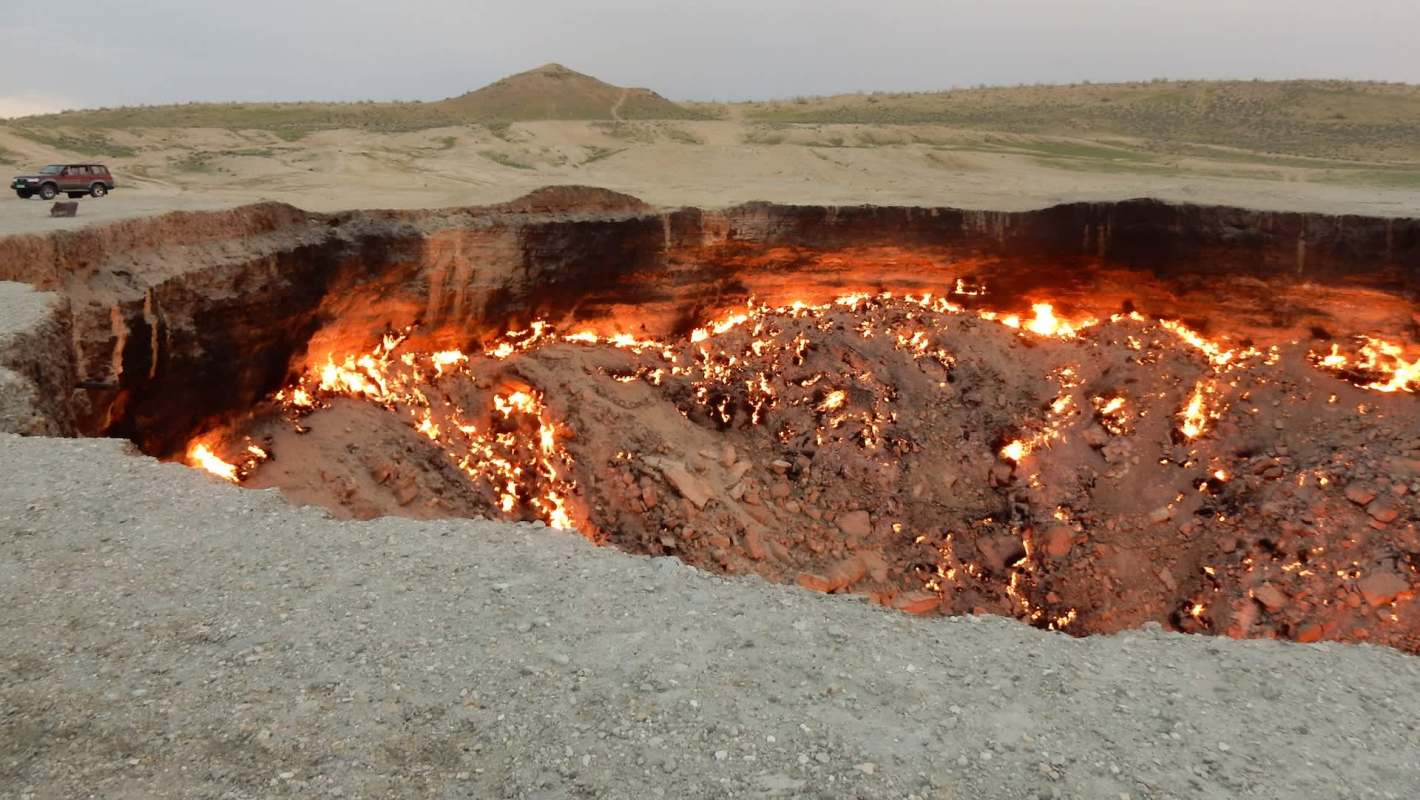
One of the world's most unusual tourist sites may be losing some of its intensity. In Turkmenistan's remote Karakum Desert lies the Darvaza crater, a pit of burning gases the size of a soccer field that is often referred to as the Gates to Hell.
The crater has been burning for decades, but recent data suggests the flames are slowly going out.
While the fumes from the pit pose risks to both human health and the environment, the dimming of the flames is not entirely good news. The New York Times reported that the situation is more complicated, as the pit continues to release planet-warming and harmful gases even as the fires subside.
The crater's origin remains uncertain, but local lore says Soviet geologists in the 1960s or 1970s accidentally opened it while drilling for oil and ignited the escaping gas after the ground collapsed to reduce toxic fumes. What has drawn recent attention is infrared satellite analysis from Capterio, a company that tracks natural gas flaring.
Capterio's review found that the crater's heat intensity has fallen by more than 75% over the past three years, indicating a significant decline in the flames.
The Turkmenistani government has said for years that it wants to reduce emissions from the site. In a 2025 publication by the Turkmen Energy Forum, an industry group, officials said two gas wells were drilled in 2024 in attempts to reduce nearby natural gas.
TCD Picks » Quince Spotlight
💡These best-sellers from Quince deliver affordable, sustainable luxury for all




However, Capterio told the Times that its data indicates the decline in flames may have begun before those wells were added, raising the possibility that natural underground changes are playing a role.
It's important to understand how the flames within the pit impact the greenhouse, or planet-warming, gases that are released into the atmosphere.
A reduction of fire does not necessarily mean a smaller climate threat. When methane, the main fuel in the crater and a powerful greenhouse gas, burns, it converts into carbon dioxide. Carbon dioxide is also a greenhouse gas but is significantly less potent in the short term.
Methane traps far more heat in the atmosphere than carbon dioxide over a 20-year period, so if the flames weaken and more unburned methane escapes, the overall climate impact could actually increase.
The Times, citing data from Carbon Mapper, a nonprofit based in Southern California, reported that the crater emitted an average of about 1,300 kilograms of methane per hour between 2022 and 2025. A reading from October showed that figure had risen to 1,960 kilograms per hour.
Turkmenistan already ranks among the world's highest methane emitters, so while the Darvaza site's figures are significant, the burning pit represents only a small fraction of the country's total emissions.
Even in its dimmer state, the crater remains dramatic enough to attract travelers willing to navigate Turkmenistan's restrictive entry requirements and a long desert journey.
Mongolia-based tour guide Rich Beal, who has visited the site 30 times, told the Times the crater remains striking despite the decrease in flames. "I do remember it being a little bit more roaring," Beal said. Even so, he said, the flames were still five or six feet tall.

Get TCD's free newsletters for easy tips, smart advice, and a chance to earn $5,000 toward home upgrades. To see more stories like this one, change your Google preferences here.







