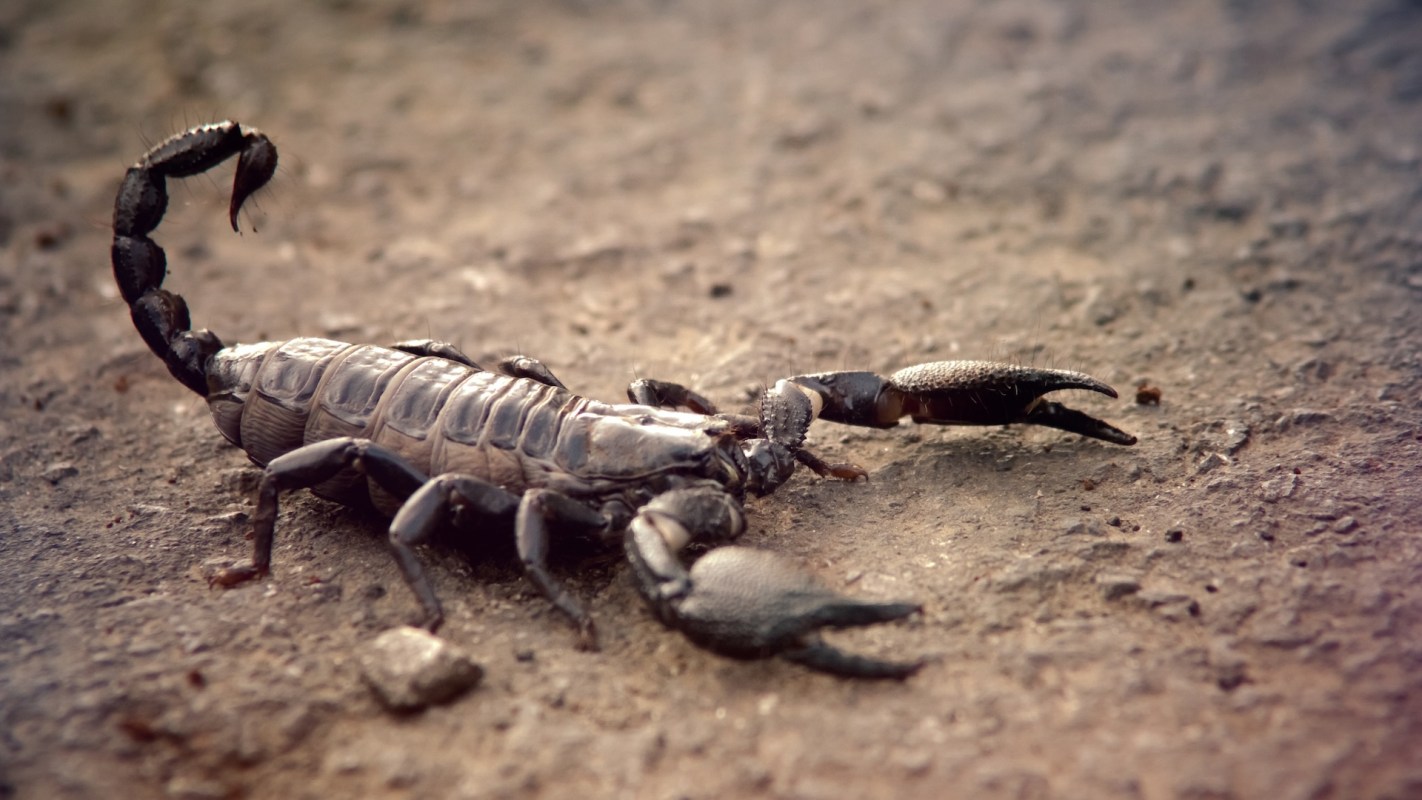
Think scorpions are just creepy crawlers? Think again. These ancient survivors are armed with natural weapons tougher than you might expect.
A new study found that scorpions reinforce their claws and stingers with trace metals, essentially turning themselves into living toolkits, according to Phys.org.
Researchers analyzed 18 species and discovered precise patterns in how these metals are distributed.
Zinc, for example, concentrates at the very tip of the stinger, the exact point used to inject venom, while manganese sits just below it, forming a layered structure.
The pincers tell a similar story. Metals such as zinc and iron are concentrated along the cutting edges, strengthening the areas that endure the most stress when gripping prey.
"The microscopic-scale methods we used allowed us to identify individual transition metals in extremely high detail, showing us how nature skillfully engineered these metals in the scorpion's weapons," said study co-author Edward Vicenzi, per Phys.org.
TCD Picks » Quince Spotlight
💡These best-sellers from Quince deliver affordable, sustainable luxury for all




One surprising finding challenged expectations. Researchers initially thought iron would be most concentrated in the scorpions' strongest pincers. Instead, it appeared more prominently in longer, slimmer claws.
"This points to a role for iron beyond hardness, perhaps playing a bigger role in durability," said researcher Sam Campbell, per Phys.org. "After all, long claws need to grasp prey and prevent it from escaping before being injected by venom. This is an interesting finding because it suggests an evolutionary relationship between how a weapon is used and the specific properties of the metal that reinforces it."
Beyond the intrigue, the findings could have real-world applications. Studying how animals naturally strengthen their structures could inspire the development of lighter, more durable materials in sustainable manufacturing.
It's also a reminder that even the smallest creatures can offer big insights. As scientists continue studying how animals adapt to survive, discoveries like this highlight how much innovation already exists in nature.
"Not only does our work illustrate the material properties of scorpions' weapons, but it establishes a new approach toward analyzing the role of metal enrichment across the tree of life," said senior author Hannah Wood, per Phys.org.

Get TCD's free newsletters for easy tips, smart advice, and a chance to earn $5,000 toward home upgrades. To see more stories like this one, change your Google preferences here.