


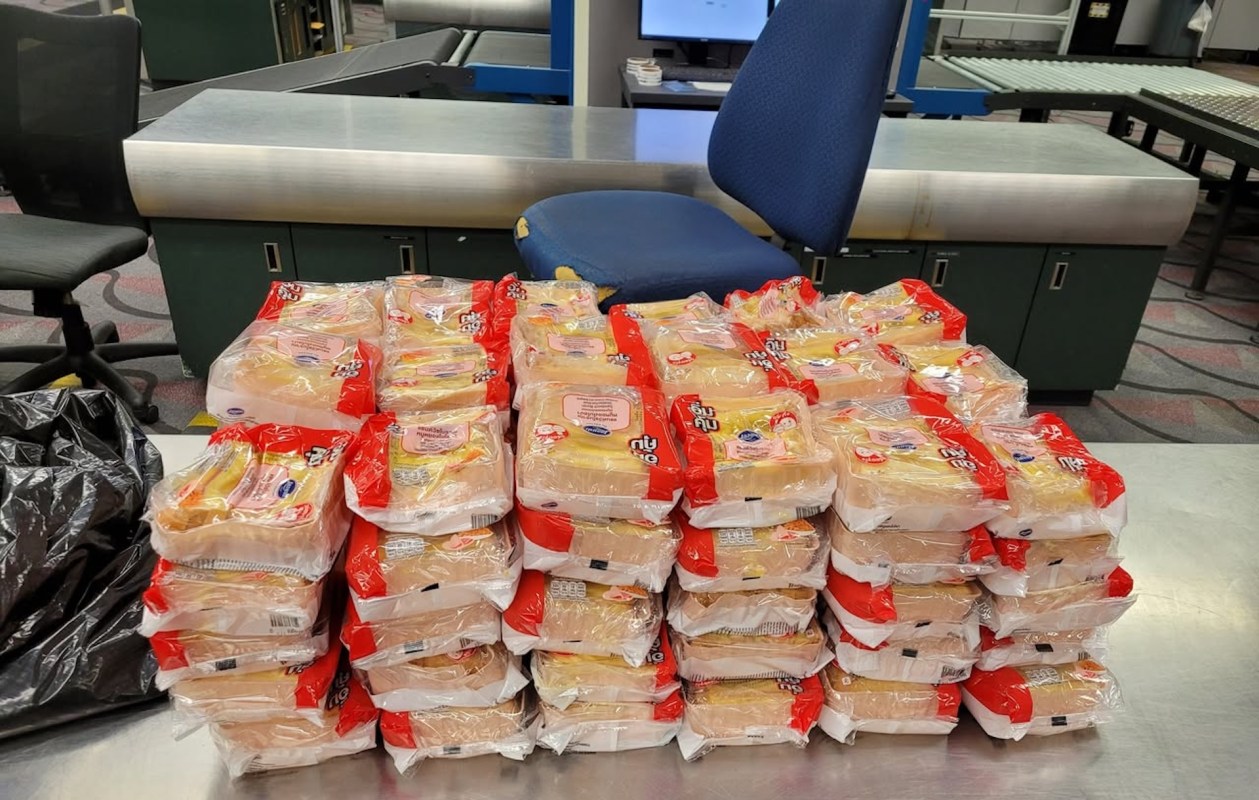
A sniffer dog working for the United States Customs and Border Protection has garnered a lot of attention after detecting 100 pork and chicken sandwiches stashed in one traveler's bags, Bored Panda reported.
The U.S. Customs and Border Protection Office of Field Operations shared an image featuring the sandwiches collected from two sizable bags.
"A U.S. airport sniffer dog detected over 100 pork and chicken sandwiches from 7-Eleven in Thailand," read the caption of a post about the pup by Dexerto (@Dexerto) on the social platform X.
"Merla found the snacks hidden in a passenger's luggage, which were later destroyed."
"Why destroy them?" one commenter asked. "Is it illegal to have them?"
While the notion of discarding food may seem wasteful, both the U.S. Department of Agriculture and the U.S. CBP have indicated that bringing meats and meat products into the U.S. from other countries is prohibited.
TCD Picks » Quince Spotlight
💡These best-sellers from Quince deliver affordable, sustainable luxury for all




The CBP has highlighted the risks posed by foreign pests and diseases potentially entering the U.S. and harming agriculture, stating, "prohibited agricultural items can harbor plant pests and foreign animal diseases that could seriously damage America's crops, livestock, and the environment," according to Bored Panda.
All travelers should declare meats, fruits, vegetables, plants, seeds, soil, animals, and animal products when entering the U.S. This rule applies to items in checked baggage, carry-on luggage, and vehicles.
Failing to declare prohibited agricultural products could result in fines of up to $1,000 for a first-time offense involving non-commercial quantities. If the items were intended for commercial use, more severe penalties may apply.
Fortunately, Merla was on duty to safeguard the public's interests.
Established in 1984, the USDA's detector dog program, known as the Beagle Brigade, began with just one beagle. Today, the program boasts over 180 teams.
Detector dogs have been employed to detect banned foods and other items, and to prevent harmful pests and diseases from entering the country, due to their exceptional sense of smell, which allows them to identify specific odors.
Beagles and their mixes are particularly suited for this role due to their keen sense of smell, manageable size, strong motivation for food, and friendly demeanor towards the public.
"It's funny, but this is actually serious because one contaminated food item can affect an entire country's agriculture," one user commented on the X post. "Still, finding 100+ sandwiches is wild, that dog deserves a raise."
"Merla is out here saving America one 7-Eleven sandwich at a time," another added.

Get TCD's free newsletters for easy tips, smart advice, and a chance to earn $5,000 toward home upgrades. To see more stories like this one, change your Google preferences here.






