


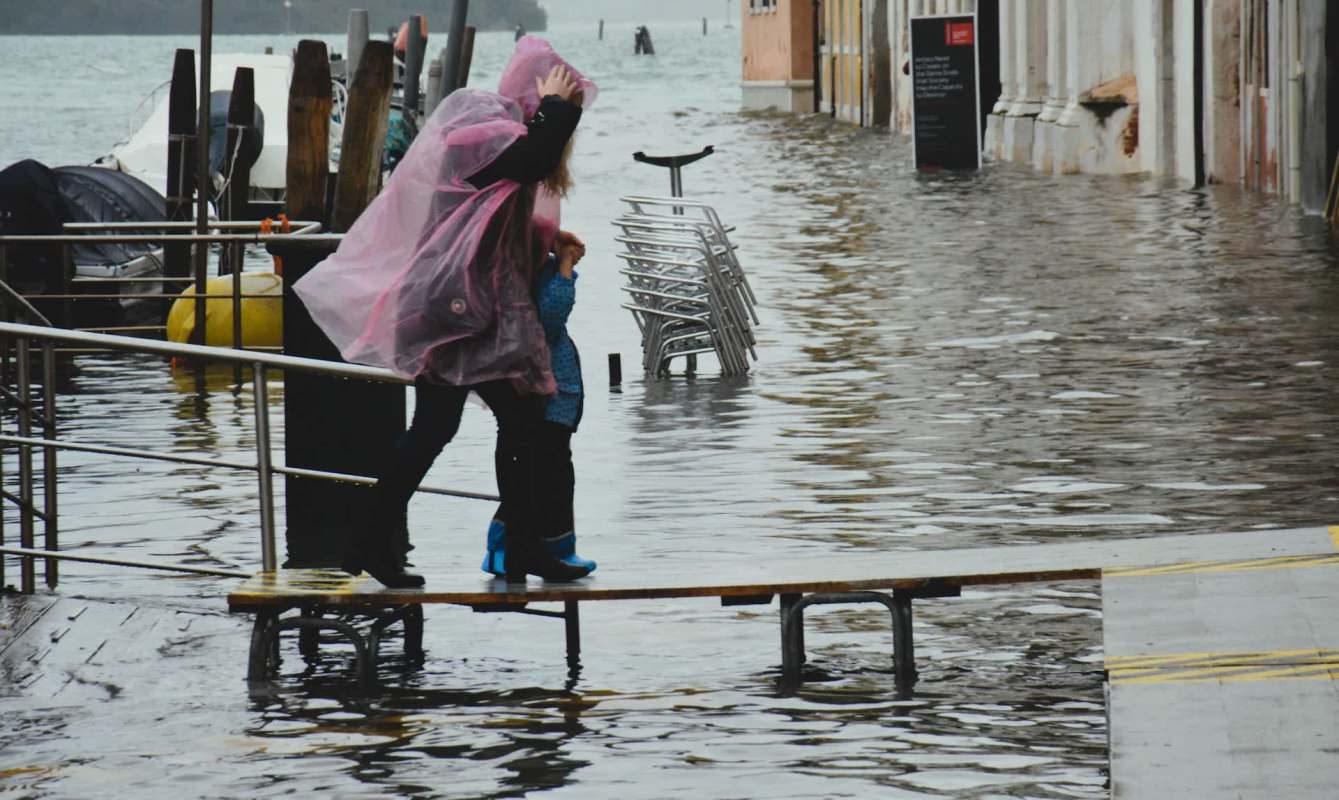
Venice is renowned for its art, history, and stunning architecture on water. However, new research suggests that safeguarding the city's future will be no easy task.
What's happening?
A study published in Scientific Reports explored three possible measures to protect the city against sea level rise, as Euronews reported.
The first and least expensive of the three, dikes, addresses a scenario wherein sea levels rise beyond 0.5 meters (1.6 feet). The researchers said the price of that solution would be €500 million to €4.5 billion ($589.4 million to $5.3 billion).
A more ambitious and costly measure would be to create a large levee. This could extend protection to sea level rise of 10 meters (32.8 feet). The expected price tag is in the range of €30 billion ($35.4 billion)
Lastly, the most extreme move would be to relocate the city. Potential expenses would reach up to €100 billion ($117.9 billion), but if sea rise exceeds 4.5 meters (14.8 feet), it might be the only sure way to save landmarks such as St. Mark's Basilica.
"Our analysis shows that there is no optimal strategy for Venice," said professor Robert Nicholls, a co-author of the study.
TCD Picks » Quince Spotlight
💡These best-sellers from Quince deliver affordable, sustainable luxury for all




Why are rising sea levels' threat to Venice concerning?
Venice is already taking measures to combat sea level rise, including with the innovative MOSE system that was put into place a handful of years ago.
However, this study indicates that these options are only Band-Aids for the increasingly common flooding that plagues the city. As it stands, tourists and residents trek through swamped streets regularly.
The low elevation of Venice means it is vulnerable to storm surges and high tides, and the factors that cause and exacerbate the flooding are unlikely to improve.
Euronews noted that thunderstorms last summer transformed streets into rivers, and that drainage systems were no match for them. Already, the combination of weather and pollution is decimating the region's ecosystem.
Rising temperatures push sea levels ever higher by melting glaciers and expanding seawater. In Venice, the ground itself is sinking in a phenomenon similar to that of another threatened cultural hub, New Orleans.
What's being done about Venice?
The scientists' solutions might seem cost-prohibitive, but they also may be the city's only hope. The researchers noted that these schemes can require up to 50 years of work, which means officials can't afford to wait too long.
Nicholls sounded a somber note on the city's future.
"No adaptation measure can sustain the Venice that we see today in the long term," he concluded.

Get TCD's free newsletters for easy tips, smart advice, and a chance to earn $5,000 toward home upgrades. To see more stories like this one, change your Google preferences here.







