


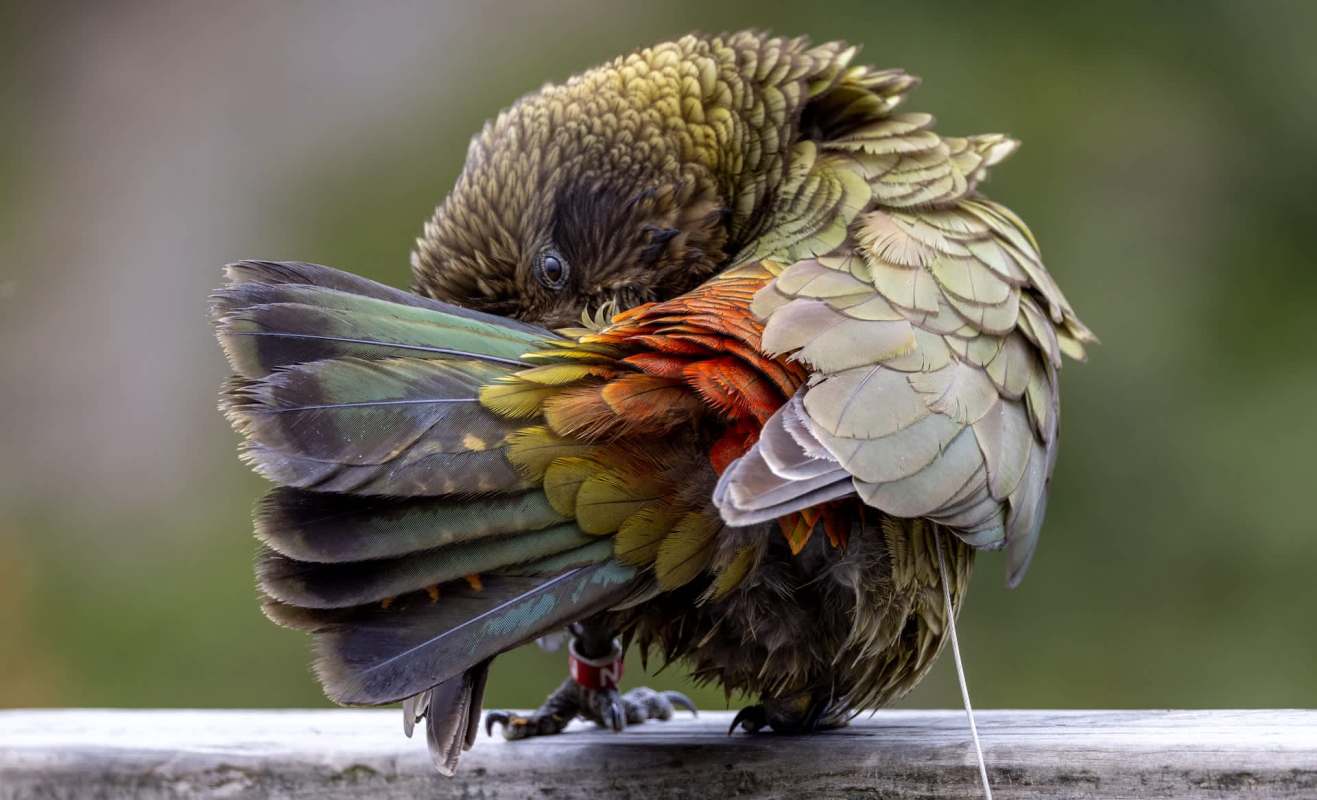
A parrot named Bruce with no upper beak surprised scientists by becoming the alpha male of his group, or circus.
The New York Times reported that the study, published in Current Biology, showed the inventiveness of disabled animals.
"The link between innovation and disability in animals is important and completely understudied," said Alice Auersperg, a cognitive biologist at the University of Veterinary Medicine Vienna who was not involved in the study.
Bruce is a 13-year-old kea, a species found only in New Zealand. He likely lost his upper beak while trying to get food from a rat trap, making it nearly impossible for him to survive in the wild. Researchers rescued him and took him to the Willowbank Wildlife Reserve, where scientists visited his circus to study the birds' intelligence. Bruce always wanted to join the experiments, but his missing beak made it difficult.
Then scientists noticed something — he was holding a pebble between his tongue and lower beak and running it through his feathers.
In the absence of an upper beak, which keas use to preen themselves, Bruce had found a way to clean his feathers. The behavior had not been observed any other time within the species.
TCD Picks » Quince Spotlight
💡These best-sellers from Quince deliver affordable, sustainable luxury for all




Years later, he astonished scientists again. Male keas typically bite rivals around the neck to assert superiority. Unable to bite, Bruce established his dominance through an unconventional fighting technique, using his lower beak in a maneuver scientists termed "jousting."
Male keas fight for dominance, and losing causes them to feel stress. The alphas have low stress since they don't lose. During stress tests, scientists were shocked to find Bruce's levels were the lowest, meaning he was at the top.
"We haven't been tracking his dominance and stress over the last 12 years to know the journey that he's been on," said Alex Taylor, the director of the Animal Minds Lab at Universitat Autònoma de Barcelona, according to the Times. "We weren't really looking for it, so we didn't really join the dots."
Humans are responsible for many animal disabilities. Injuries from traps, vehicle collisions, pollution, and the exotic pet trade all contribute. A rescued pet toucan found itself without a beak, for example, and experts performed a beak transplant.
While this solution was human-created, Sarah Turner, a primatologist at Concordia University in Montréal who was not involved in the study, said that research on other species aligns with the study's results: Animals with disabilities sometimes come up with ingenious ways to thrive.
The authors of the study also said that Bruce's success "brings into question whether well-intentioned prosthetic assistance for physically impaired animals will always improve positive animal welfare."
As the warming planet drives animals closer to humans in search of food and suitable habitats, and human activity further threatens their survival, more research about how they adapt to disabilities is crucial.
"The world is a living lab now," Turner said.

Get TCD's free newsletters for easy tips, smart advice, and a chance to earn $5,000 toward home upgrades. To see more stories like this one, change your Google preferences here.







