


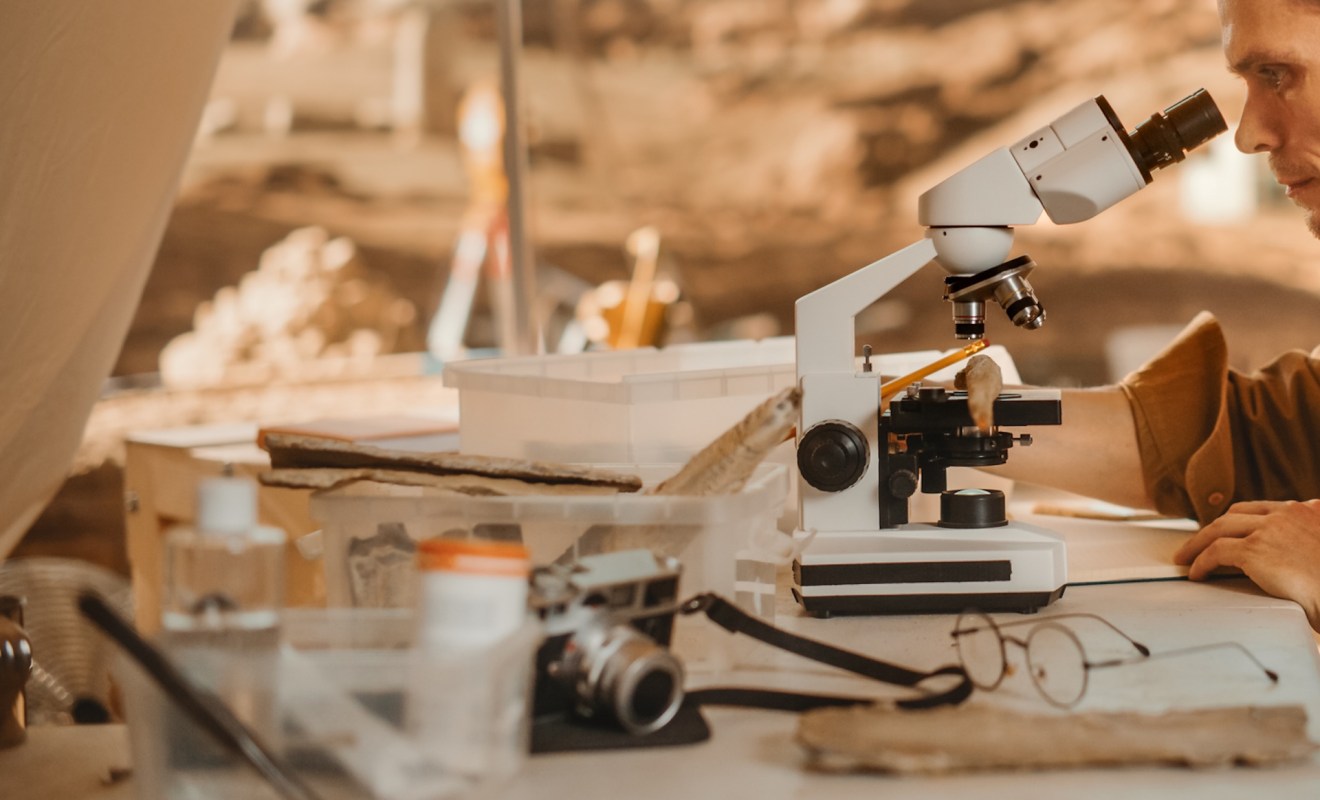
Researchers recently announced that new technology has enhanced their ability to analyze organisms that became extinct about 445 million years ago. This advancement could help scientists understand how oceans responded to past warming and oxygen loss.
Phys.org reported that Jonathan Aitchison and his colleagues at the University of Queensland, Australia, have used new technology to uncover more than 20 microscopic fossils, including a previously unknown species. The discovery could provide fresh insights into the Late Ordovician mass extinction event.
The researchers were looking for a way to recover radiolarian fossils, microscopic single-celled zooplankton. Traditional methods are limited because the acid used to dissolve the rock often also destroys the fossils.
Recent advancements in synchrotron-based micro-computed tomography (microCT) have enabled researchers to digitally reconstruct specimens from a roughly 445-million-year-old black shale collected in late 2018 in the Sichuan Basin, an ancient seabed in China.
The tech is a powerful X-ray machine that can create detailed 3D models of fossils inside the rock.
"Here, we present, to our knowledge, the first high-resolution synchrotron microCT imaging of Upper Ordovician radiolarians preserved in petra as bitumen- and dolomite-filled hollow moulds ('ghost' fossils) within black shales of the Wufeng Formation," the researchers wrote in the study, published in the journal Royal Society Open Science.
TCD Picks » Quince Spotlight
💡These best-sellers from Quince deliver affordable, sustainable luxury for all




Black shale predates the peak of the Late Ordovician mass extinction, and studying fossils from this period could help shed light on important details of how marine life responded to these environmental shifts during a time when oceans were already losing oxygen, according to Phys.org.
Black shale is also common worldwide, so the technology could be the key to accessing an enormous new archive of ancient life.
As rising global temperatures warm the oceans once again and experts warn of potential extinctions of coral and other species, this insight could prove extremely useful.
"This approach opens a previously inaccessible fossil archive essential for refining models of ecosystem resilience during past climate warming," the researchers wrote.
|
Which of these savings plans for rooftop solar panels would be most appealing for you?
Click your choice to see results and earn rewards to spend on home upgrades. |
 Save $1,000 this year 💸
Get TCD's free newsletters for easy tips, smart advice, and a chance to earn $5,000 toward home upgrades. To see more stories like this one, change your Google preferences here.






