


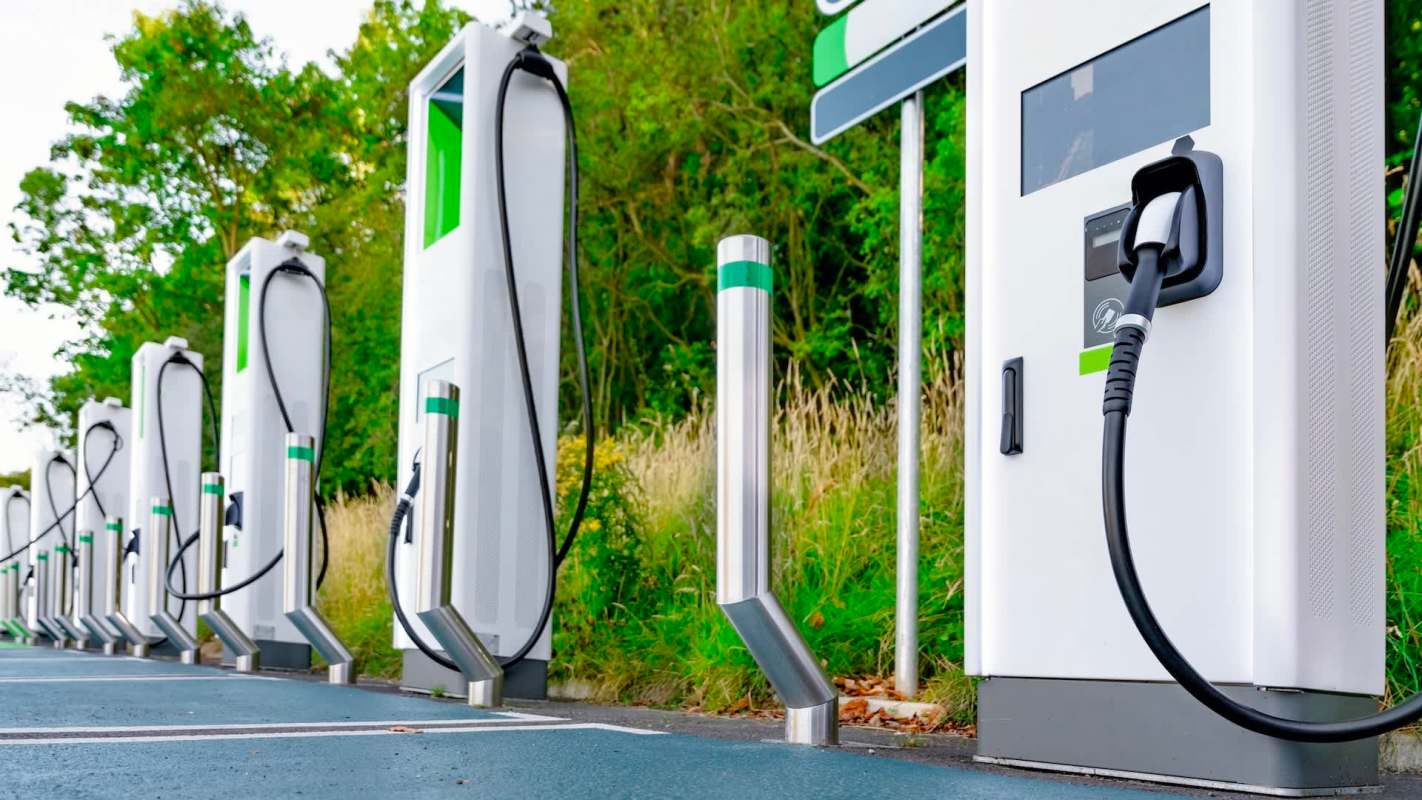
Maryland EV drivers may soon have more public charging options after state officials announced plans to reduce a controversial inspection fee for newly built EV chargers.
According to a report by Maryland Matters, Secretary of Agriculture Kevin Atticks told public officials that his agency will use money, known as SEIF funds, allocated by the state for clean energy projects to help pay for the charger inspection program. In turn, the fee for charging operators would be lowered from $150 per charger port to $75.
The program was initially supposed to take effect in January, but the Department of Agriculture delayed its launch after local pushback.
"When we promulgated the regulations, that fee was based on simple math," Atticks said, per Maryland Matters. "Since then, the equation has changed a little bit, and we have a great partnership with the Maryland Energy Administration."
While the expansion of public charging is vital to the widespread adoption of EVs in the U.S., many drivers avoid public stations entirely by opting for at-home charging. By charging at home, EV owners take advantage of electricity rates, which are often far cheaper than public stations.
Over time, those savings can seriously add up. To find out how much an at-home charger can save you, consider connecting with Qmerit to get free information and installation quotes for Level 2 chargers.
Despite the reduced fee, some EV advocates are still wary of the inspection program.
"[This] solves a problem we don't have, and creates a problem we didn't have," Wiley Hodges, a member of the Electric Vehicle Association of Washington, D.C., said, per Maryland Matters.
Save $10,000 on solar panels without even sharing your phone number Want to go solar but not sure who to trust? EnergySage has your back with free and transparent quotes from fully vetted providers in your area. To get started, just answer a few questions about your home — no phone number required. Within a day or two, EnergySage will email you the best options for your needs, and their expert advisers can help you compare quotes and pick a winner. Solar panels can save you more than $50k over their 25-year lifespan, and EnergySage can help you save as much as $10k on installation. Which begs the question — isn't that worth an email or two? |

Another EV advocate, Lanny Hartmann, noted that he would prefer that available SEIF funds go towards solar panel installations or the expansion of charging stations rather than an inspection fee.
Hodges also urged the agency to exempt Level 2 chargers from the charge. Level 2 chargers tend to bring in less income for developers compared to fast chargers, so the $150 per port fee could be a limiting factor for this type of unit.
|
Which of these savings plans for rooftop solar panels would be most appealing for you?
Click your choice to see results and earn rewards to spend on home upgrades. |
 Save $1,000 this year 💸
 "The cost of the program is unreasonably high for the operators of essential Level 2 charging infrastructure, likely leading to fewer Level 2 chargers being available to Maryland EV drivers," Hodges said.
Although this inspection fee could affect Level 2 charger installations for developers in Maryland, upgrading your home charging system can still be a worthwhile investment that helps you avoid the higher costs of public charging. Consider connecting with Qmerit to learn how a Level 2 charger can speed up your at-home charging.
For even more savings, you might want to consider installing solar panels to charge your EV using the energy from the sun.

Get TCD's free newsletters for easy tips, smart advice, and a chance to earn $5,000 toward home upgrades. To see more stories like this one, change your Google preferences here.






