


One of the primary reasons to switch from a gas-guzzling car to an electric alternative is to save money on fuel.
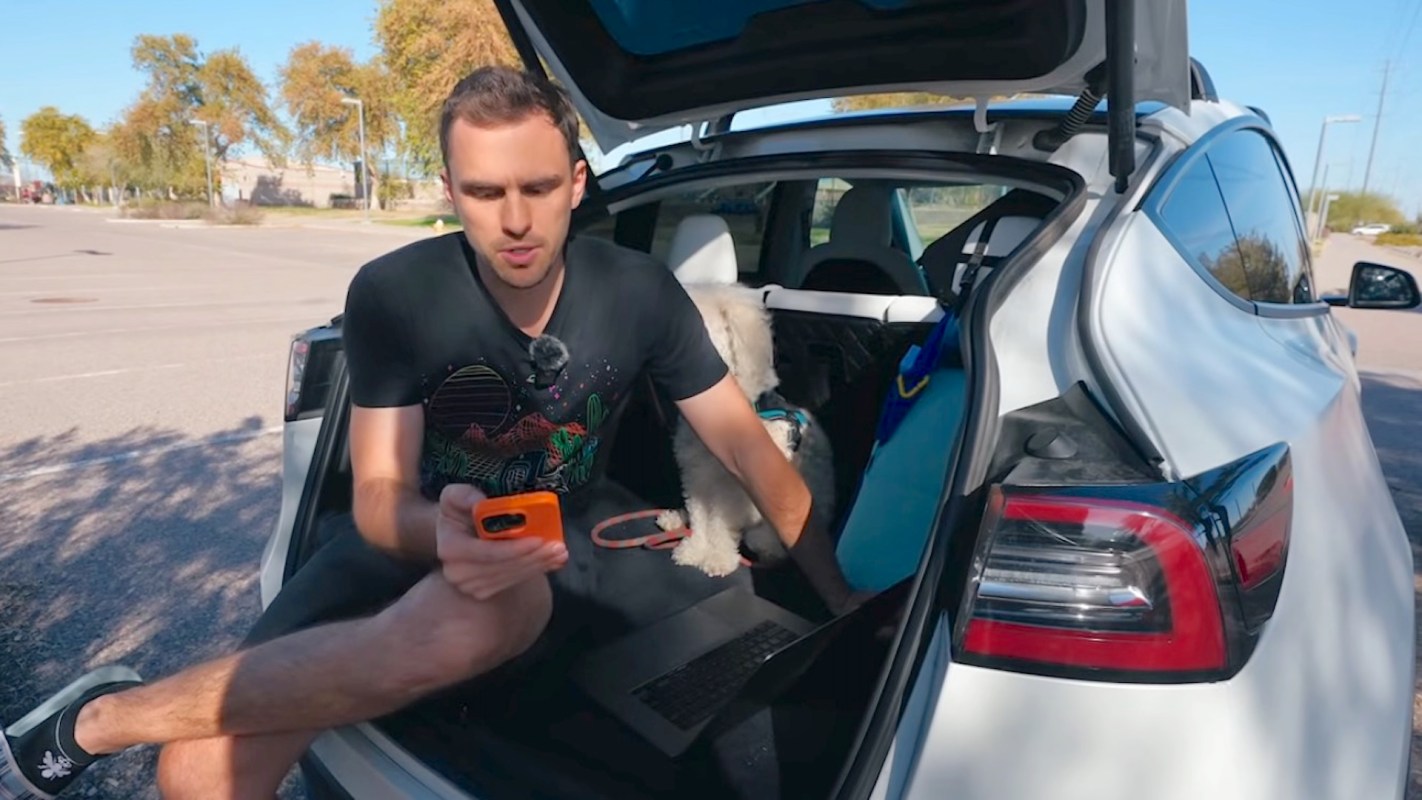
A YouTube creator made a video about this point by reviewing the numbers on how much he saved on fuel costs after more than 50,000 miles of driving a Tesla Model Y.
Tesla owner Gjeebs (@Gjeebs) dived into the Tesla app's settings to check his charging history.
"After driving my Tesla Model Y 50,000 miles, I added up the charging costs from my charging history to give you an idea of what to expect," they added in the caption.
According to the app, after driving across several states, the Tesla used just under 7,000 kilowatt-hours of electricity. Based on the average cost per kilowatt-hour he cited from public charging of 34.5 cents, a quick calculation showed that the total spent for charging came to $2,385.34. As a comparison to his claim, a non-hybrid Toyota Corolla getting a strong 33 miles per gallon across 50,000 miles would require over $6,000 in fuel costs at $4 per gallon.
The creator explained that while several factors can affect EV charging costs, one of the most reliable ways to save money is by utilizing at-home chargers.
"Charging at home with an electric vehicle is the key," they said.
If you're curious about how much an at-home charger can save you, consider connecting with Qmerit to get free installation estimates on Level 2 chargers.
Save $10,000 on solar panels without even sharing your phone number Want to go solar but not sure who to trust? EnergySage has your back with free and transparent quotes from fully vetted providers in your area. To get started, just answer a few questions about your home — no phone number required. Within a day or two, EnergySage will email you the best options for your needs, and their expert advisers can help you compare quotes and pick a winner. Solar panels can save you more than $50k over their 25-year lifespan, and EnergySage can help you save as much as $10k on installation. Which begs the question — isn't that worth an email or two? |

However, Gjeebs doesn't provide all of the data for review, and while it's a widely accepted fact that the cost per mile for an EV is about half that of a gasoline-powered car and optimal driving conditions can exceed that, it's likely something is missing from the equation if his data shows so few kWh across 50,000 miles. While 7,000 kWh can take his Model Y far, it has a rating of 120 miles per gallon equivalent, which means you could expect roughly 3.6 miles per kWh on normal driving and perhaps as much as 4.2 miles per kWh.
Even with a more generous estimation of 4.5 miles per kWh, that's 31,500 miles of driving, so the data he got from the Tesla app was likely incorrect or missing times the vehicle was charged, or the 50,000 miles accounts for driving done before he took ownership of the vehicle.
While there was likely a mistake, nonetheless, Gjeebs' overall points are still correct that driving an EV such as a Tesla Model Y will save thousands over the lifetime of the car in fuel costs over gasoline, and especially when gas prices are heightened.
A better comparison might be using conventional fuel-efficiency ratings for the Model Y and that of the Corolla more directly at current common gas prices of $4 per gallon. While the fuel-efficient Corolla would cost $6,060 to fuel over 50,000 miles at 33 miles per gallon, the Model Y would cost $4,791 to power over 50,000 miles at 3.6 miles per kWh at his public charging stations — or only $2,500 if charging at home for the national average of 18 cents per kWh.
A less fuel-efficient BMW X3, which gets 26 mpg, would cost $7,692 to fuel across 50,000 miles at $4 per gallon, and as the X3 is a close comparison to the Model Y on size and features, that's a solid indicator of EV savings using only public chargers. Since most EV drivers charge at home overnight in their garage, the $2,500 to $7,692 cost comparison is a solid picture, though the average family would end up charging at public stations on road trips enough to raise that Tesla estimation somewhere between $2,500 and $4,791.
Again, at-home charging is generally cheaper than public stations because of lower electricity rates, and, as Gjeebs noted, some utilities offer even deeper discounts specifically for EV charging.
"Through your energy provider, you can actually get special rates specifically for your EV," the creator explained. "You're able to continue to reduce the costs."
Gjeebs described a scenario where charging after 11 p.m. means the price per kilowatt-hour is cut almost in half. So, as Gjeebs explained, if they had avoided the public charging stations for at-home charging, they could've saved an additional $1,412 on the cost of powering their EV.
EV owners already save a ton on fuel and maintenance costs compared to combustion car drivers, but they can save even more by taking advantage of at-home electricity rates and special utility offers.
If you install a Level 2 charger at home through Qmerit, you can take full advantage of those savings while enjoying quicker charging speeds. Qmerit's free tools can help you connect with vetted contractors and resources to make your installation process simple.
To fully maximize your savings, you should consider pairing an at-home charger with a home solar panel system. By utilizing the energy generated by your solar panels, you can power your car for much less.
Luckily, EnergySage can help you discover the best solar panels for your home and budget through a concierge-level service. By taking advantage of these services, the average homeowner can save up to $10,000 on installation costs by comparing competitive bids from vetted experts.
Gjeebs isn't the only one benefiting from the savings earned from EV driving. In the comments, others were quick to add their stories.
"I bought a Model 3 about 40 days ago and I love it," one wrote. "I've spent $12.00 to charge it for a month."
|
Which of these savings plans for rooftop solar panels would be most appealing for you?
Click your choice to see results and earn rewards to spend on home upgrades. |
 Save $1,000 this year 💸
 Another Tesla owner calculated that they only paid $825 for about 22,000 miles of driving, a figure that is possible if their local electricity prices are below the national average of about 18 cents per kWh and clock in closer to 13 to 14 cents.
"[I had] savings of about $1500 over gas," they added.
Editor's note: This article was updated to include deeper breakdowns of the math in recognition of likely missing data in the YouTube creator's figures that had not been identiifed at original press time.

Get TCD's free newsletters for easy tips, smart advice, and a chance to earn $5,000 toward home upgrades. To see more stories like this one, change your Google preferences here.






