


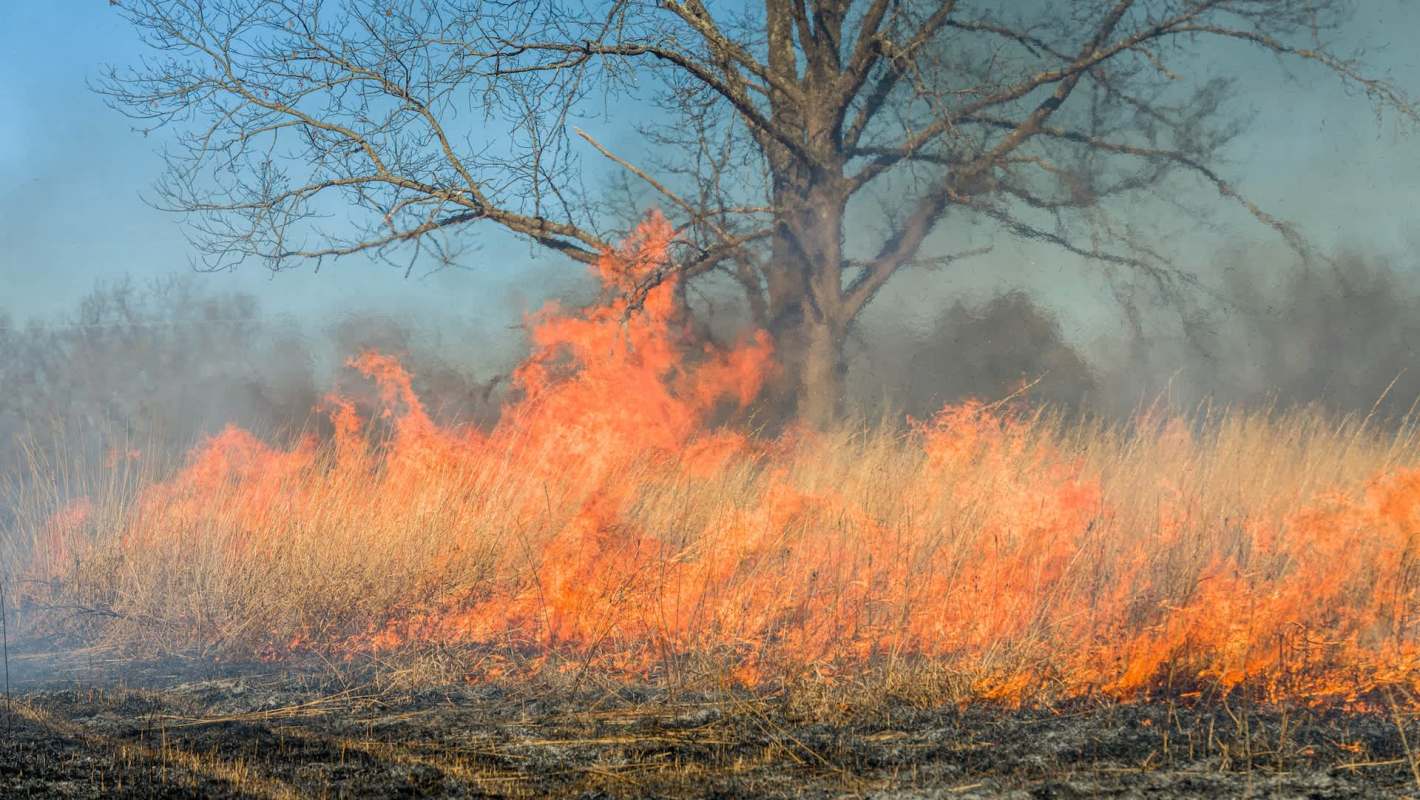
"Burn, baby burn," might not sound like the best philosophy to save oak-dominated forests.
But a new study from the University of Illinois Urbana-Champaign indicates that increasing the frequency of controlled burns could yield major benefits for young oak trees.
The findings, published in the Journal of Applied Ecology in January 2026, suggested that in forests with invasive stiltgrass, more burns could mean healthier trees. The results should ease some concerns for land managers worried that increasing burns to address invasive growth could harm oaks.
"If fire is having this unexpected, potentially adverse effect, it would be difficult for them to achieve their management objectives," said researcher Jennifer M. Fraterrigo in a university news release.
Instead, the research found that young oak trees thrived in areas subjected to more frequent burns than in those that experienced only a single burn.
Strategic, prescribed burns are an important tool not only for controlling invasive species but also for preventing wildfires. Despite some understandable hesitation around their use, there is considerable Indigenous knowledge and growing evidence that they can be essential to forest management.
TCD Picks » Quince Spotlight
💡These best-sellers from Quince deliver affordable, sustainable luxury for all




In Illinois, a primary concern is invasive stiltgrass, which can dominate the forest floor and block the sunlight acorns need to germinate.
While prescribed burns are known to remove old growth and excess wildfire fuel from deciduous forests, there was less certainty about how they might impact stiltgrass specifically.
If burning the stiltgrass led to more invasive plants thriving or harmed the oak trees, it could defeat the purpose entirely. Luckily, the research pointed the other way.
More frequent fires facilitated the survival of nearly twice as many young oak trees as those experiencing just one prescribed burn. The stiltgrass cover decreased in the plots with more fires, as more light reached the forest floor and fire severity decreased over time.
|
Which of these savings plans for rooftop solar panels would be most appealing for you?
Click your choice to see results and earn rewards to spend on home upgrades. |
 Save $1,000 this year 💸
 There is still work to be done to determine how increased fire impacts stiltgrass in the long term, but the study suggests the utility of a more aggressive burn strategy. It showed that upping prescribed burns both knocked stiltgrass down a peg while promoting oak health.
"A lot of research has previously focused on the effects of one or two burns," Fraterrigo said in the release. "This study demonstrates that we need a lot of fire for a long period of time to achieve the results that we want."

Get TCD's free newsletters for easy tips, smart advice, and a chance to earn $5,000 toward home upgrades. To see more stories like this one, change your Google preferences here.







