


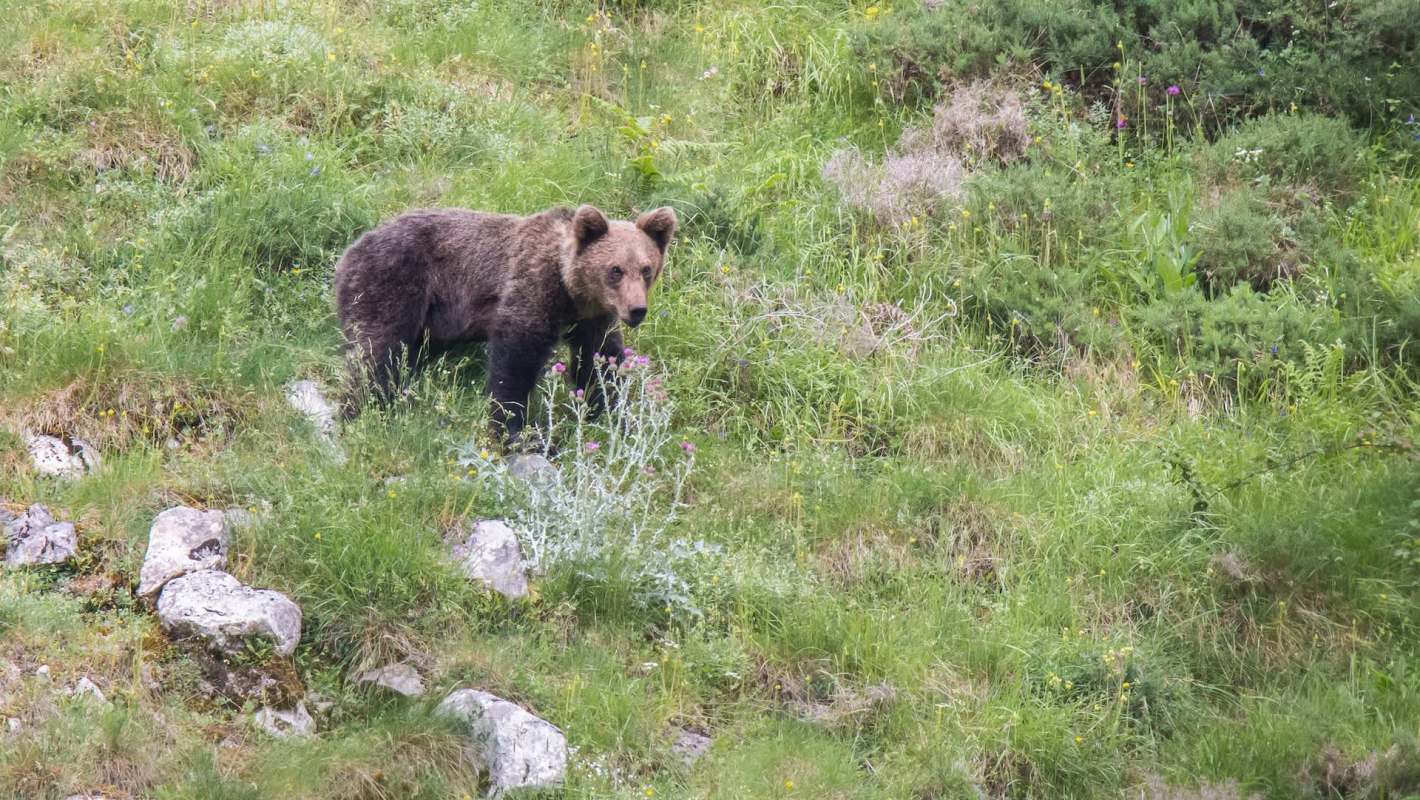
While "The Jungle Book" might be a childhood favorite for many, human-wildlife interactions in real life are not so healthy — especially when it comes to bears.
What's happening?
According to a 2025 study published in the journal Molecular Biology and Evolution, the Apennine brown bear population of central Italy has shown signs of domestication.
Researchers compared genomic diversity between other brown bear populations in central Europe and North America to determine the key difference. The Apennine bears exhibited "reduced genetic diversity, higher inbreeding, and larger realized genetic load compared to other brown bears," according to the authors of the study.
The genome of the bears showed signs of selection at genes associated with reduced aggression, which points to the influence of human activity on the animals' behavior as they have coexisted for millennia.
Because this specific bear population is located in the Apennine Mountains, cut off from other bear populations, it is believed that natural selection favored reduced aggression to protect the bears from possibly deadly human encounters and to preserve their numbers.
Why is wild animal domestication concerning?
Although reduced aggression in predator species like bears could reduce conflicts with humans, these genetic alterations can do more harm than good in the long run.
TCD Picks » Quince Spotlight
💡These best-sellers from Quince deliver affordable, sustainable luxury for all




"Human-wildlife interactions are often dangerous for the survival of a species, but may also favor the evolution of traits that reduce conflict," Giorgio Bertorelle, a population geneticist involved in the research, told Anthropocene Magazine.
When wild animals become accustomed to human behavior, they are more comfortable around human activity and dwellings, increasing the risk of human-wildlife interactions and, ironically, the risk of dangerous conflicts.
Beyond direct, individual human actions, such as feeding or approaching wildlife, more widespread factors, such as rising global temperatures and habitat destruction, can force animals to adapt and risk interacting with humans for survival.
What's being done about wild animal domestication?
As noted by Anthropocene Magazine, one solution to combat the genetic domestication of wild animals could be to import animals from outside to increase the diversity of the population. Bertorelle, however, warned that spreading these genetic variants to other populations may only exacerbate the issue.
|
Which of these savings plans for rooftop solar panels would be most appealing for you?
Click your choice to see results and earn rewards to spend on home upgrades. |
 Save $1,000 this year 💸
 "Even populations that have been heavily and negatively affected by human activities may harbor genetic variants that should not be diluted, for example, by restocking," Bertorelle said.
In the meantime, it is crucial for individuals and communities to be aware of the risks of interacting with wildlife. Precautions can be taken to prevent unintentional encounters, such as not leaving garbage or food waste outside and maintaining a safe distance from wild animals, as recommended by the National Park Service.

Get TCD's free newsletters for easy tips to save more, waste less, and make smarter choices — and earn up to $5,000 toward clean upgrades in TCD's exclusive Rewards Club.







