


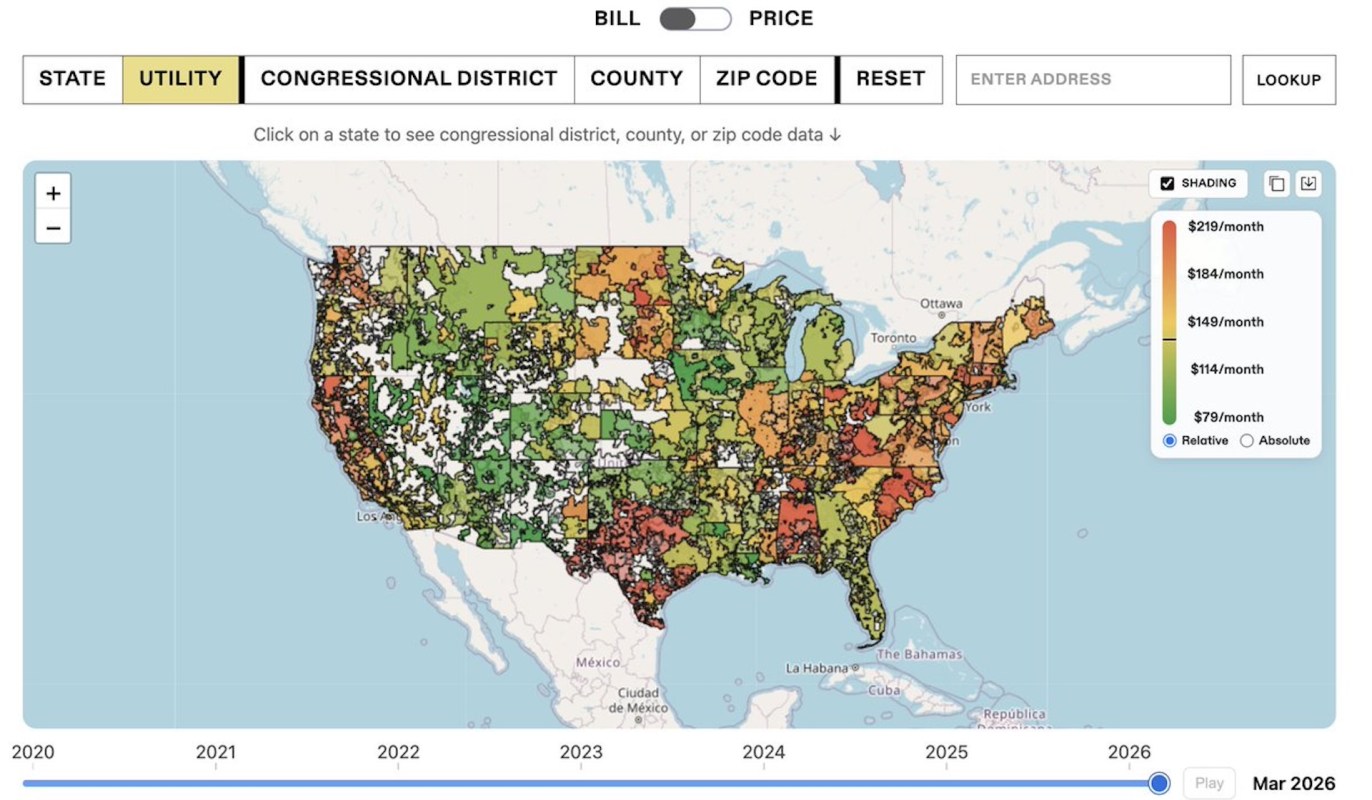
Electricity costs can come as a surprise, especially during cold spells and heat waves when bills exceed expectations. Homeowners and tenants are struggling to plan for electricity bills amid rapid and drastic price fluctuations.
Enter the Electricity Price Hub, a new public data platform developed by the Massachusetts Institute of Technology and Heatmap to foster cost transparency for electricity rates across the United States.
This tool breaks down month-to-month estimates of residential electricity prices and bills for utilities across the country, down to the ZIP code level, from 2020 to the present. The team combines detailed price and component data for the largest utilities, sourced from state filings and utility rate books, to offer the most up-to-date electricity prices and bill estimates.
By breaking down charges into understandable data points, Americans can gain clarity on their electricity expenses and identify what a reasonable rate might look like.
congressional medal of honor worthy https://t.co/IjbObidBnu
— Liz Charboneau (@lizchar) April 1, 2026
Over the past five years, electricity prices nationwide have risen by an average of 33%, adding about $35 to household bills each month, or $420 annually.
The platform developers state that there is no one cause of rising electricity costs and that prices are rising in different areas for different reasons.
TCD Picks » Quince Spotlight
💡These best-sellers from Quince deliver affordable, sustainable luxury for all




In Florida, for example, extreme weather is driving higher distribution costs. Tampa Electric customers have seen storm-related charges rise steadily.
In New Jersey, the utility Atlantic City Electric's generation-related charges have increased by more than 50% year on year. Adding new capacity to the grid in the Mid-Atlantic and surging power demands, primarily driven by resource-hungry data centers, are driving increasing generation costs.
The monitoring enabled by the Electricity Price Hub allows for greater accountability among providers for rising rates. It can also inform regulators and politicians who have been making high-stakes decisions about reliability, affordability, and future investment with partial information.
To mitigate costs or maximize the value of energy used at home, consider investing in solar panels or high-efficiency appliances. These investments can lead to significant savings over time while benefiting the environment.
|
Which of these savings plans for rooftop solar panels would be most appealing for you?
Click your choice to see results and earn rewards to spend on home upgrades. |
 Save $1,000 this year 💸
Get TCD's free newsletters for easy tips to save more, waste less, and make smarter choices — and earn up to $5,000 toward clean upgrades in TCD's exclusive Rewards Club.






