


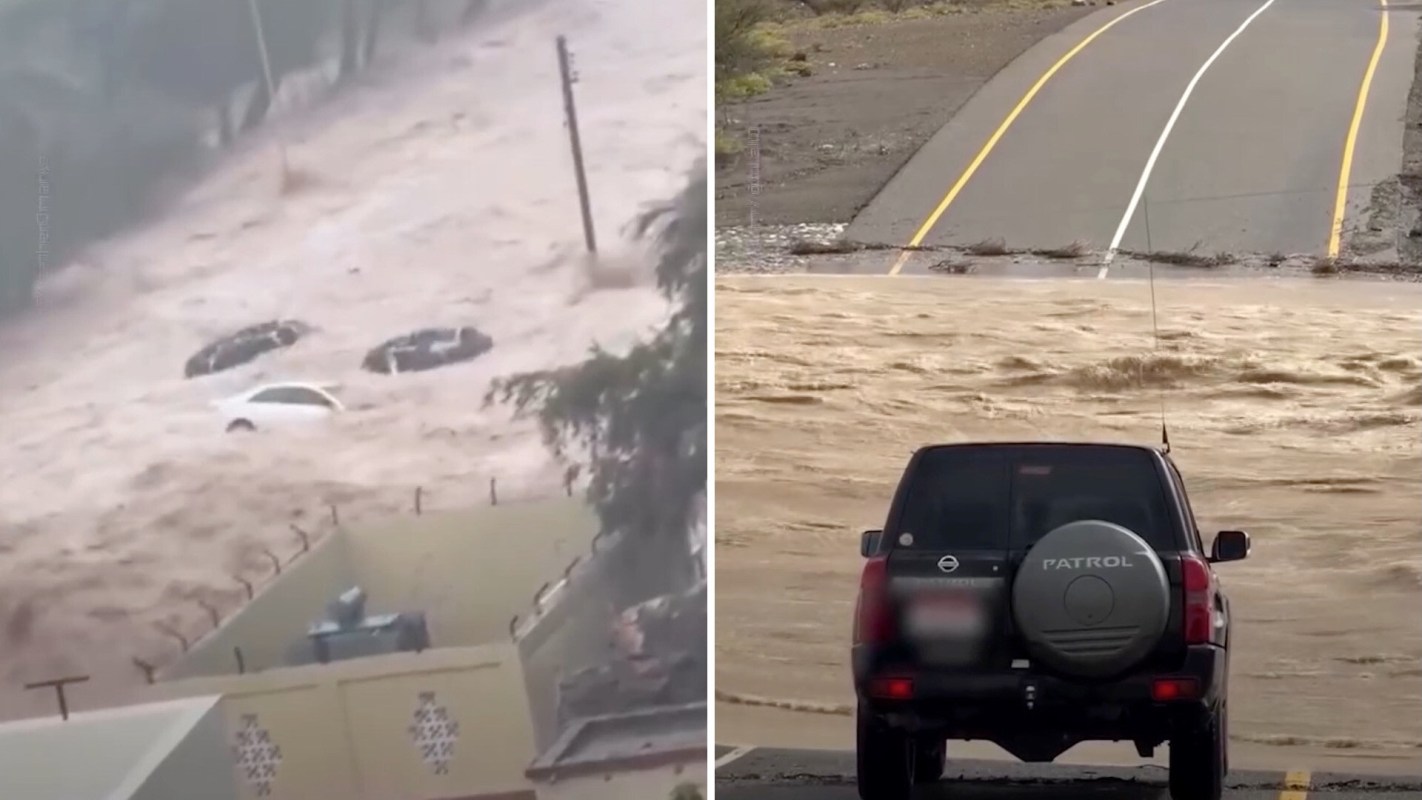
An abnormally strong jet stream led to powerful storms lashing parts of the Middle East in late March, according to the Guardian.
What's happening?
On March 25, the New York Times reported that large swaths of Southwest Asia had been bracing for storms expected to unleash more than a year's worth of rain over a matter of days.
After scattered storms passed through Israel and Lebanon, the system coalesced as it moved across Syria, Jordan, Saudi Arabia, and Iraq. Forecasters warned that the United Arab Emirates, Saudi Arabia, Qatar, Iran, and Oman could face severe flooding just two years after similar storms killed at least 21 in Oman and the Emirates.
Soon, footage emerged of raging waters sweeping away vehicles and homes. Reuters reported that at least five people died in Oman after their vehicles were caught in the floods. Emergency teams in the country rescued more than 115 people trapped by floodwaters, and the National Committee for Emergency Management began sheltering displaced residents, according to Muscat Daily.
Severe weather in Southwest Asia does happen, but the region has been experiencing increasingly destructive storms and other volatile weather patterns as global temperatures rise.
These climate risks directly endanger lives and amplify other existing challenges.
TCD Picks » Quince Spotlight
💡These best-sellers from Quince deliver affordable, sustainable luxury for all




In Iran, for example, a prolonged drought exacerbated a water crisis that many Iranians view as rooted in the Islamic Republic's "systemic mismanagement and corruption," according to Holly Dagres, an Iran-raised, Iranian American and a senior fellow at The Washington Institute.
Damaging floods have the potential to further compound a multifaceted humanitarian disaster.
What's being done about climate-related disasters more broadly?
Scientists have connected climate-fueled extreme weather to air pollution that warms the planet by trapping heat in the atmosphere. Most of this pollution comes from the burning of gas, oil, and coal.
To that end, a transition to renewable, cleaner energy sources, such as solar power, has the potential to support human health and safety on many fronts. In regions prone to desertification, drip irrigation is helping to combat food insecurity and the threat of famine-related displacement by helping communities manage water resources more effectively.

Get TCD's free newsletters for easy tips to save more, waste less, and make smarter choices — and earn up to $5,000 toward clean upgrades in TCD's exclusive Rewards Club.







