


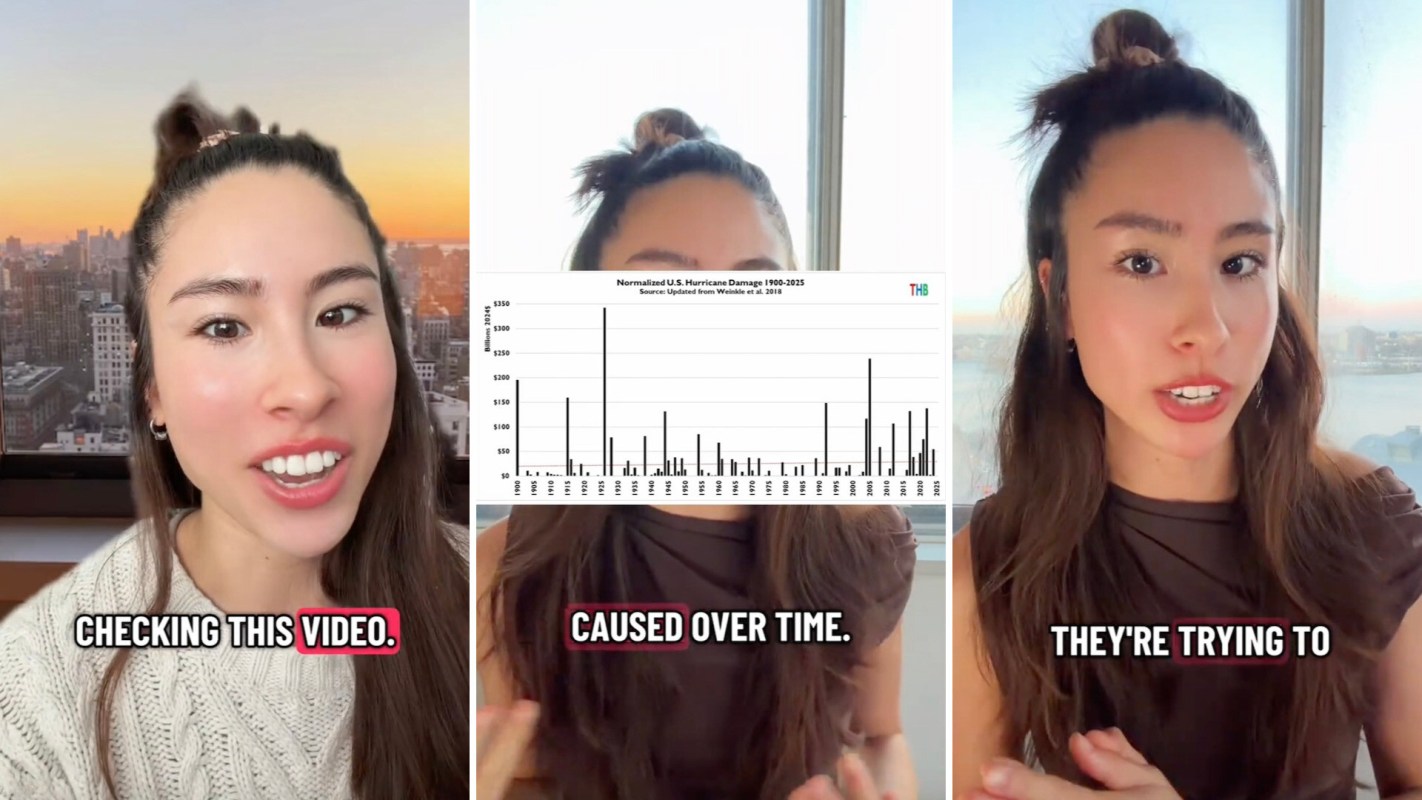
A former U.S. youth climate negotiator is pushing back on misleading hurricane data shared on TikTok.
Lia Newman (@LiaAndTheWorld) posted the fourth installment of her fact-check series targeting claims made by Lucy Biggers of the Free Press. In the post, shared on TikTok, Newman explains why a graph from political scientist Roger Pielke Jr., a professor emeritus at the University of Colorado Boulder, doesn't tell the full story about whether hurricanes are growing more intense.
In the video, Newman explains that Pielke's method "normalizes" hurricane damage data.
@liaandtheworld Part 4 of fact checking @Lucy and Roger Pielke Jr. on hurricanes. Don't let misleading graphs and articles fool you! #climate #takedown #factcheck #debunk #climatescience ♬ The Kite Luisa Marion - luisa.marion.music
"What [the author is] trying to accomplish here is to see whether a storm that happened today would cause the same amount of damage if we adjusted for population growth, development, inflation, other factors," she says.
"In other words, like, maybe hurricanes are costing more today because there are simply more people and property in harm's way, which could very well be true."
But Newman says this approach has a big blind spot.
TCD Picks » Quince Spotlight
💡These best-sellers from Quince deliver affordable, sustainable luxury for all




"Normalization can't tell us whether the hurricanes themselves are getting wetter, stronger, bigger, longer, more dangerous, because it compares the same physical storm," she says.
That flat trend line, she argues, says nothing about whether storms themselves have gotten physically stronger.
The science backs her up.
A peer-reviewed Climate Central paper from 2024 determined that warmer oceans boosted wind speeds in about four out of five Atlantic hurricanes from 2019 through 2023. They add an average of 18 miles per hour per storm. NOAA data shows the share of Category 4 and 5 storms has gone up over the past several decades. Higher sea levels and more intense rain tied to a warming planet are making hurricane impacts worse in ways that cost-normalization methods can't account for.
|
Which of these savings plans for rooftop solar panels would be most appealing for you?
Click your choice to see results and earn rewards to spend on home upgrades. |
 Save $1,000 this year 💸
 "Moral of the story: don't believe everything you see or hear just because there's a graph involved," Newman says.
Commenters jumped in with their own takes.
"Why would they just use USA stats for hurricanes…. Hurricanes effect other areas that just the USA," one wrote.
Another put it more colorfully, writing, "So like, it turns out if you explode a 50 megaton nuke in 1000 AD, normalize for population, inflation and other variables, you get the same death rate and costs, therefore nukes haven't gotten any stronger since then."

Get TCD's free newsletters for easy tips to save more, waste less, and make smarter choices — and earn up to $5,000 toward clean upgrades in TCD's exclusive Rewards Club.






