When distressing clips of beached whales and dolphins circulate online, it's natural for people to want answers. But linking animal deaths to a specific cause — especially powerful solutions like renewable energy — requires careful evidence, not just emotion.
One TikTok suggests that offshore wind farms are responsible for whale and dolphin deaths along the New Jersey coast, but the claim doesn't hold up under closer examination.
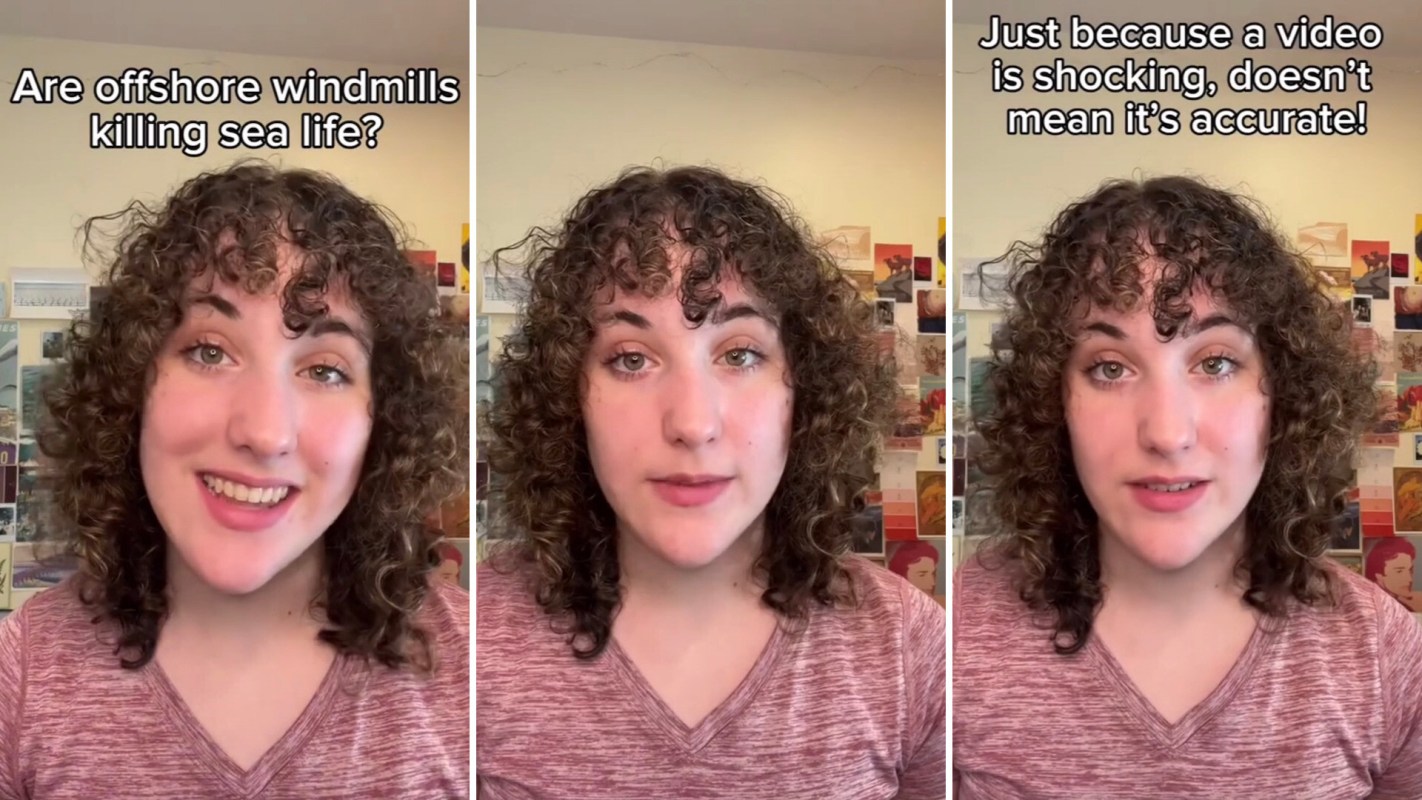
In another TikTok, fact-checker Maggie from MediaWise (@mediawise) reviews the video and urges viewers to approach emotionally charged content with caution.
"Always be wary of posts that evoke strong feelings or sadness, even if they include what looks like legit news articles and videos," she explains.
@mediawise Are offshore windmill farms really killing off dolphins and whales? After some digging on the viral video, Teen Fact-Checker Maggie found that no, just because a video is shocking does NOT always mean it's true! We rate this one as Not Legit. #checkyourfacts #factcheck #windfarms #sealife #noaa ♬ original sound - MediaWise
The original video paired new clips of stranded whales and dolphins with somber music, the caption implying that the offshore wind developments were to blame. In the MediaWise TikTok, Maggie clarifies that the video jumped to a conclusion that isn't supported by scientific evidence.
She details a quick search of the National Oceanic and Atmospheric Administration's resources, which show no connection between the two.
"It's a credible primary source for scientific information," Maggie notes.
TCD Picks » Quince Spotlight
💡These best-sellers from Quince deliver affordable, sustainable luxury for all




In fact, that exact NOAA page explicitly states there is no evidence connecting whale or dolphin deaths to wind farm development activities. There are no known links between recent large whale deaths and ongoing wind surveys or construction efforts.
One viewer reacted directly to the claim, writing, "I didn't believe windmills can kill those sea creatures in the first place... submarines can tho." Their skepticism underscores that not all viral claims are taken at face value and that verifying the science is important.
That doesn't mean offshore wind is impact-free. Research shows that construction noise, especially from pile-driving, can affect marine mammals' hearing and behavior, and regulatory frameworks like the Marine Mammal Protection Act require mitigation measures to reduce these disturbances. Scientists also note that U.S. wind areas can overlap with biologically important habitats, highlighting the need for careful monitoring.
Beyond potential local effects, offshore wind offers environmental benefits by reducing reliance on dirty fuels, a major driver of the changing climate that threatens marine ecosystems. The structures themselves may even create artificial reef-like habitats, supporting biodiversity, though researchers continue to study changes in underwater soundscapes and currents.
|
Which of these savings plans for rooftop solar panels would be most appealing for you?
Click your choice to see results and earn rewards to spend on home upgrades. |
 Save $1,000 this year 💸
Get TCD's free newsletters for easy tips to save more, waste less, and make smarter choices — and earn up to $5,000 toward clean upgrades in TCD's exclusive Rewards Club.