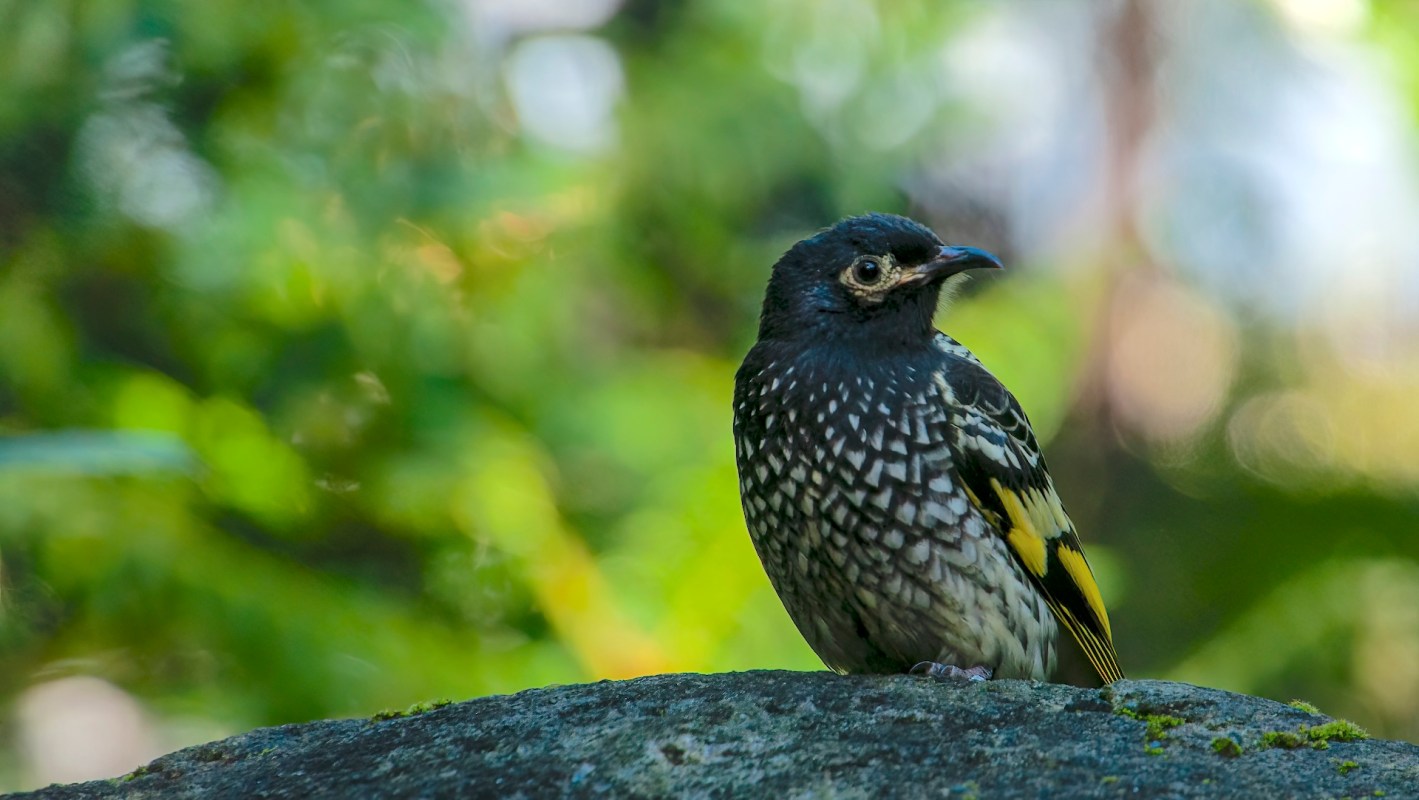
Scientists appear to be successfully resurrecting a dying art form: the rare vocalizations of one of Australia's most threatened songbirds, the regent honeyeater.
The Guardian recently reported on the efforts to restore the lengthier, more complex version of the bird's song before it disappears completely.
The regent honeyeater, a species now thought to have fewer than 250 individuals in the wild, is primarily found in the Blue Mountains of Australia. But the male's unique and lengthy call has largely faded from its natural habitat as the bird's prospects have diminished.
And the simplified version of the vocalization isn't just a drag from an artistic standpoint. It may also be hindering the regent honeyeater's breeding success.
In a study published in Nature Communications in February, researchers outlined their multiyear efforts at Taronga Zoo. They started during the 2020-21 breeding season to save the longer tune. Initially, playing recorded versions of the songs daily was ineffective.
Next, the researchers tried a more intimate approach by bringing in two wild-born male "song tutors" to teach a class, according to the Guardian. This approach showed some promise, but just like in a human classroom, the teacher-to-student ratio was of the utmost importance.
TCD Picks » Quince Spotlight
💡These best-sellers from Quince deliver affordable, sustainable luxury for all




When they shifted the approach to include only six young birds per adult tutor, the program really took off. Song learning increased from zero to 42% over three years. It was in the nick of time, too.
"The full version of the wild song taught to zoo-bred males disappeared from the wild during the study, making the zoo population the only remaining source of traditional song culture," the study co-authors wrote.
Even better, the zoo-bred males appear to be passing along the more complex vocalizations to the next generations. The zoo and its partners are now releasing regent honeyeaters into the wild that can sing the full song.
Next up will be seeing how these efforts to restore the full song impact those released birds.
|
Which of these savings plans for rooftop solar panels would be most appealing for you?
Click your choice to see results and earn rewards to spend on home upgrades. |
 Save $1,000 this year 💸
 "Our aim for the overall project is to have species become self-sustaining," ecologist and study co-author Joy Tripovich told the Guardian. "We really want them to grow their numbers on their own so that we don't need to intervene anymore."
Part of that is incumbent on the zoo-bred birds integrating themselves after release and interbreeding with wild birds.
"Historically, that wasn't something we ever really observed," Daniel Appleby, the study's first author, told the outlet.
But if anything can change the tune of these wild birds, it might be the full regent honeyeater song itself.

Get TCD's free newsletters for easy tips to save more, waste less, and make smarter choices — and earn up to $5,000 toward clean upgrades in TCD's exclusive Rewards Club.