


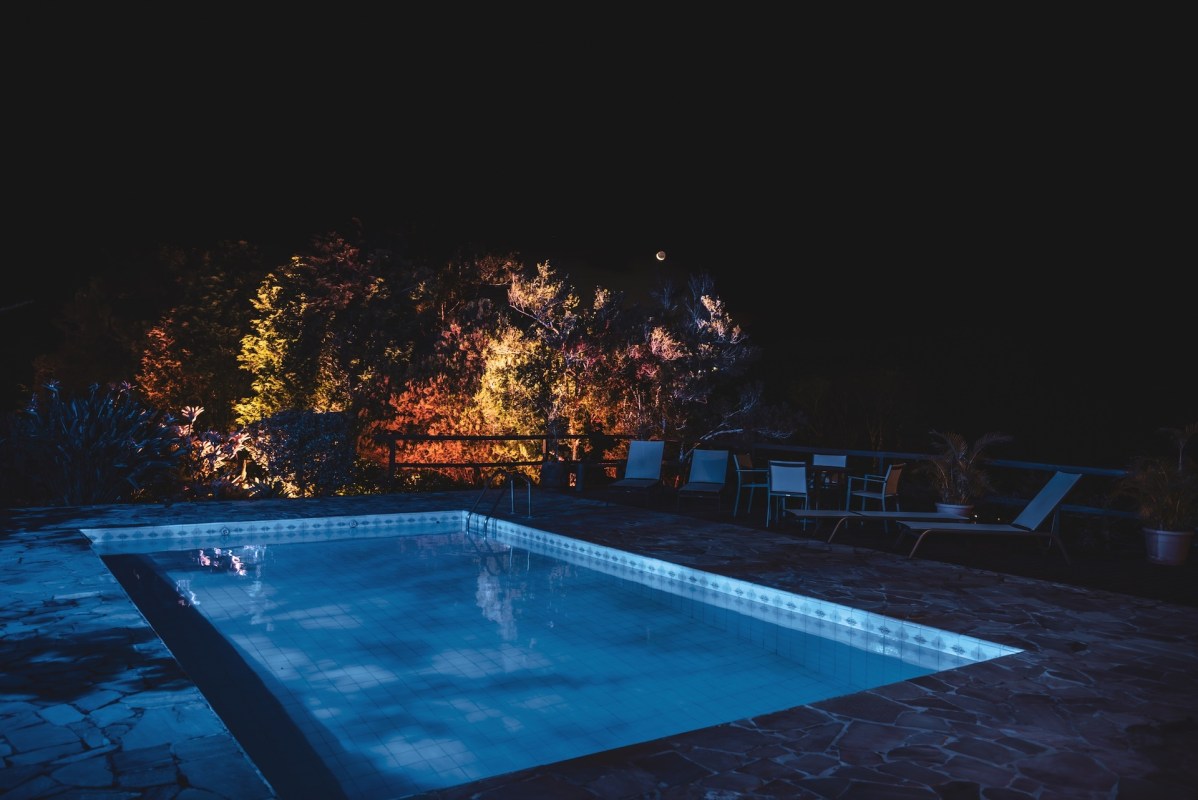
A puzzling appearance of a crocodile hatchling in Sheffield, South Africa, carried all the intrigue of the juiciest true-crime mystery.
The North Coast Courier reported on the rapid appearance and disappearance of the tiny reptile in a suburban family's swimming pool. Grant van der Walt first doubted his mother when she reported it to him, but he changed his tune when he took a closer look.
"When I first saw it lying motionless at the bottom of the pool, I thought it was some dead leaves," recalled Van der Walt. "But then it started swimming."
Van der Walt had to run to work but tried to secure the pool by putting a cover over it. He also reached out to Crocodile Creek owner Craig Watson for assistance from someone with more experience.
Watson didn't arrive in time to see the young croc, which had scurried away in the meantime. How it got to the pool and where it came from was completely unclear.
CCTV footage helped piece together its journey to Van der Walt's property. The neighborhood's estate manager, Jon Dreyer, didn't recall any crocodiles ever being on the site, and he theorized it could have been an escaped pet.
TCD Picks » Good Store Spotlight
Get 10% off your next purchase with code TCD10

Whatever the case, Watson highlighted the small crocodile's impressive survival skills. To get to the pool, it had to evade neighborhood pets, navigate a steep driveway climb, and take a flight of stairs.
Watson had different theories for the young croc's arrival in the suburbs. He thought it could have made its way via waterways after recent heavy rains, or a bird could have taken it for a ride.
Another idea was that a nearby resident picked it up somewhere in nature before hatching it on their land.
Low on Watson's list of probabilities was that the crocodile was locally bred, with it unlikely that mature crocodiles were nearby. He noted that the nearest breeding pairs were 30 miles away, and Crocodile Creek has no water links to the suburban area.
TCD Picks » Quince Spotlight
💡These best-sellers from Quince deliver affordable, sustainable luxury for all




|
Which of these savings plans for rooftop solar panels would be most appealing for you?
Click your choice to see results and earn rewards to spend on home upgrades. |
 Save $1,000 this year 💸
 However the young creature got there, crocodiles provide important ecosystem services. They help regulate prey populations and create habitats for other animals through burrowing and nest building, as World Animal Protection observed.
Ensuring the creature's survival can encourage healthy biodiversity that ultimately benefits everyone, all the way up to the human food supply.

Get TCD's free newsletters for easy tips to save more, waste less, and make smarter choices — and earn up to $5,000 toward clean upgrades in TCD's exclusive Rewards Club.







