


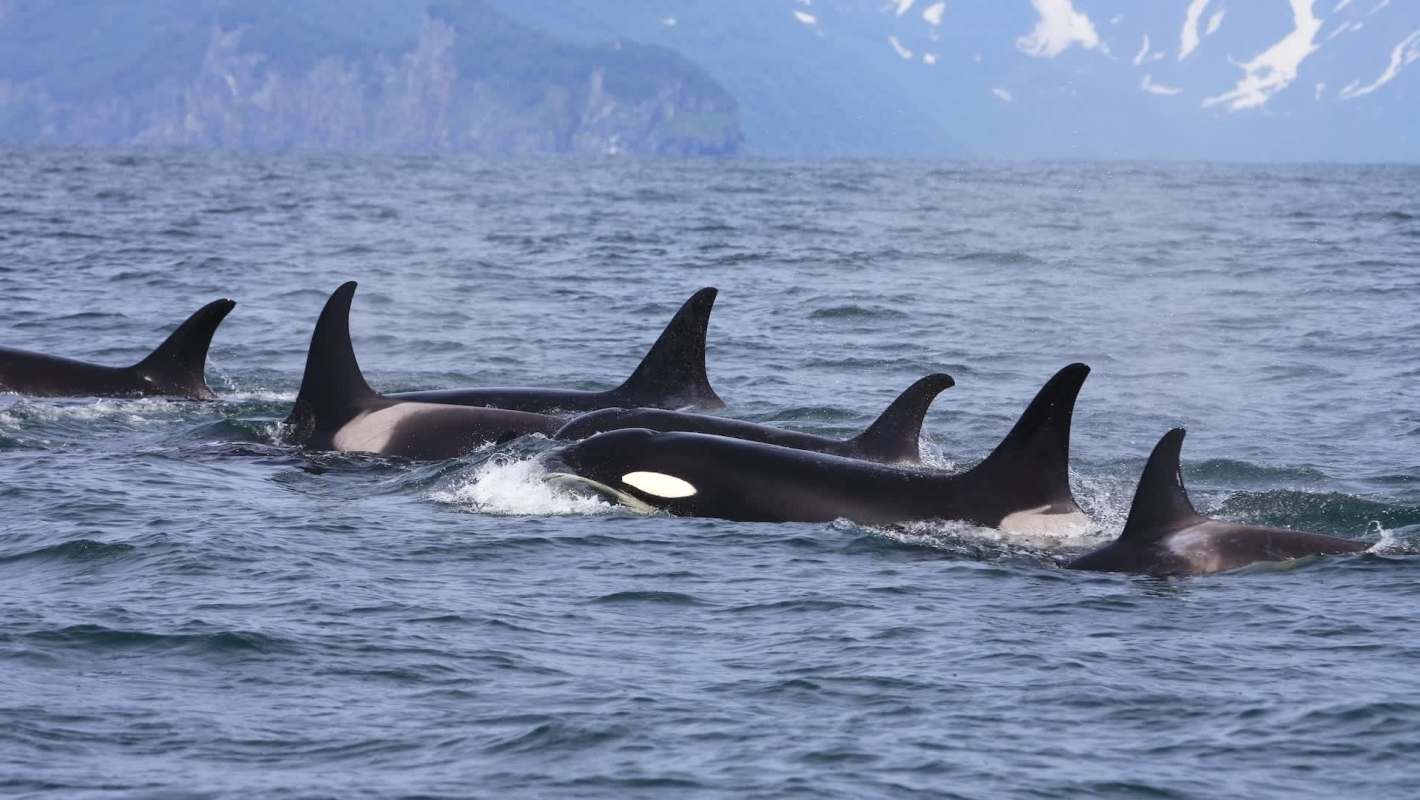
Scientific analysis of "cannibal" killer whales might seem shocking at first glance, but it might also indicate that our understanding of this species is falling behind the pace of evolution.
As Oceanographic reported in March, researchers studying orcas off the coast of Russia in 2022 made an unexpected discovery. They recovered a killer whale fin with bite marks belonging to another killer whale.
It wasn't a one-off; two years later, researchers found another within miles of the first.
According to the researchers, who published a scientific article in the journal Marine Mammal Science, the signs point to deliberate hunting. It's possible the whales that were eaten died before being consumed, but it's unlikely, since whale remains quickly sink.
Meanwhile, if a killer whale died in a fight with another, it would be unlikely to lose a fin. However, removing low-energy parts, such as fins, is consistent with how killer whales feed on large animals.
Cannibalism isn't unknown in the animal kingdom, but in a social species like killer whales, it is notable.
TCD Picks » Quince Spotlight
💡These best-sellers from Quince deliver affordable, sustainable luxury for all




However, researchers suggested that, from the whales' perspective, something else was at play.
"In the real world, killer whales are so different from each other that many researchers argue they should be divided into several subspecies," said Olga Filatova, an associate professor from the Department of Biology at the University of Southern Denmark, per Oceanographic.
The killer whales are divided into two kinds: resident fish-eating whales that live in matriarchal family units of up to four generations and transient hunting whales that have a looser social structure and eat seals, sea lions, porpoises, and other whales. The two groups never socialize or interbreed.
"The hunting killer whales most likely do not perceive the ones they feed on as belonging to their own species," said Filatova.
|
Which of these savings plans for rooftop solar panels would be most appealing for you?
Click your choice to see results and earn rewards to spend on home upgrades. |
 Save $1,000 this year 💸
 With increasing global temperatures affecting the ocean even more than the land, as the National Oceanic and Atmospheric Administration explained, shifting water temperatures may even influence the territorial habits of these whales.
The idea that these animals are the same species — and that one hunting the other is an act of cannibalism — reflects a human view of the situation. But as the two populations diverge, they may be evolving into entirely separate species.
"We are witnessing an evolutionary process: These two groups, which never mix, are becoming increasingly distinct," Filatova continued. "At some point, they will be so different that they will become separate species."

Get TCD's free newsletters for easy tips to save more, waste less, and make smarter choices — and earn up to $5,000 toward clean upgrades in TCD's exclusive Rewards Club.







