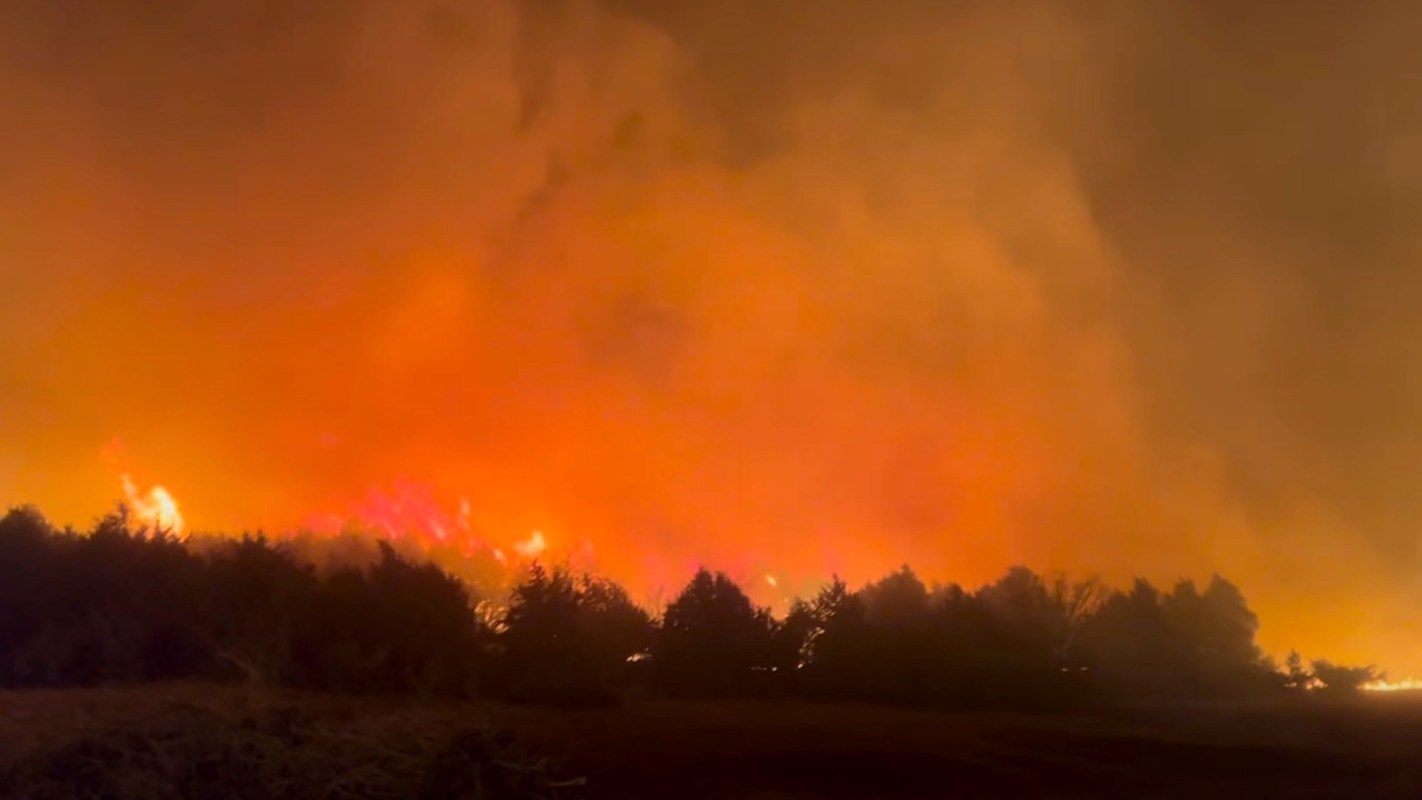
A series of massive wildfires tearing through Nebraska has scorched nearly 750,000 acres, marking one of the largest fire events in the state's history and forcing officials to declare a state of emergency. The fires caused widespread damage, road closures, and at least one reported fatality, according to USA Today.
What's happening?
Four major wildfires — the Morrill, Cottonwood, Anderson Bridge, and Road 203 fires — have collectively burned 747,167 acres of land as of March 16, with 0% containment, according to officials and data from wildfire tracking app Watch Duty.
The Morrill fire alone has ravaged over 570,000 acres, making it the largest of the group, according to a March 16 update from the Rocky Mountain Complex Incident Management Team.
During a press conference, Gov. Jim Pillen confirmed that the fires killed one person in Arthur County, per ABC News.
Despite some temporary slowdowns along fire perimeters, the area remains under a Red Flag warning as persistent drought continues to heighten to wildfire risk.
The devastation also reaches beyond human impact.
TCD Picks » Quince Spotlight
💡These best-sellers from Quince deliver affordable, sustainable luxury for all




"Hardly anyone ever talks about the loss of habitat and wildlife in these fires yet the losses are devastating," one user wrote on X.
Why is this concerning?
Wildfires of this scale disrupt entire communities — displacing families, destroying homes and businesses, and leaving lasting impacts on local communities.
Smoke from large fires can also travel long distances, worsening air quality and increasing health risks, particularly for children, older adults, and people with respiratory conditions.
These events are becoming more severe as prolonged drought, rising temperatures, and unpredictable weather patterns create ideal conditions for fires to ignite and spread rapidly.
TCD Picks » Quince Spotlight
💡These best-sellers from Quince deliver affordable, sustainable luxury for all
|
Which of these savings plans for rooftop solar panels would be most appealing for you?
Click your choice to see results and earn rewards to spend on home upgrades. |
 Save $1,000 this year 💸
 There are also major environmental consequences. Large-scale fires destroy critical habitats, and ecosystems can take years, or even decades, to recover.
The financial toll can be significant as well, with residents in high-risk areas facing rising insurance costs, declining property values, and ongoing economic uncertainty.
What's being done about wildfires?
On March 13, Gov. Pillen issued an emergency proclamation, mobilizing National Guard members, helicopters, and aerial firefighting resources to help contain the fires.
Additional crews from across Nebraska, along with support from neighboring Iowa, have joined the response efforts.
"Nebraska will keep battling these fires. We have the resolve and grit to get through this — together," Pillen wrote on X.

Get TCD's free newsletters for easy tips to save more, waste less, and make smarter choices — and earn up to $5,000 toward clean upgrades in TCD's exclusive Rewards Club.