


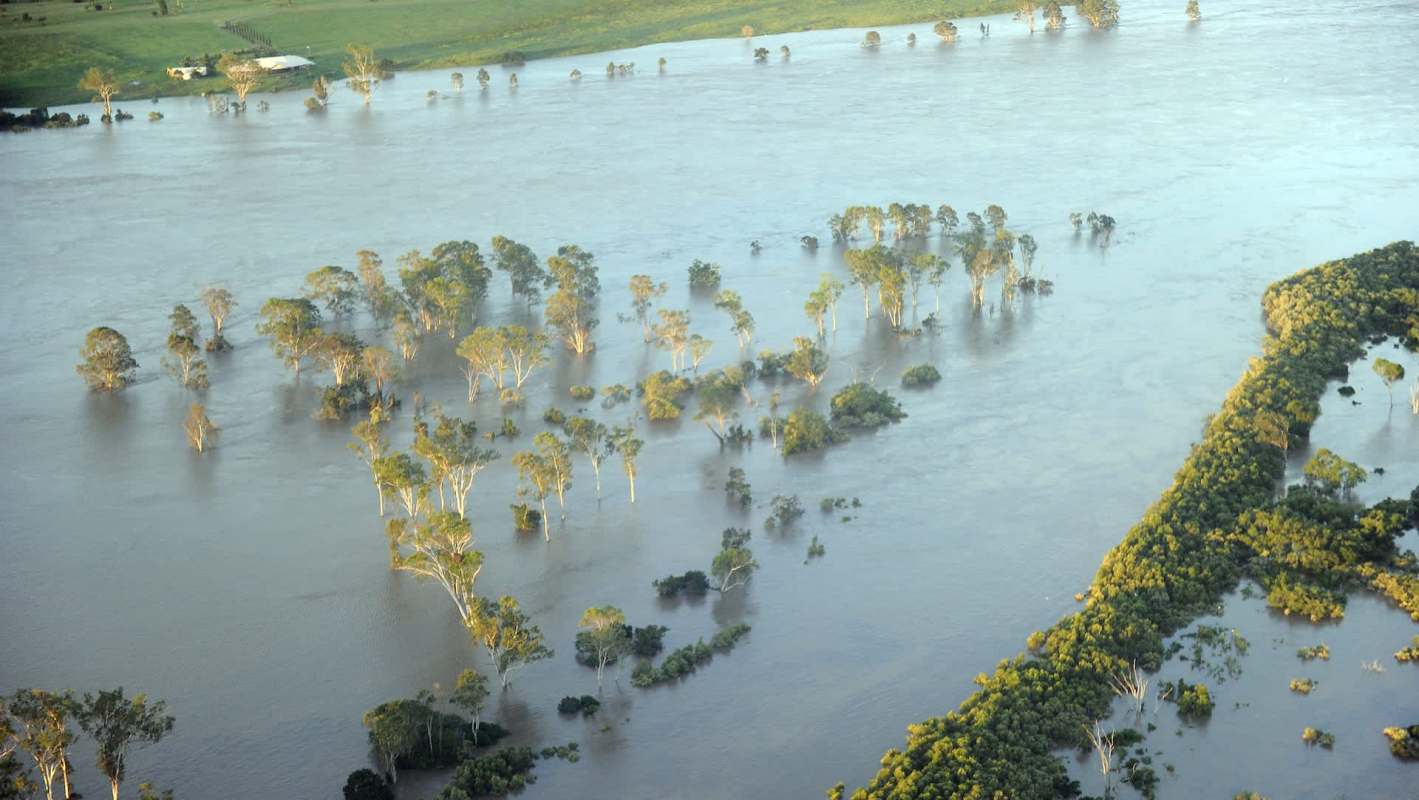
As of March 11, numerous flood watches and warnings remained in effect across two large regions in northern Australia. Days of torrential rain had brought the worst flooding some spots had seen in decades, with some residents told to evacuate.
Successive days of heavy rain also impacted the town of Darwin in Australia's Northern Territory.
"This is an unprecedented situation, and we have never seen this volume of water in the dam before," said PowerWater, the Northern Territory's water utility, in a statement, per the Guardian. "Our priority is to restore the pump station and associated equipment as quickly as is safely possible, and we are investigating operating the dam with generators."
The Darwin River Dam ceased operating on March 9 after significant flooding. "The Darwin River Dam spillway has been overflowing since the new year due to a heavy wet season," added the water utility. "[March 9] flash flooding and further rain pushed the dam to more than 110% capacity. Combined with the additional rain, this caused the flooding."
The state of Queensland has also been impacted, and Bundaberg residents were told to evacuate. "Major flooding is occurring along Charleys Creek at Chinchilla, and at Condamine Township on the Condamine River, it is estimated that the river is peaking around the major flood level," cautioned Australia's Bureau of Meteorology (BoM) on March 11. "Recent moderate to heavy rainfall has caused significant river and creek level rises."
For some rivers in Queensland, this was the second time in just days that they rose well above flood stage. The Katherine River overspilled its banks earlier in the month, reaching its peak major flood stage around March 7 and March 8. The river dipped back into a minor flood stage on March 9, but forecasters warned that it would rise again in just a matter of days.
TCD Picks » Quince Spotlight
💡These best-sellers from Quince deliver affordable, sustainable luxury for all




As of the morning of March 10, at least 15 drivers were experiencing major flooding, according to the BoM. Rainfall maps from the bureau revealed that as much as a foot to nearly 16" of rain had fallen along the northern and eastern coasts of Australia over the prior week.
Australia's Prime Minister, Anthony Albanese, addressed the flooding, which was brought on by a large monsoon trough and a tropical low, at a March 10 press conference.
"So, people in the path of these weather systems should prioritise their safety by following flood advice and warnings, staying aware of surroundings, and avoiding hazards like flood waters," Albanese advised. "If it's flooded, forget it. We can't say it too many times. And so if people follow that advice, we'll continue to provide support as we always do with the state and territory governments."
Flooding is one of the leading weather-related causes of death in the country. "In Australia, flooding is the second deadliest hazard after heat waves," according to the Australian Climate Service. "Between 1900 and 2022, floods accounted for approximately 20% of natural hazard deaths in Australia."
The ACS's National Climate Risk Assessment report has warned that "extreme heat, floods, bushfires, poor air quality, and communicable diseases will escalate health risks" in the country.
"More frequent and more intense extreme events will affect the way of life in different ways across Australia — from impacts to sport and recreation, to unreliable infrastructure, like energy sources during heat waves," the report's authors added. "There will be additional pressure on emergency responders and defence resources."
|
Which of these savings plans for rooftop solar panels would be most appealing for you?
Click your choice to see results and earn rewards to spend on home upgrades. |
 Save $1,000 this year 💸
Get TCD's free newsletters for easy tips to save more, waste less, and make smarter choices — and earn up to $5,000 toward clean upgrades in TCD's exclusive Rewards Club.







