


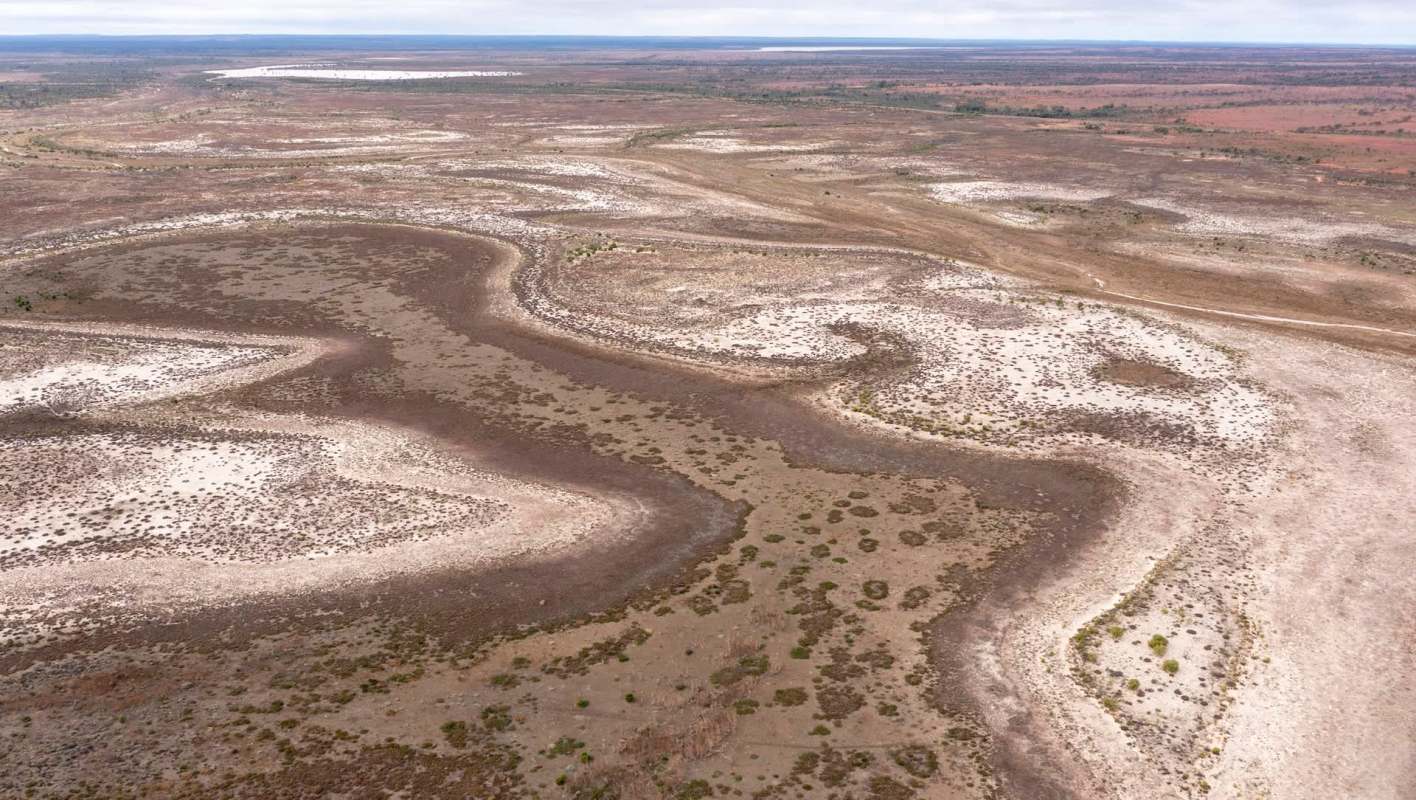
Geologists are considering a new kind of energy storage in a remote corner of Australia, according to the Australian Broadcasting Corp.
An underground salt deposit in Queensland could prove to be the perfect place for hydrogen gas or compressed air. A preliminary 1.9-mile borehole was drilled into the Adavale Basin by Geoscience Australia.
After dissolving the salt, it's possible to pump hydrogen or air into the resulting cavern, then release the pressurized gas to move turbines and recover the energy for later use. The massive size of such caverns makes them more efficient options than above-ground storage.
"You can produce these things out there, pump them into the cavern, and it's basically this on-demand battery that's under the ground," Geoscience Australia analyst Mitchell Bouma said, per the ABC.
Geoscientist Mark Bunch echoed the sentiment that these facilities have "enormous potential" as alternatives to lithium-ion battery storage.
A cavern in the Adavale Basin could store 6,000 metric tons (6,614 tons) of hydrogen, or roughly 100 gigawatt-hours of energy. Similar compressed air storage facilities are already in operation in China.
TCD Picks » Quince Spotlight
💡These best-sellers from Quince deliver affordable, sustainable luxury for all




The project is not without its hurdles. Above the Adavale Basin is the Great Artesian Basin, the largest freshwater basin in the world. Many communities rely on it as their only consistent water supply in the arid region.
Experts have defended the storage as exceptionally stable. They say that even in the case of an unexpected fracture, the salt in the cavern would seep into crevices and prevent contamination of water supplies.
Building reliable energy storage is necessary to enable the spread of renewable power sources such as wind and solar. With adequate storage to cover lulls in production, green energy can displace the likes of coal and gas on the electrical grid. This means less pollution going into the atmosphere, reduced intensity of destructive weather, and fewer costs to property owners in the face of those disasters.
|
Which of these savings plans for rooftop solar panels would be most appealing for you?
Click your choice to see results and earn rewards to spend on home upgrades. |
 Save $1,000 this year 💸
 The results of the geological study of the Adavale Basin are expected to be published in six months and are likely to produce more than simply information on compressed air energy storage.
"Basin systems like the Adavale Basin can host a variety of critical minerals and strategic materials, including copper, zinc, and cobalt, which are critical to produce wind turbines and electric vehicle batteries," Bouma said. "So, we're excited to see what we can discover through improving our geological models."

Get TCD's free newsletters for easy tips to save more, waste less, and make smarter choices — and earn up to $5,000 toward clean upgrades in TCD's exclusive Rewards Club.






