


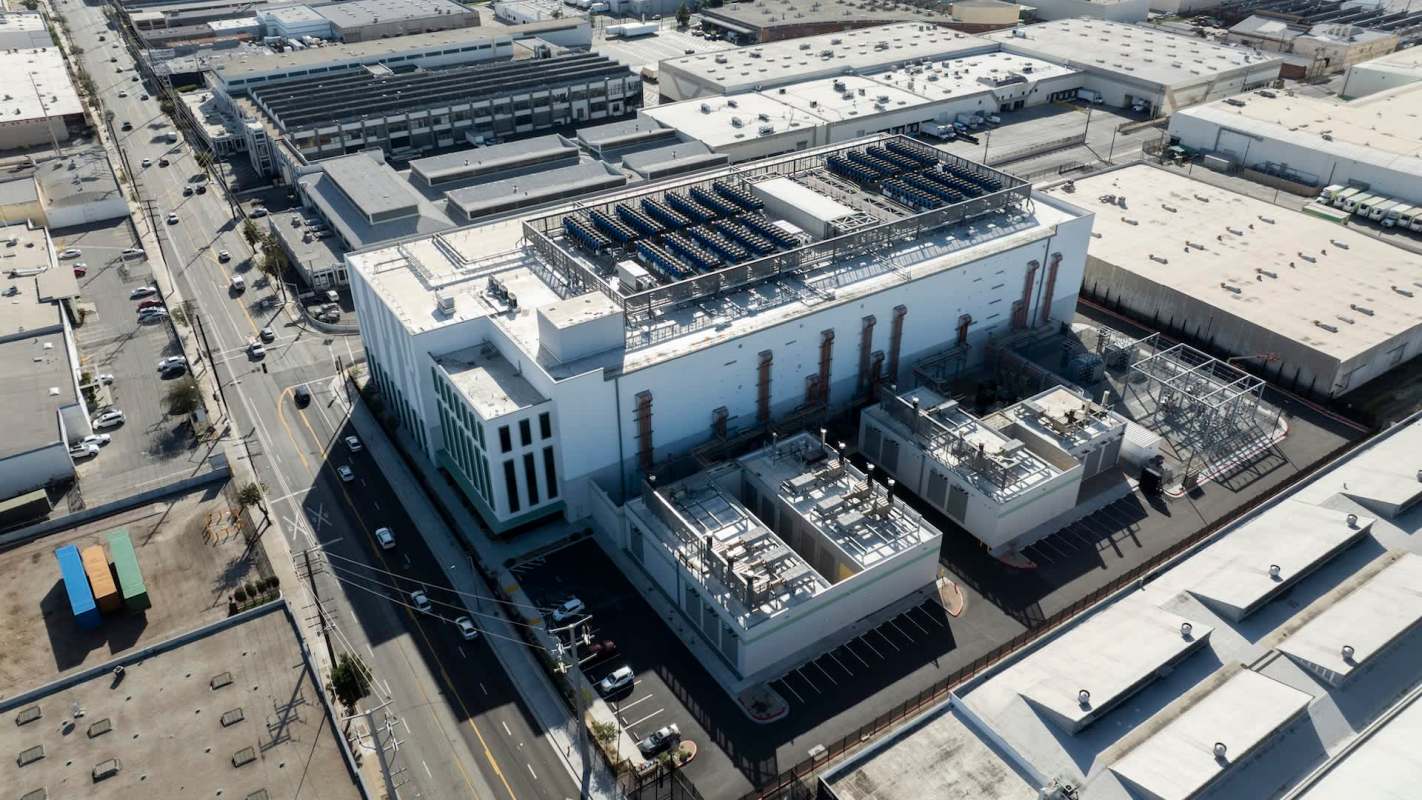
Data centers are highly contentious due to their impact on electricity prices, but in a San Francisco Chronicle editorial, an expert warned communities not to lose sight of another major risk they pose.
What's happening?
Ann Hayden is vice president of climate-resilient water systems for the Environmental Defense Fund.
In her editorial, Hayden first noted that "energy consumption" had become the public's primary focus amid what is often described as a "data center boom."
She acknowledged that energy costs were "important," but reminded readers that data centers also placed tremendous strain on water systems, particularly in arid regions like California.
Citing "already over-allocated" water resources across Western states, Hayden emphasized the significant amount of water data centers cycle through to cool servers and generate energy.
Hayden alluded to developers "parachuting into a community" and plunking down data centers with little interference from municipalities, leaving residents and local officials to manage the disruptions they cause and the resources they consume.
TCD Picks » Quince Spotlight
💡These best-sellers from Quince deliver affordable, sustainable luxury for all




Putting new data centers in drought-prone areas amounted to "a recipe for heightened water inequity and strain on already challenged communities and ecosystems," she cautioned.
Why is this concerning?
As AI adoption continued at a rapid clip, data centers sprouted up across the country to power this emerging technology.
Almost immediately, communities near data centers began reporting unbearable noise and air pollution, as well as a general reduction in quality of life.
Those impacts escalated after data center energy demand drove up electric bills nationwide, a financial hit most households couldn't ignore. To that end, Hayden warned that water usage was easier to conceal than metered kilowatt-hours.
"Unfortunately, tech companies are often not fully transparent about water use," she stated.
|
Which of these savings plans for rooftop solar panels would be most appealing for you?
Click your choice to see results and earn rewards to spend on home upgrades. |
 Save $1,000 this year 💸
 OpenAI has repeatedly come under fire for its refusal to disclose its water usage, and Amazon's plans to discharge data center wastewater into Pennsylvania waterways drew local chagrin.
"Two of the largest data center projects in the West are proposed in water-challenged, economically disadvantaged regions — Imperial County and Doña County, N.M. — and both have been less than forthcoming about water use," Hayden added.
What's being done about it?
Hayden characterized the data center development process as somewhat backwards, perhaps best described by the adage about seeking forgiveness rather than permission.
She suggested that the approach led to a "growing mistrust of data center developers," and said that officials should insist upon "data center projects that actually improve water security and help communities."
As Hayden pointed out, local action on data centers had been pivotal in recent months.
Community pushback in the last quarter of 2025 alone halted $98 billion in planned data center development.

Get TCD's free newsletters for easy tips to save more, waste less, and make smarter choices — and earn up to $5,000 toward clean upgrades in TCD's exclusive Rewards Club.







