


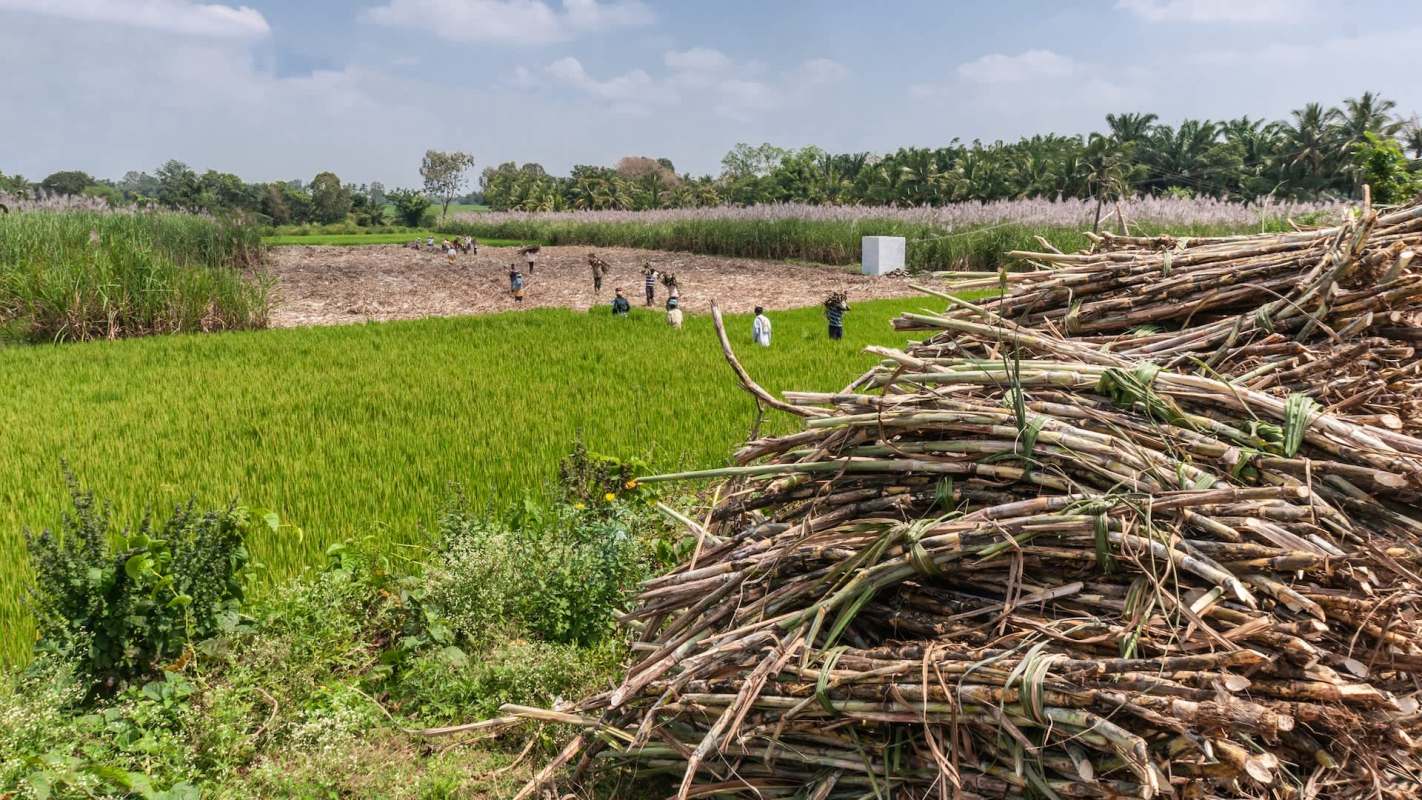
As a tall, dense crop, sugarcane is difficult to inspect plant by plant, making it hard to detect infections that often start deep within fields where the human eye cannot easily reach — but an AI-powered view can tell a different story.
Researchers from India's Shri Govindram Seksaria Institute of Technology and Science (SGSITS) and Delhi Technological University developed a butterfly-shaped AI-powered flying robot.
It can move through sugarcane crops, capture images of leaves, and identify diseases using GPS tagging to mark infected plants, the Times of India reported. The robot can detect common sugarcane diseases like red rot, smut, wilt, and ratoon stunting earlier than traditional methods.
Crop disease outbreaks threaten global food security, and rising global temperatures are exacerbating the problem by accelerating pathogen life cycles and expanding pest ranges, as recently published microbiology research showed.
In sugarcane fields, many infections manifest in hard-to-inspect areas.
"Farmers cannot manually check every plant, and conventional aerial views miss inner crop details," Upendra Singh, study author and assistant professor from the IT department of SGSITS, told the Times of India.
TCD Picks » Quince Spotlight
💡These best-sellers from Quince deliver affordable, sustainable luxury for all




"This system is designed to detect disease early and guide farmers to the exact location," Singh added.
The flying device captures detailed leaf images at close range, which overhead drones cannot. It uses AI to process images in real time and flag diseases, while GPS pinpoints the locations of infected plants.
That data is fed into a web and mobile platform to create a live digital field map.
Farmers can view disease heat maps, trends, and alerts, enabling targeted treatment rather than blanket application of harmful pesticides across entire fields.
|
Which of these savings plans for rooftop solar panels would be most appealing for you?
Click your choice to see results and earn rewards to spend on home upgrades. |
 Save $1,000 this year 💸
 This precision benefits farmers and consumers through healthier crops, lower costs, and reduced chemical runoff into soil and water.
Initially designed as a ground vehicle, the robot evolved into a lightweight flying device inspired by butterfly and bird structures to optimize cost, balance, and field coverage.
The researchers filed a patent for the technology, supported by India's Ministry of Micro, Small, and Medium Enterprises through its ASPIRE plan for rural entrepreneurship, The Better India reported.
Similar AI-powered technology is helping farmers globally.
For example, the Leaf Monitor app from the University of California, Davis, measures light reflections in leaves to assess nutrient levels, and researchers at the University of Florida developed an AI-backed drone monitoring system to prevent over-fertilization of hemp crops.
The researchers see potential applications for their butterfly device beyond individual farms, Singh said. Agritech firms could offer crop monitoring as a service, while sugar mills and research bodies could use the data for yield forecasting and supply chain planning.
With a patent pending and real-world tests completed, the technology could advance toward commercial deployment in the next few years with enough support.

Get TCD's free newsletters for easy tips to save more, waste less, and make smarter choices — and earn up to $5,000 toward clean upgrades in TCD's exclusive Rewards Club.







