


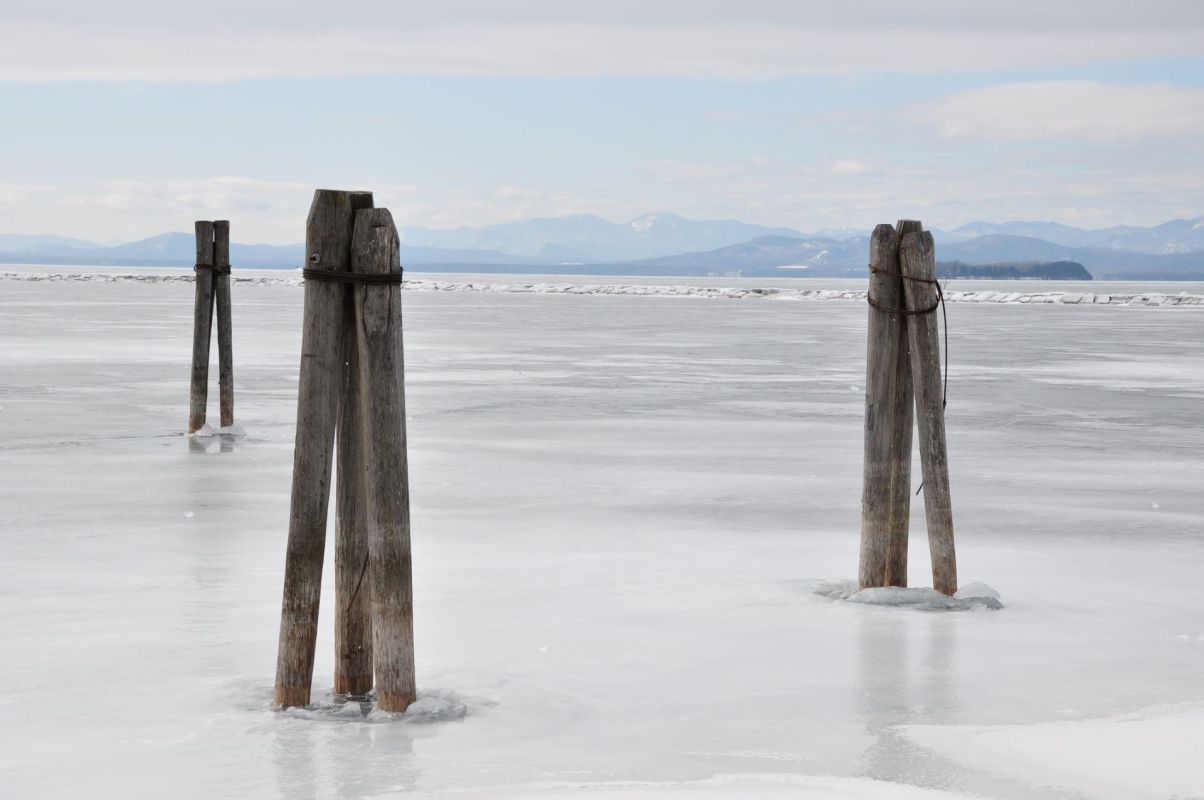
For the first time in seven years, Lake Champlain has completely frozen over.
Frigid temperatures and abnormal freezing patterns led the National Weather Service to declare the lake officially closed to the public in mid-February.
What's happening?
As VTDigger reported, the large lake bordering both Vermont and New York has fully frozen for the first time since March 2019.
The National Weather Service reviewed polar-orbiting satellite data and recorded imagery to assess Lake Champlain's ice coverage.
"We'll be carefully continuing to look at the satellite imagery in the coming weeks," NWS meteorologist Seth Kutikoff told the publication. "And so whenever we do have it opening again, we can resume forecasting wave heights in the parts of the lake that are no longer frozen."
Why are frozen lakes significant?
Unexpected freezing patterns have occurred in numerous lake regions in the winter of 2025-26. In addition to Lake Champlain, scientists have been caught off guard by the freezing of Lake Erie along the borders of Michigan, Ohio, Pennsylvania, and New York.
TCD Picks » Quince Spotlight
💡These best-sellers from Quince deliver affordable, sustainable luxury for all




These lake freezes remind us of the unpredictability of weather in an ever-changing global climate.
When lakes completely freeze over, entire regional ecosystems can be impacted. Everything from wildlife habitats to shoreline erosion and shipping routes can change based on abnormal freeze patterns.
Kutikoff explained that more ice on Lake Champlain is likely to affect wind conditions and wave development as it melts.
Additionally, there are increased safety risks due to lake freezes. The NWS has recorded ice-related drownings on Lake Champlain in the past, prompting closures.
|
Which of these savings plans for rooftop solar panels would be most appealing for you?
Click your choice to see results and earn rewards to spend on home upgrades. |
 Save $1,000 this year 💸
 Regardless, people still risk their lives by venturing onto the frozen lake. VTDigger shared photos of people who creatively accessed the lake and were casually walking on it despite the closure.
What can be done about frozen lakes?
Satellite imagery has been extremely effective in revealing patterns in ice-covered lakes.
In 2024, the Great Lakes experienced some of the lowest levels of ice cover ever recorded. Now in 2026, high ice levels are taking meteorologists by surprise.
Not only has human-caused pollution driven global temperatures higher, but it has also led to more severe, more frequent, and more unusual precipitation and freezing patterns. That's why it's imperative to take action to reduce the production of planet-warming gases.
It might seem like a tall task, but making everyday lifestyle changes, such as walking or biking for short journeys or eating more plant-based food, can minimize your personal polluting impact.
Even if you live far from Lake Champlain, sharing news stories like this one can remind people you know about the uncertainty of our planet's evolving climate and to be mindful of potential risks.

Get TCD's free newsletters for easy tips to save more, waste less, and make smarter choices — and earn up to $5,000 toward clean upgrades in TCD's exclusive Rewards Club.







