


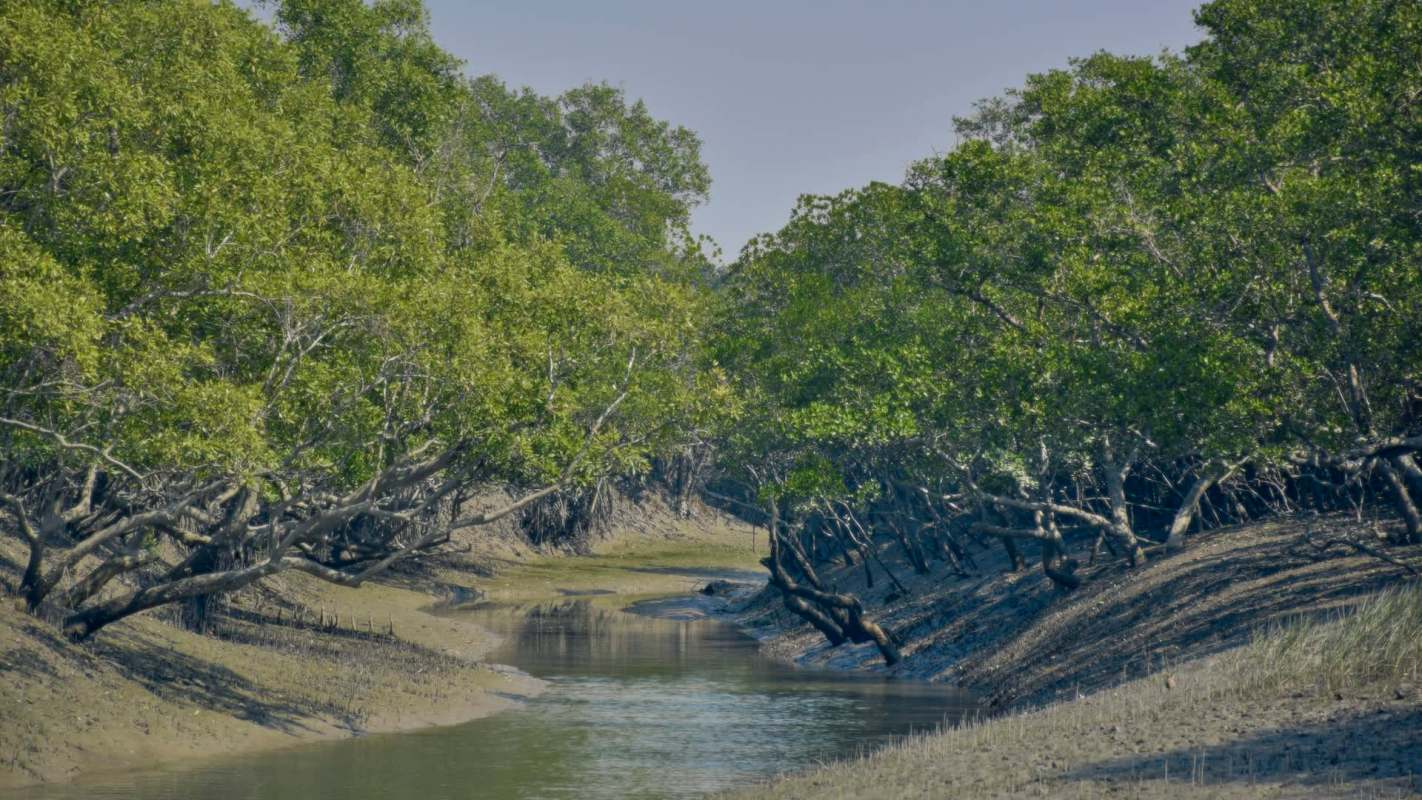
A project in Mumbai, India, has residents and environmental experts concerned.
What's happening?
Mongabay reported that the Bombay High Court approved the Versova-Bhayandar DP road, a controversial project that will remove thousands of trees.
Around 45,000 mangrove trees along Mumbai's western coast will be impacted by the construction of the arterial road. It is intended as an extension of Mumbai's coastal network to reduce congestion on the Western Express Highway. However, residents and environmental activists say the consequences of the new road are much worse than the traffic it will relieve.
The mangrove trees not only play an essential economic role but are also vital to the environment.
Local fishers also rely on the mangrove trees to support their livelihoods. One fisherwoman from Mumbai's Charkop village, Dipti Dheeraj Bhandari, expressed her concerns over the new project.
"My entire family depends on fishing in these mangroves," she told Mongabay. "Without them, our life comes to a standstill."
TCD Picks » Quince Spotlight
💡These best-sellers from Quince deliver affordable, sustainable luxury for all




From an environmental standpoint, the mangrove trees act as a natural barrier to storm surge and rising sea levels.
"If you go to Carter Road (a coastal promenade with mangroves) and neighbouring areas during a high tide, the waves are already crashing across the shore," environmental activist Natasha Pereira told Mongabay. "In such a scenario, cutting mangroves, which are the first line of defence, puts citizens at high risk."
Why is the proposed road project in Mumbai concerning?
The new road project directly impacts the ecosystems that rely on the mangrove trees. Chopping down 45,000 trees will cause significant habitat loss and declines in local species that rely on mangroves for survival.
The loss of these trees will also exacerbate the effects of a shifting climate. Mumbai is already bearing the brunt of these changes, as its location makes it vulnerable to extreme weather.
|
Which of these savings plans for rooftop solar panels would be most appealing for you?
Click your choice to see results and speak your mind. |
 Save $1,000 this year 💸
 Mangrove trees play a key role in reducing storm surge, especially during powerful storms, protecting homes from flooding. They also act as carbon sinks, absorbing carbon from the atmosphere, helping fight pollution and improve air quality.
"In the past few decades, Mumbai has experienced extreme rainfall, heavy precipitation, and heat waves," Praveen Kumar, assistant professor at the Centre for Climate Change and Sustainability Studies, Tata Institute of Social Sciences, told Mongabay.
"In such situations, cutting mangroves, which are among the most ecologically productive systems along the western coast of India, will cause massive social, economic, and ecological damage."
What's being done about the loss of mangrove trees?
While Bombay's High Court approved of the project, it requires the Brihanmumbai Municipal Corporation to "file yearly updates on compensatory tree planting," according to Mongabay. Though these replantings will not fully replace the total loss of vegetation, they will help to minimize the effects of the construction.
Environmental activists and citizens are still speaking out against the project. Pereira, for example, started a petition to combat the removal of the mangrove trees. Fishers who rely on the mangrove trees for their livelihoods have also written to the BMC, explicitly listing their objections to the project.

Get TCD's free newsletters for easy tips to save more, waste less, and make smarter choices — and earn up to $5,000 toward clean upgrades in TCD's exclusive Rewards Club.







