


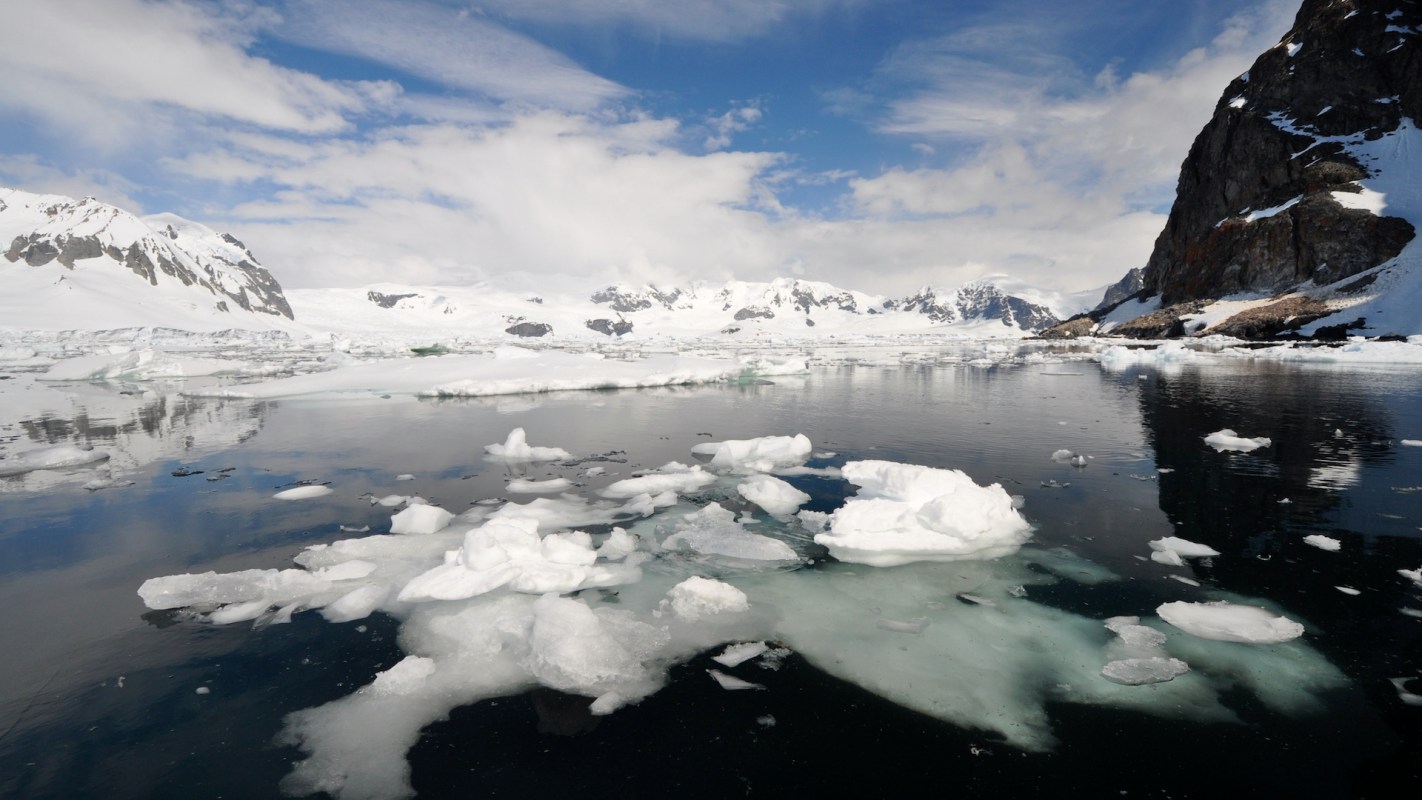
New research has showed that meltwater from the Antarctic ice sheet has intensified stratification in the Southern Ocean, which ultimately may have played a part in bringing the ice ages to an end.
What's happening?
Scientists shared their findings after studying the changes in the Southern Ocean surface conditions during the last two deglaciations — the transition between long glacial periods and warmer interglacial periods, according to the Max Planck Society.
Published in the Proceedings of the National Academy of Sciences, the study was led by François Fripiat, a researcher at the Max Planck Institute for Chemistry and the Université Libre de Bruxelles.
Research revealed that ocean stratification became stronger near Antarctica due to inputs of freshwater from ice melt during deglacial periods. Freshwater and winds near the polar front caused deep waters to rise, which may have released carbon dioxide that contributed to warmer temperatures.
"The ocean can be compared to a huge machine that redistributes heat and carbon on a planetary scale," Fripiat explained. "When this machine becomes stratified, its operation slows down, with direct consequences for climate."
Why is the impact of ice melt important?
Antarctica is losing ice mass at an average rate of about 135 billion tons per year, according to NASA. The ice melt results in rising sea levels, which impacts the environment and humans, especially those living in coastal communities.
TCD Picks » Quince Spotlight
💡These best-sellers from Quince deliver affordable, sustainable luxury for all




The primary driver of global sea-level rise is climate change. Human activities, which include burning fossil fuels, release pollution into the atmosphere. That pollution creates a warm blanket around the planet, and increasing temperatures lead to melting ice sheets and glaciers, per Earth.gov.
Ice melt poses significant risks to humans all over the world. According to the United Nations Environment Programme, microbes trapped in ice could accelerate the spread of disease as temperatures rise. The Guardian reported that glacier loss could threaten the food and water supply of 2 billion people.
What's being done about mitigating ice melt?
Scientists have used unique methods to mitigate melting glaciers and ice sheets. Some scientists even tried using an underwater curtain, according to the Guardian. Meanwhile, NASA monitors the weight of glaciers and ice sheets using satellites to track changing sea levels.
Speaking with friends and family about how ice melt affects our communities can help spread awareness of the issue. Reducing pollution that contributes to rising global temperatures is key to slowing ice melt and sea level rise.
You can help by taking steps to lower your carbon footprint. Making your next car an electric vehicle or transitioning to a smart home are good places to start.
|
Which of these savings plans for rooftop solar panels would be most appealing for you?
Click your choice to see results and speak your mind. |
 Save $1,000 this year 💸
Get TCD's free newsletters for easy tips to save more, waste less, and make smarter choices — and earn up to $5,000 toward clean upgrades in TCD's exclusive Rewards Club.







