


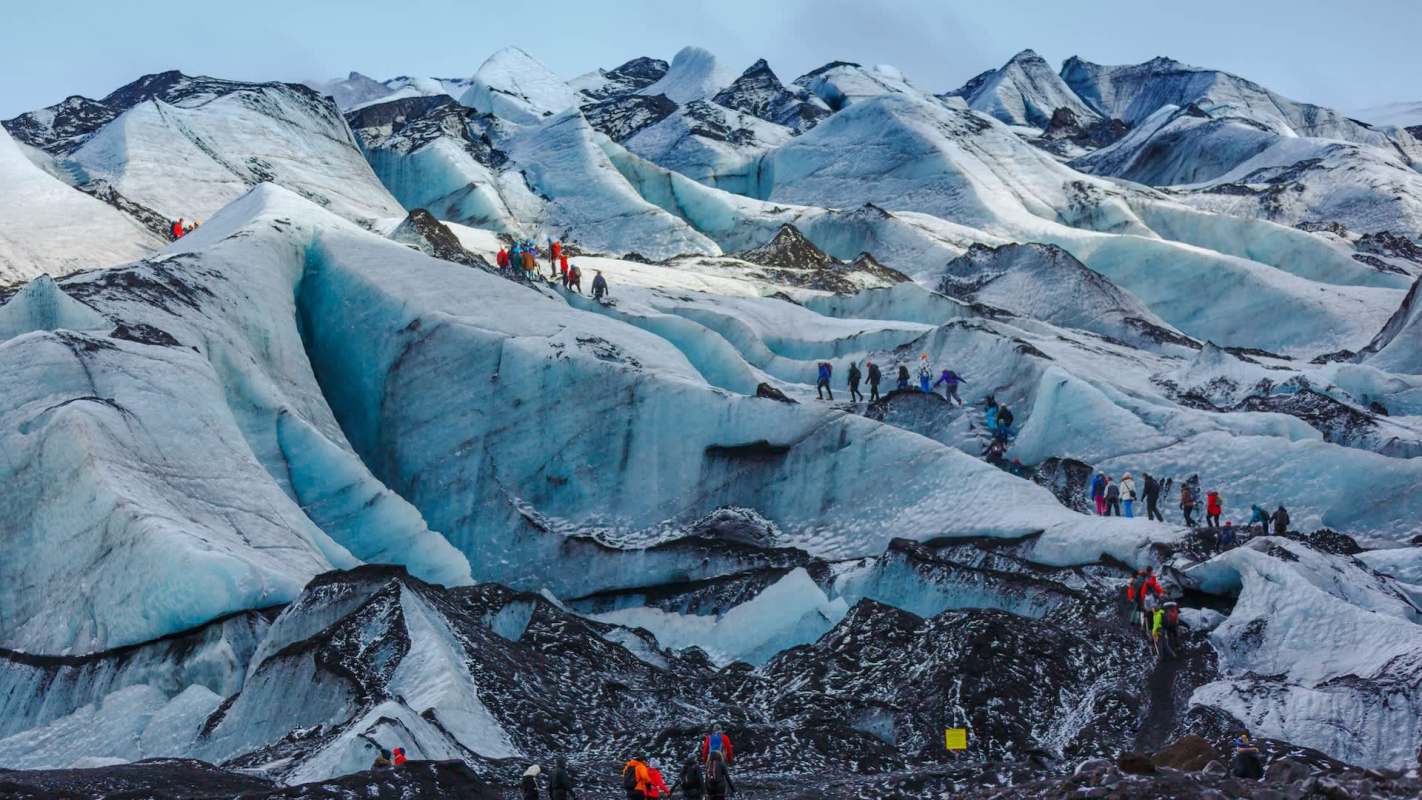
The more glaciers melt, the more tourists are drawn to them, as if to watch the floating giants fade away while they still can.
People who visit glaciers do so for a variety of reasons: because they offer picturesque views, rallying points for change, and even symbols of mourning.
What's happening?
A new study published in Nature Climate Change examined the roles that glaciers play in human lives and the environment that surrounds them.
Cymene Howe, one of the authors responsible for the research, emphasized that while increased awareness of glacial melt is important to reducing global temperatures, oftentimes the strategies to access the glaciers themselves do more harm than good.
With all the resources used to keep glaciers around for the sole purpose of tourism, such efforts are actually doing the opposite and contributing to the heating of the atmosphere.
The study warns that unless more well-developed glacier tourism policies emerge, the icy behemoths may disappear even faster than anticipated.
TCD Picks » Quince Spotlight
💡These best-sellers from Quince deliver affordable, sustainable luxury for all




Why is this important?
Arctic ice melt is not a new phenomenon. It has become a focal point in recent years, however, because of the tangible effects such glacial erosion has caused.
Rising sea levels exacerbated by melting glaciers are contributing to coastal erosion, thus threatening communities in areas at low elevations.
Additionally, new research has shown a looming "recoupling" phenomenon in glacier formations. Glacial decoupling is the ideal: wherein the air above a glacier is cooler than the surrounding atmosphere and creates an effective refrigerator around the bounds of the ice. Recoupling, consequently, is the convergence of the two temperatures, resulting in far faster melting.
"The global loss of glaciers is reason to both mourn and celebrate them," Howe said, according to a Rice University report. "But it also demands that we address the fact that climate change is killing our glaciers."
|
What's the most you'd pay per month to put solar panels on your roof if there was no down payment?
Click your choice to see results and speak your mind. |
 $200 or more 💰
 Glaciers not only help to regulate global temperatures by reflecting ultraviolet rays into space, but they are also an incredibly important source of fresh water.
They act as self-made water towers, containing meltwater for people across the world. As they deplete, so too does people's access to the vital resource.
Glaciers also support biodiversity, as not all glacial formations are free-floating in the Arctic. Many are connected to mountainous terrain and support a variety of life that relies on their presence, including humans.
"Glaciers provide water for us, and they are habitats for both ordinary and extraordinary creatures," Howe said. "The stories glaciers tell us are important because they help us to remember that the world's glaciers don't need to die if we can find better ways to care for them."
What's being done about this?
Rice added that to mitigate glacial melt, people need to focus on "centering local communities, addressing environmental justice concerns, and rethinking tourism models that depend on disappearing landscapes."
Essentially, it is key to recognize glaciers not just as beautiful but as essential to how the world functions.
The first steps toward such a change in perspective will come from a decrease in pollution, which would slow the warming of the atmosphere and ice melt.
It may seem like a large problem to conquer, but the crucial concept to remember is how effective change can be when it is communicated and adhered to by many different people.
From decreasing plastic use to wasting less water and taking local action, each step is tangible and achievable, potentially allowing glaciers to stick around just that much longer.

Get TCD's free newsletters for easy tips to save more, waste less, and make smarter choices — and earn up to $5,000 toward clean upgrades in TCD's exclusive Rewards Club.







