


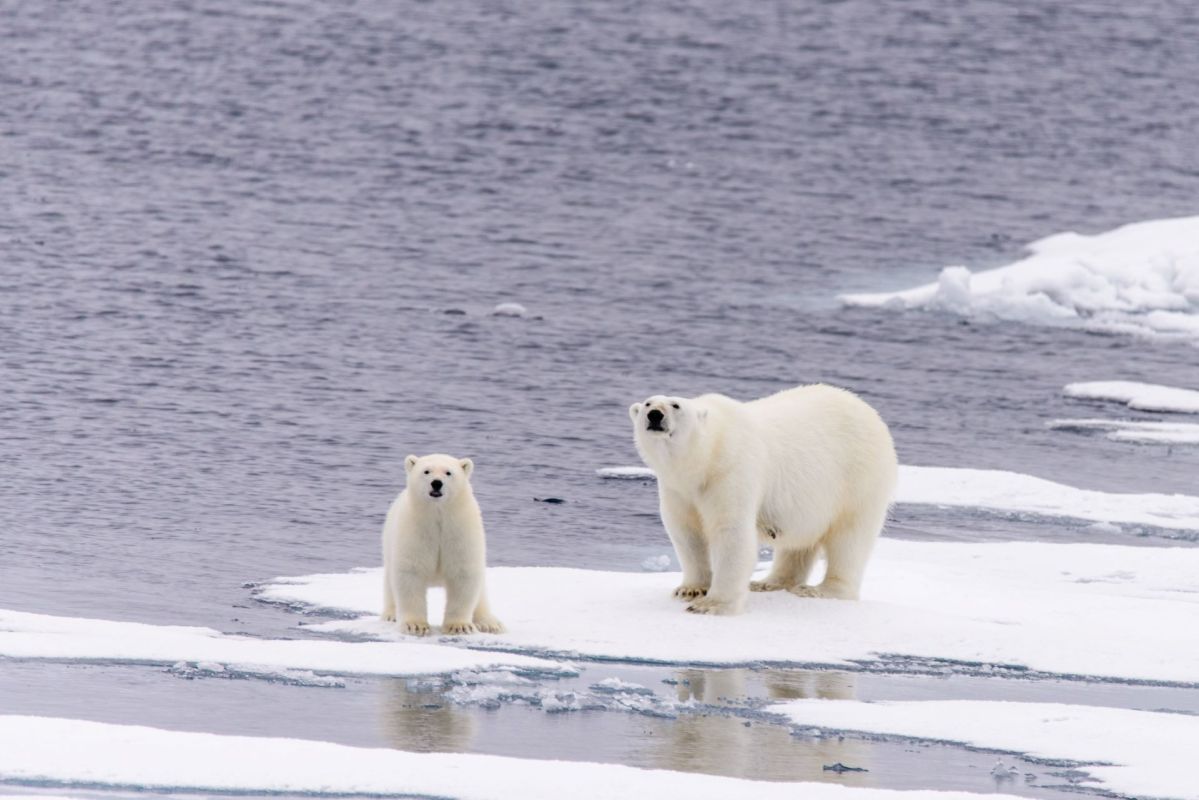
A new study of polar bears in Norway's Svalbard region has left scientists conflicted. While the bears appeared healthier despite rapid sea ice loss from rising global temperatures, researchers warned that these findings aren't good news.
What's happening?
Research published in Scientific Reports analyzed over two decades of data from nearly 800 adult polar bears in the Barents Sea from 1995 to 2019. The team expected to see worsening body condition as sea ice declined, as the area has lost ice faster than most polar bear habitats, according to the National Oceanic and Atmospheric Administration.
Instead, they found that after an initial decline in the late 1990s, the body condition of many bears improved from around 2000 onward.
"I was surprised," Jon Aars, the study's lead author and scientist at the Norwegian Polar Institute, told Vox. "I would have predicted that body condition would decline. We see the opposite."
Aars noted that the bears appeared heavier even as ice-free days increased by 100 days a year during the study period.
Scientists believe the bears may be adapting by shifting their diets. They're relying more on alternative prey such as reindeer, walrus carcasses, more seal species, or coming into closer contact with humans — like one encounter caught on video in Svalbard last year — when traditional hunting conditions deteriorate.
TCD Picks » Quince Spotlight
💡These best-sellers from Quince deliver affordable, sustainable luxury for all




Why is this shift concerning?
While the findings complicate the narrative around polar bears and ice loss, researchers stress that the broader trend remains troubling. Polar bears still depend on sea ice to hunt, travel, and reproduce. Other populations across the Arctic, including Canada's Hudson Bay, have seen sharp declines in survival and more underweight bears as ice disappears.
The concern around ice loss extends beyond these bears. Loss of sea ice accelerates ocean warming, disrupts the base of food systems, and threatens coastal communities that rely on stable Arctic seasons and ecosystems. Other Arctic animals, like multiple kinds of seals and whales, struggle to adapt to rapid ice loss, with population shifts harder to detect.
"Many of those are more at risk than polar bears," Aars told Vox. "There are also changes in Svalbard, in the sea, that are much more profound than what we see on land with polar bears. But people don't see it, or people don't care."
What's being done about this?
The study's authors emphasize the importance of continued monitoring across different regions rather than drawing broad conclusions from a single population of polar bears. They warned that Svalbard's bears may only be temporarily resilient in an unbalanced ecosystem and could face sudden declines if alternative prey populations decline.
TCD Picks » Quince Spotlight
💡These best-sellers from Quince deliver affordable, sustainable luxury for all
Ultimately, protecting Arctic ecosystems requires reducing pollution driving global temperature increases and ice sheet loss, safeguarding endangered habitats, and expanding conservation efforts that support a stable future for all.
|
What's the most you'd pay per month to put solar panels on your roof if there was no down payment?
Click your choice to see results and speak your mind. |
 $200 or more 💰
Get TCD's free newsletters for easy tips to save more, waste less, and make smarter choices — and earn up to $5,000 toward clean upgrades in TCD's exclusive Rewards Club.







