


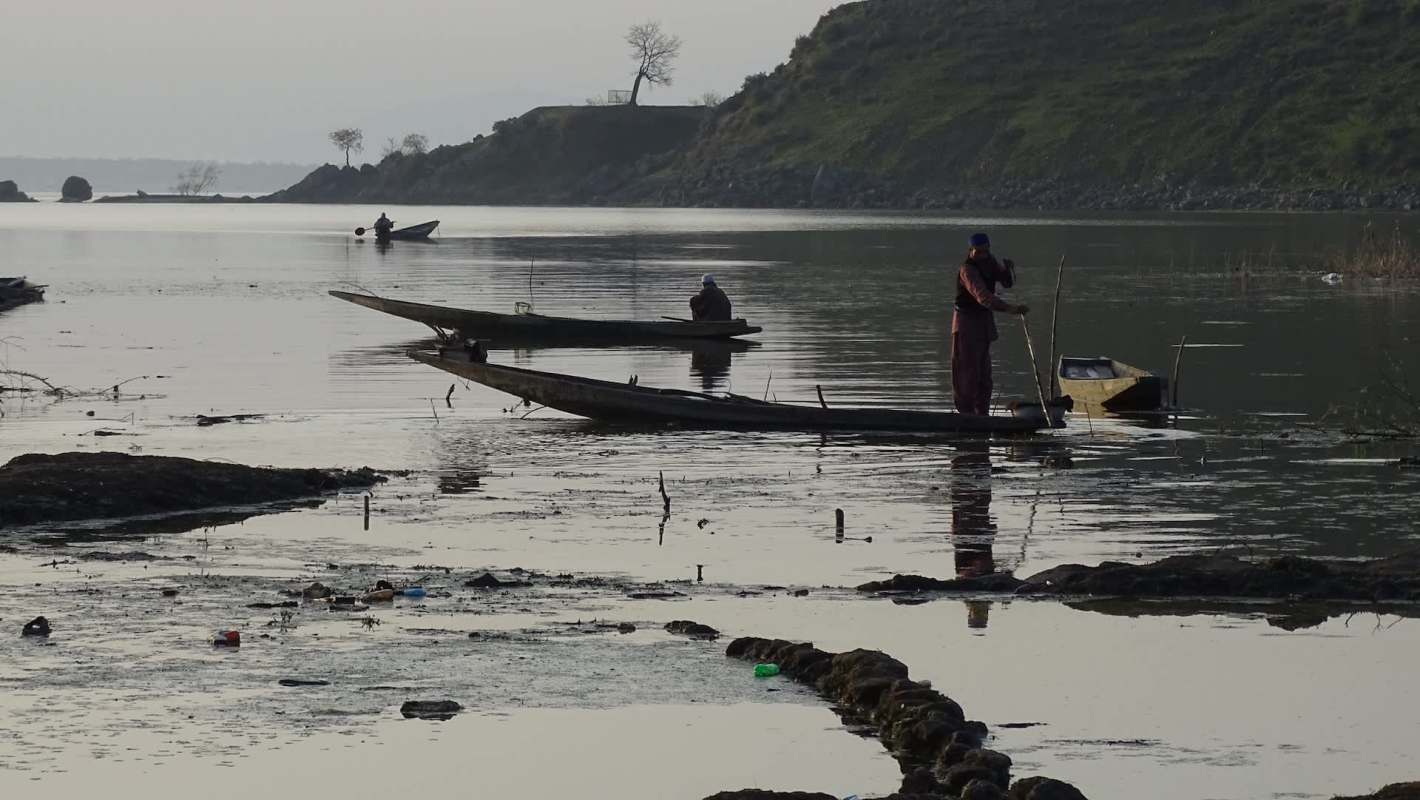
Extreme weather is upending livelihoods around Kashmir's Wular Lake. Farmers who once relied on lotus stems and water chestnuts have been pushed out of cultivation and toward open fishing to survive.
According to Greater Kashmir, repeated flooding and long dry spells wiped out those crops. Dwindling fish catches have left many families with no reliable source of income at all.
What's happening?
Wular Lake, one of Asia's largest freshwater lakes, has been hit by a cycle of intense summer flooding followed by prolonged dry spells. Those swings wiped out two staple crops — lotus stems and water chestnuts — that form the backbone of the local economy.
With fields no longer producing, many farmers turned to fishing to survive. That fallback collapsed too. Pollution, heavy silt buildup, and shrinking water depth have sharply reduced fish populations, leaving nets empty.
"We have never sat idle like this before," explained farmer Mushtaq Ahmad Dar, describing days when fishermen returned home with nothing at all.
At Wular Lake, the damage is visible. Floods drag mud and debris into the water, slowly filling it in. Months later, dry weather leaves less water to dilute pollution, and oxygen levels drop. Fish die off. Crops that need steady water never recover.
TCD Picks » Quince Spotlight
💡These best-sellers from Quince deliver affordable, sustainable luxury for all




Why is this concerning?
Failed harvests mean lost income for farmers. Shrinking fish catches take affordable protein off the table. When those losses pile up, food becomes harder to find and more expensive even for people far from the lake.
This problem goes beyond Wular Lake as well. Farmers in Ohio have already watched dry spells shrink harvests. In Italy, fishermen along the Adriatic Sea say the fish they counted on aren't showing up the same way anymore.
Shoppers usually feel the supply chain disruption later through higher prices.
In Bandipora, which is in Jammu and Kashmir, India, it shows up immediately. No food to sell means no income coming in.
|
What's the most you'd pay per month to put solar panels on your roof if there was no down payment?
Click your choice to see results and speak your mind. |
 $200 or more 💰
 What's being done about it?
Local groups are calling for lake restoration efforts. Potential actions include dredging excess silt, reducing untreated waste flowing into the water, and protecting surrounding wetlands that naturally stabilize water levels.
More broadly, supporting lake restoration, cleaner waterways, and farming practices that can handle unpredictable conditions can help reduce damage when extreme weather hits.
Paying attention to how food systems depend on healthy land and water and backing policies that protect both are crucial. These acts can make the difference between communities adapting and being forced to walk away from their livelihoods.

Get TCD's free newsletters for easy tips to save more, waste less, and make smarter choices — and earn up to $5,000 toward clean upgrades in TCD's exclusive Rewards Club.







