


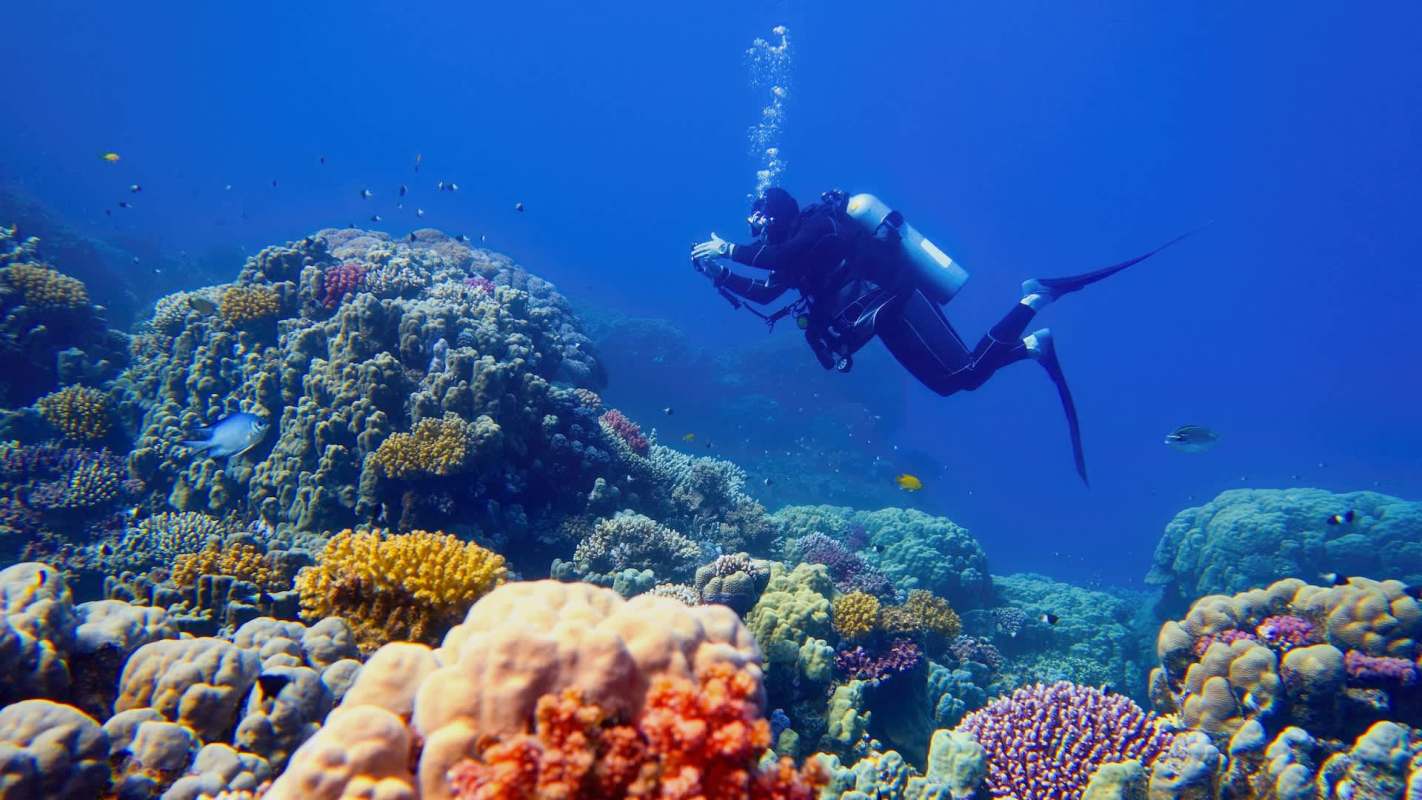
Australian scientists are donning their wetsuits and trying something bold to help one of the world's most iconic natural wonders bounce back.
The Great Barrier Reef stretches across roughly 13,000 square miles off Australia's coast, supporting marine life, local jobs, and entire coastal communities.
After record-breaking coral bleaching in 2024 damaged large portions of the reef, researchers decided that watching and waiting wasn't an option.
According to Vox, that urgency led Australia to launch the Reef Restoration and Adaptation Program — an ambitious effort designed to help corals recover by boosting their natural reproduction.
During annual spawning events, scientists collect coral eggs and sperm, fertilize them, and raise baby corals in protected environments. Once they are strong enough, those young corals are returned to damaged reef areas, where they can help rebuild living coral cover.
The approach is already showing promise. In a single season, RRAP produced tens of millions of coral embryos, with plans to add millions of one-year-old corals to the reef each year.
TCD Picks » Quince Spotlight
💡These best-sellers from Quince deliver affordable, sustainable luxury for all




Some of these corals are selected for greater heat tolerance, giving the reef a better chance of surviving warmer waters.
"All of those scientists are genuinely doing everything they can," said Yolanda Waters, founder and CEO of Divers for Climate, a non-profit network of scuba divers involved in reef advocacy. "If we can do better, why wouldn't we?"
Projects like this don't just benefit sea life. The reef supports tourism, fisheries, and coastal protection for nearby communities. When coral systems weaken, people feel it — economically and culturally.
That's why large-scale restoration efforts are increasingly paired with land-based solutions, like reducing sediment runoff from rivers, similar to work being done upstream in Queensland to protect reef waters.
|
What's the most you'd pay per month to put solar panels on your roof if there was no down payment?
Click your choice to see results and speak your mind. |
 $200 or more 💰
 The coral restoration work is also backed by broader national efforts, with the Australian government committing long-term funding to protect reef ecosystems and the communities that depend on them.
"The hopeful part is if we can take action now to help the system adapt to the changing environment," said Mia Hoogenboom, a coral reef ecologist at James Cook University who works with RRAP. "Then we've got a good chance of keeping the resilience in the system."
For scientists, divers, and coastal communities alike, that resilience could make all the difference — proof that helping nature recover isn't wishful thinking, but a choice.

Get TCD's free newsletters for easy tips to save more, waste less, and make smarter choices — and earn up to $5,000 toward clean upgrades in TCD's exclusive Rewards Club.







