


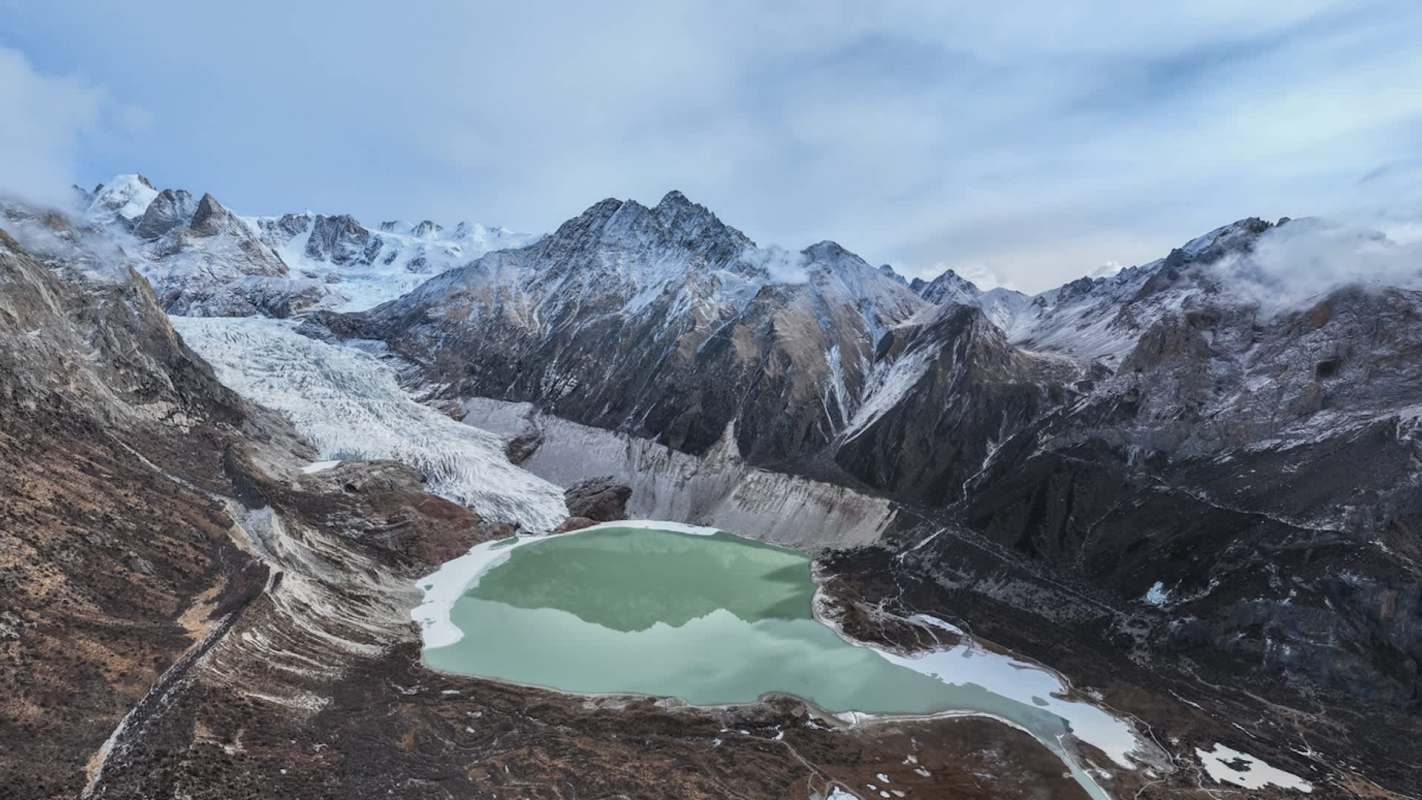
Scientists are warning that Himalayan glacial lakes are becoming a growing threat to communities downstream as "too little snow and too much rain" destabilize the region's terrain.
What's happening?
Thulagi Glacial Lake, at the base of the retreating Thulagi Glacier near Mount Manaslu in Nepal, has expanded over the past few decades as surrounding ice melted, the Nepali Times reported.
Once a small pool in the 1960s, the lake is now more than 1 square kilometer (nearly 250 acres) and holds close to 10 billion gallons of water.
Scientists have classified Thulagi as one of the most dangerous glacial lakes in the Himalayas, among 47 others on an ICIMOD watchlist. They fear a glacial lake outburst flood (GLOF), a sudden release of water triggered by landslides, ice collapse, or weakening natural dams.
"The lake will burst sooner or later," local guide Chandra Bahadur Gurung told the Nepali Times.
A 2018 study followed the evolution of three glacial lakes, including Thulagi, finding that a GLOF from Thulagi posed a risk to communities and four hydropower projects downstream.
TCD Picks » Quince Spotlight
💡These best-sellers from Quince deliver affordable, sustainable luxury for all




Why is this concerning?
Rising global temperatures — driven by the production and use of oil, gas, and coal — are raising the risks of melting and devastating GLOFs.
Modeling showed that if Thulagi were to burst, floodwaters could reach downstream towns within hours, with surges over 40 feet in some locations. Entire villages could be wiped out, roads and bridges destroyed, and rivers permanently rerouted.
Residents in Nepal's Manang district still carry trauma from flooding in 2021, when heavy rainfall led to surging water in the Marsyangdi River.
"I did not know if I would live or die," one hotel owner recalled after watching water tear through his village.
|
What's the most you'd pay per month to put solar panels on your roof if there was no down payment?
Click your choice to see results and speak your mind. |
 $200 or more 💰
 "The Marsyangdi flows through my house now," said Kamarkali Gurung. "I can never go back."
Extreme weather events like these destroy and disrupt livelihoods, tourism, agriculture, and energy production for vulnerable communities.
Extreme rainfall in the region has already devastated farms in Nepal and doubled food prices for families, and past GLOFs have washed away homes and healthcare clinics and taken lives.
Beyond immediate destruction, flooding can contaminate drinking water, spread disease, and destabilize ecosystems that communities depend on for fishing and farming.
What's being done about it?
It wasn't until the 2021 floods that early warning systems were installed on the banks of the Marsyangdi River and nearby towns.
However, there is currently little preparation beyond that, and no warning systems cover Thulagi.
Last year, the Green Climate Fund approved a $36.1 million grant to help reduce the risk of GLOFs by reducing water levels in four glacial lakes, including Thulagi, under the United Nations Development Program.
Globally, scientists stress that protecting vulnerable communities requires coordinated multinational efforts to slow ice loss, invest in resilient infrastructure, transition to clean energy, and plan relocations only when necessary.

Get TCD's free newsletters for easy tips to save more, waste less, and make smarter choices — and earn up to $5,000 toward clean upgrades in TCD's exclusive Rewards Club.







