


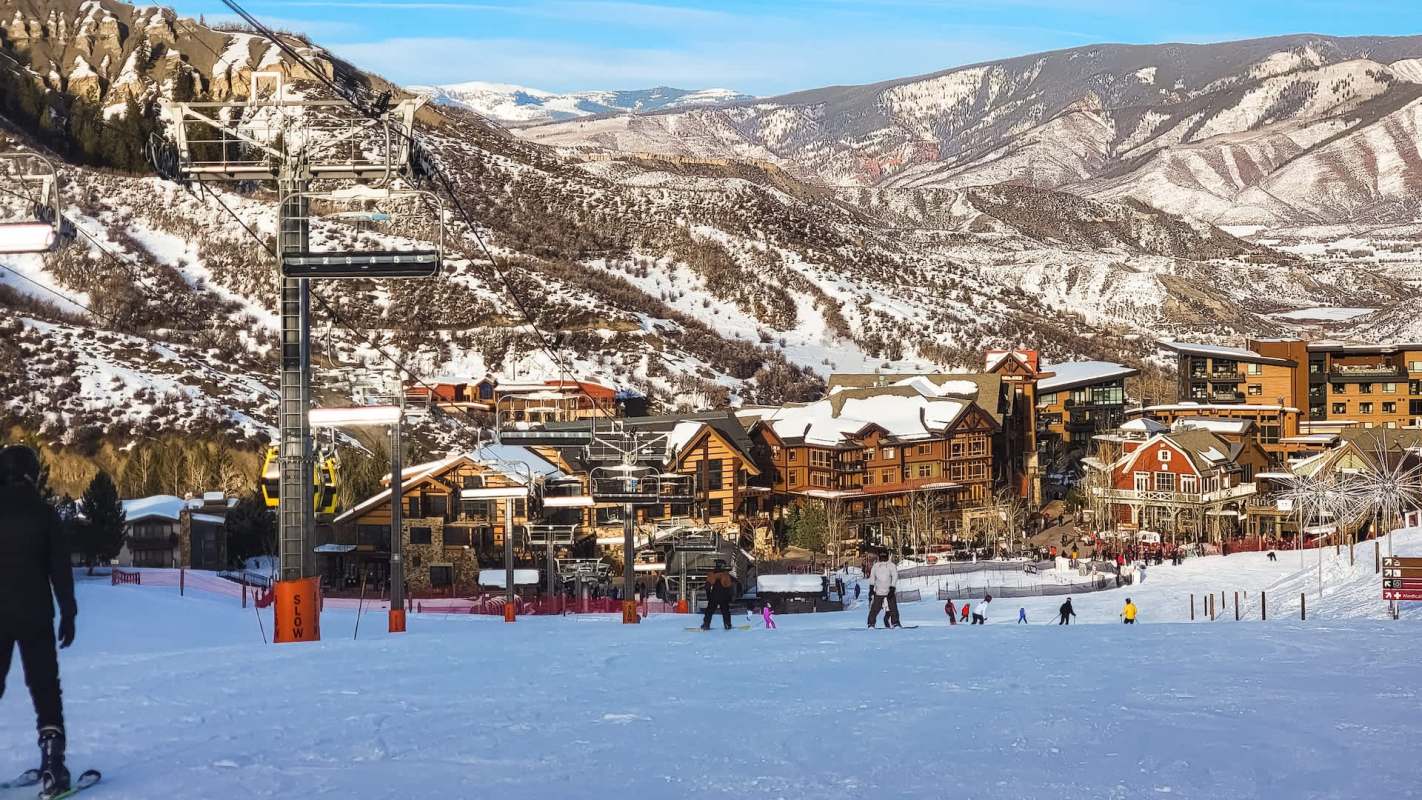
Ski resorts across the Western United States are struggling through one of their most difficult winters in decades.
According to Bloomberg, operators in Colorado and Utah are increasingly turning to cloud-seeding drones and generators to coax snow from stubbornly dry skies. Scientists say the urgency is a representation of a more difficult "winter economy."
What's happening?
Ski resorts and state agencies in Colorado, Utah, and Idaho are spending millions on cloud seeding to increase snowfall.
Bloomberg reported that the tech releases silver iodide particles into cold, wet clouds to encourage snow formation. Winter Park Resort in Colorado relied heavily on cloud seeding during the holiday season, with a contractor operating generator upwind of the slopes. Doug Laraby, a longtime Winter Park executive, told Bloomberg that one seeded storm delivered snow worth roughly $1 million to the resort.
States are also expanding their programs.
According to Bloomberg on Jan. 31, Utah committed at least $5 million a year to cloud seeding and an additional $12 million to upgrade a fleet of 200 machines as officials try to boost snowpack and refill shrinking reservoirs.
TCD Picks » Quince Spotlight
💡These best-sellers from Quince deliver affordable, sustainable luxury for all




Why are snow droughts concerning?
Snow droughts are concerning because they threaten livelihoods.
According to the New York Times, scientists say warming temperatures are causing more winter precipitation to fall as rain instead of snow, reducing mountain snowpack that communities rely on for water. The Times reported that snow droughts strain agriculture, hydropower, and local economies.
"I understand why people are buying it, because they're so desperate," Katja Friedrich, an atmospheric science professor at the University of Colorado, said to Bloomberg. "But if you ask me, there's no scientific proof [that it produces a meaningful amount of water]."
The economic fallout is already visible. Ski communities around the world are facing closures, mounting debt, and job losses as snow becomes less reliable. Plus, prolonged snow shortages can hollow out mountain towns that depend on winter tourism.
|
What's the most you'd pay per month to put solar panels on your roof if there was no down payment?
Click your choice to see results and speak your mind. |
 $200 or more 💰
 What's being done about the drought?
Cloud seeding is one of several stopgaps, or temporary, measures.
According to Bloomberg, some resorts are also investing in snowmaking machines, though experts say snowmaking uses more water than it produces. State officials told Bloomberg they view cloud seeding as cheaper and less water-intensive, even as scientists continue to study its limits.
Long-term solutions should focus on resilience. Communities facing wintry droughts are exploring diversified economies and new strategies, like relocating or expanding ski areas, to reduce risks. The key, according to various environmentalists, is addressing the underlying drivers of snow drought and that requires cutting heat-trapping pollution and planning for the future.
If you want to learn more about how you can help both the planet and these communities, a great first step is exploring critical climate issues to get a better understanding about how our industries are directly connected to those issues.

Get TCD's free newsletters for easy tips to save more, waste less, and make smarter choices — and earn up to $5,000 toward clean upgrades in TCD's exclusive Rewards Club.







