


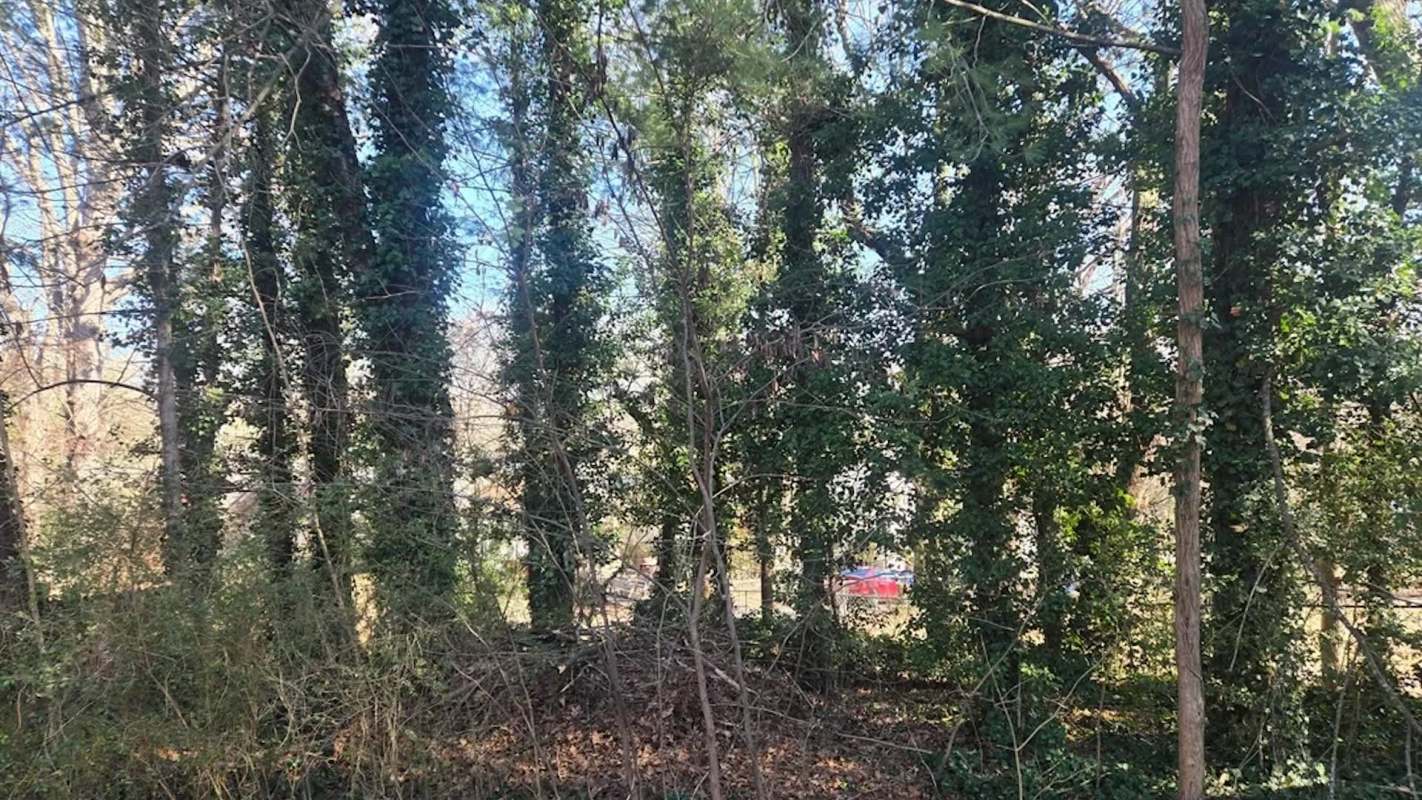
A homeowner in North Carolina got a crash course in invasive plants after inheriting a property in Asheville. They shared photos of their backyard, which was filled with ivy-covered trees, and asked for advice.
The post, in Reddit's r/arborists community, showed trees overtaken by thick ivy. The homeowner explained that while they didn't mind the look, two trees were dead. They wrote that learning more about the plant made them realize it could be harming the landscape.
"I'm thinking about cutting the vines on the hardwood trees and letting it stay on the pines (because I don't really like pines)," they wrote.
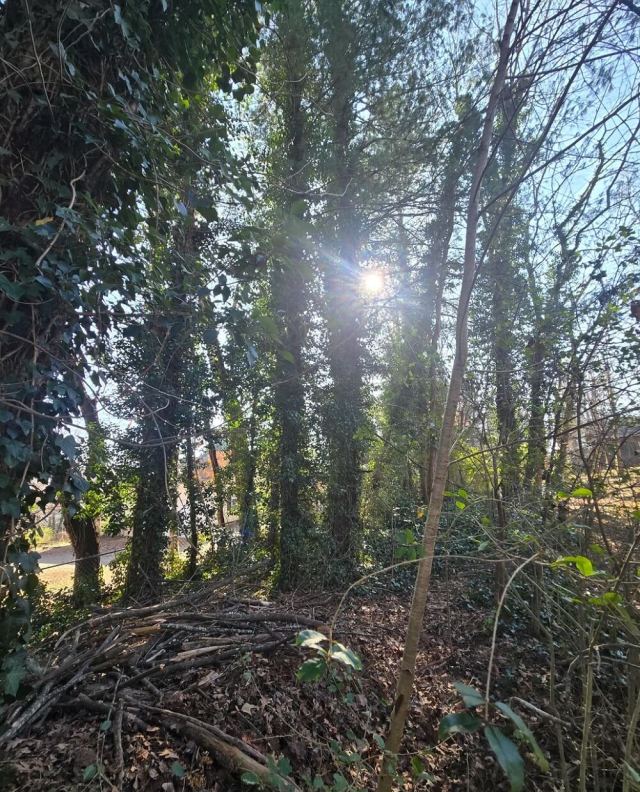
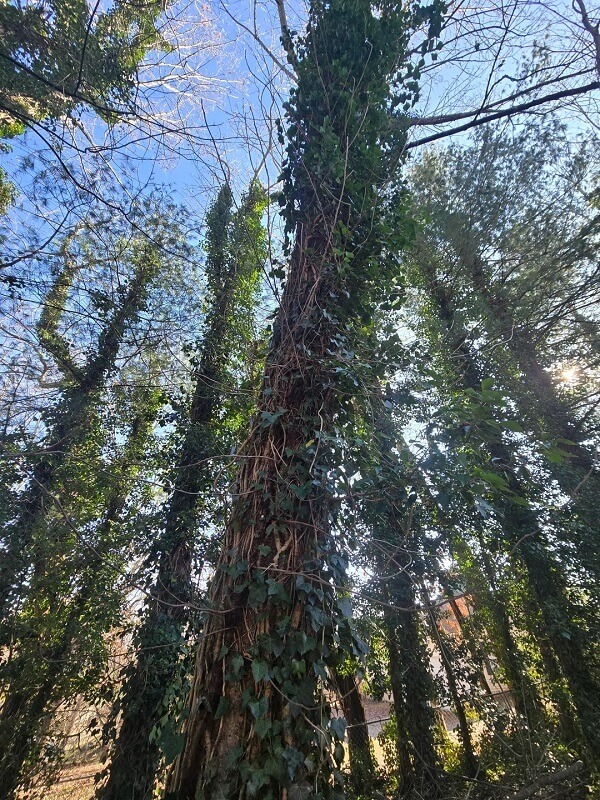
Commenters warned that ivy, particularly English ivy, can be a nightmare to get rid of once it runs rampant. While it isn't necessarily harmful to a tree at the start, it grows aggressively and can become invasive, causing problems for tree health and outcompeting native plants that insects, birds, and other pollinators depend on. When those species disappear, the effects ripple outward.
Once ivy begins growing into the crown and overtaking tree branches, it can harm its host by competing for sunlight and resources, adding excess weight, and introducing bacterial leaf scorch to certain species. Over time, the stress can weaken trees and even cause them to topple during storms.
Removing invasive species such as ivy and planting natives supports a healthier yard. Landscaping with native species, which have adapted to local climates, saves money and time by reducing the need for fertilizers, pesticides, and watering. Native plants also support biodiversity and pollinators that are essential to food security.
TCD Picks » Quince Spotlight
💡These best-sellers from Quince deliver affordable, sustainable luxury for all




Rewilding your yard with low-maintenance alternatives including clover, buffalo grass, and xeriscaping can lower your bills while creating healthier outdoor spaces. Even replacing a portion of a traditional lawn offers benefits.
That said, you shouldn't remove ivy by ripping it off a tree. Instead, commenters suggested how to stop its spread without harm. "Go around the base and clip about 6-inch sections of the ivy all the way around. Let the ivy die naturally and rot away," one wrote.
Users agreed that the homeowner shouldn't pick and choose.
"Don't purposely leave any of it. My yard is overrun by this stuff," someone said. A third person added: "Leaving any of it can have an effect far beyond your property as the seeds will be spread. This plant is so damaging to our ecosystems that there's basically a moral imperative to remove it."
|
What's the most you'd pay per month to put solar panels on your roof if there was no down payment?
Click your choice to see results and speak your mind. |
 $200 or more 💰
Get TCD's free newsletters for easy tips to save more, waste less, and make smarter choices — and earn up to $5,000 toward clean upgrades in TCD's exclusive Rewards Club.






