


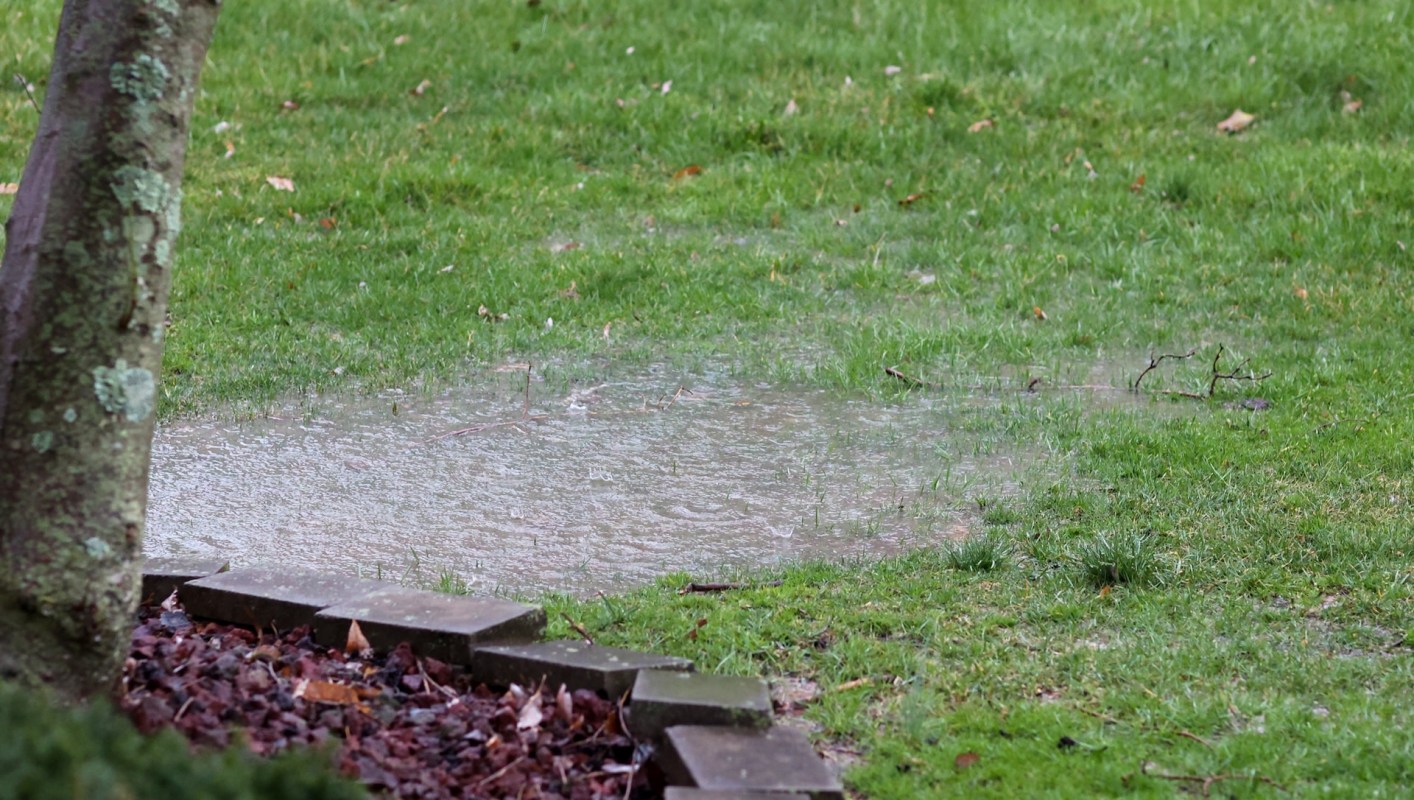
From flooding to hurricanes, extreme weather events have had devastating impacts worldwide — but that doesn't mean you're helpless. According to landscape horticulturalist Ross Cameron, your best defense is your backyard.
In an article for The Conversation, Cameron argued that the best way to reduce flood risks is to line driveways with plants.
Cameron wrote that gardens "trap and slow rainwater in the first place — acting as a brake on flash flooding and allowing rainwater to find its natural path to the soil water table and flow into our rivers."
In fact, Cameron noted that green areas only have 10% run-off from heavy rainfall compared to the average 55% in more heavily developed urban areas.
The benefits are twofold. Green spaces, like home gardens, are integral to any city. Plants release water as vapor, Cameron explained, acting as a natural "air conditioner" in the summer.
Unfortunately, gardens and green spaces are being paved over. Citing a 2025 report from the U.K. Royal Horticultural Society, Cameron wrote that more U.K. front gardens are paved over than ever before. In 1991, it was 46%. Now, it's 54%.
TCD Picks » Quince Spotlight
💡These best-sellers from Quince deliver affordable, sustainable luxury for all




Cameron theorizes that the uptick in paving can be chalked up to easier cleaning and parking. However, this creates more problems in the long run — at least one in six U.K. residents lives with flood risk.
Cameron suggested multiple methods to help both cars and plants coexist.
"Permeable lattice-framed blocks that support the weight of the car can be used to create driveways," he said. "These allow plants to grow through the gaps."
He also suggested using a gravel pathway instead of a paved one, which would allow plants to grow on the edges.
|
Would you be willing to let your yard grow wild? Click your choice to see results and speak your mind. |
 I already have 😎
 Choosing the right plants also yields multiple benefits. Native plants — that is, plants adapted to your specific region — require less water and upkeep than your standard, run-of-the-mill grass. You'll spend less on your water bill and on fertilizer.
Native grasses, like the U.K.'s cocksfoot grass, are especially known for their deep roots, making them uniquely equipped to handle flooding and prevent erosion.
As Cameron wrote, "Gardens are one of the best defenses to stop domestic properties from flooding."

Get TCD's free newsletters for easy tips to save more, waste less, and make smarter choices — and earn up to $5,000 toward clean upgrades in TCD's exclusive Rewards Club.






