


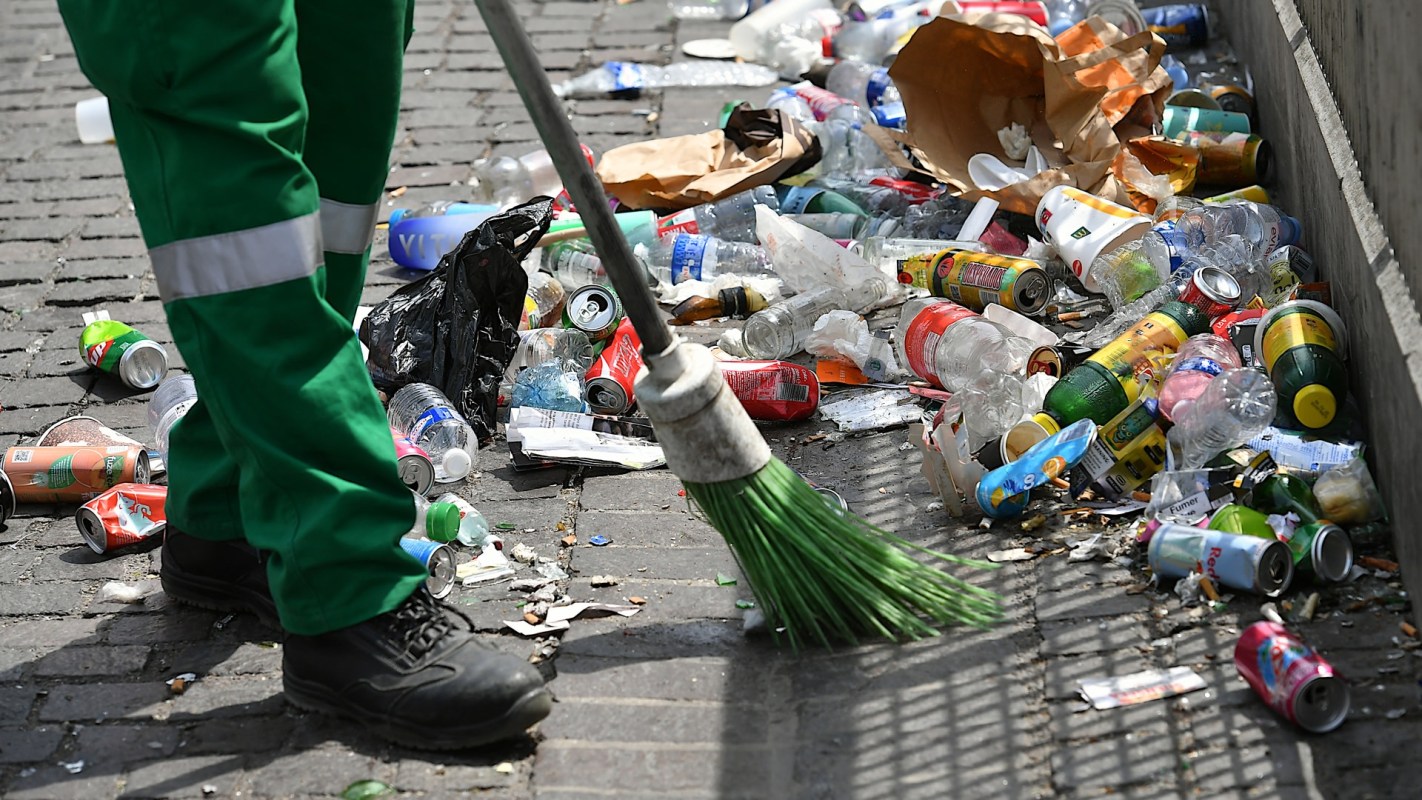
Plastic food packaging often ends up trashed soon after it's made, contributing to a pollution problem that's overrunning our natural resources.
A team of scientists has an idea about how to convert polystyrene, a popular form of the material, into another useful product, according to an abstract published in the journal Nature Nanotechnology.
"We believe that this … strategy offers a promising route for upcycling waste plastics," Tsinghua University researcher Zedong Zhang said, per Phys.org.
Tsinghua's team in China collaborated with an international group of experts on the project.
It all starts at the molecular level.
Polystyrene is heated in hydrogen and broken down into "small vapor molecules" using hydropyrolysis to make the chemical toluene, which can be used in "industrial and manufacturing settings," Phys.org noted.
TCD Picks » Quince Spotlight
💡These best-sellers from Quince deliver affordable, sustainable luxury for all




After heating, the vapor moves into the second part of the single reactor, meeting a catalyst and hydrogen gas and going through hydrogenolysis. In short, hydrogen breaks chemical bonds in the vapor, reforming it into toluene.
The process reuses common plastics and affordably reduces air pollution from toluene production by 53% compared to fossil fuel-based methods.
Temperatures during the two-stage process reach up to nearly 900 degrees Fahrenheit. The toluene yield was 83.5% during testing.
"The main objective of this study was to demonstrate that single-atom catalysts can overcome the traditional yield–selectivity trade-off and offer new routes for plastic upcycling," Zhang told the publication.
|
Do you think America has a plastic waste problem? Click your choice to see results and speak your mind. |
 Definitely 👍
 It's part of research happening all over the world to understand how plastics break down at the molecular level. Most of it takes centuries to degrade, leaving behind harmful microplastics.
The particles are leaching into our world, including our bodies. Experts at Stanford Medicine are concerned about inflammation and organ damage linked to the tiny particles.
Unfortunately, plastic recycling rates are a paltry 9%. Chemical & Engineering News attributed the low rate to "hard times" for recycling companies and regulations requiring the use of reused plastics.
While companies such as Coca-Cola continue to move toward using more sustainable materials, C&EN reported that many companies fall short of their plastic-reduction goals for a variety of reasons, leading to "walked back" targets and "extended deadlines."
Part of the problem is that new plastics are cheaper than recycled material, the story added.
Avoiding plastic use altogether might be the best way to prevent its harmful impact. Simple everyday actions make a big difference, often giving you a better experience while saving money.
Brewing your own coffee instead of using single-use pods is a great place to start. Ditching throwaway grocery bags is another easy win. Cloth totes will provide a better experience without troublesome breaks.
TerraCycle is a handy resource that can help you find ways to recycle even the toughest products that you can't avoid.
In the meantime, Zhang's team intends to continue testing and perfecting its process.
"We aim to further explore scalable tandem fixed-bed reactor designs to support longer operation times and higher plastic throughput," the expert said, per Phys.org.

Get TCD's free newsletters for easy tips to save more, waste less, and make smarter choices — and earn up to $5,000 toward clean upgrades in TCD's exclusive Rewards Club.







