


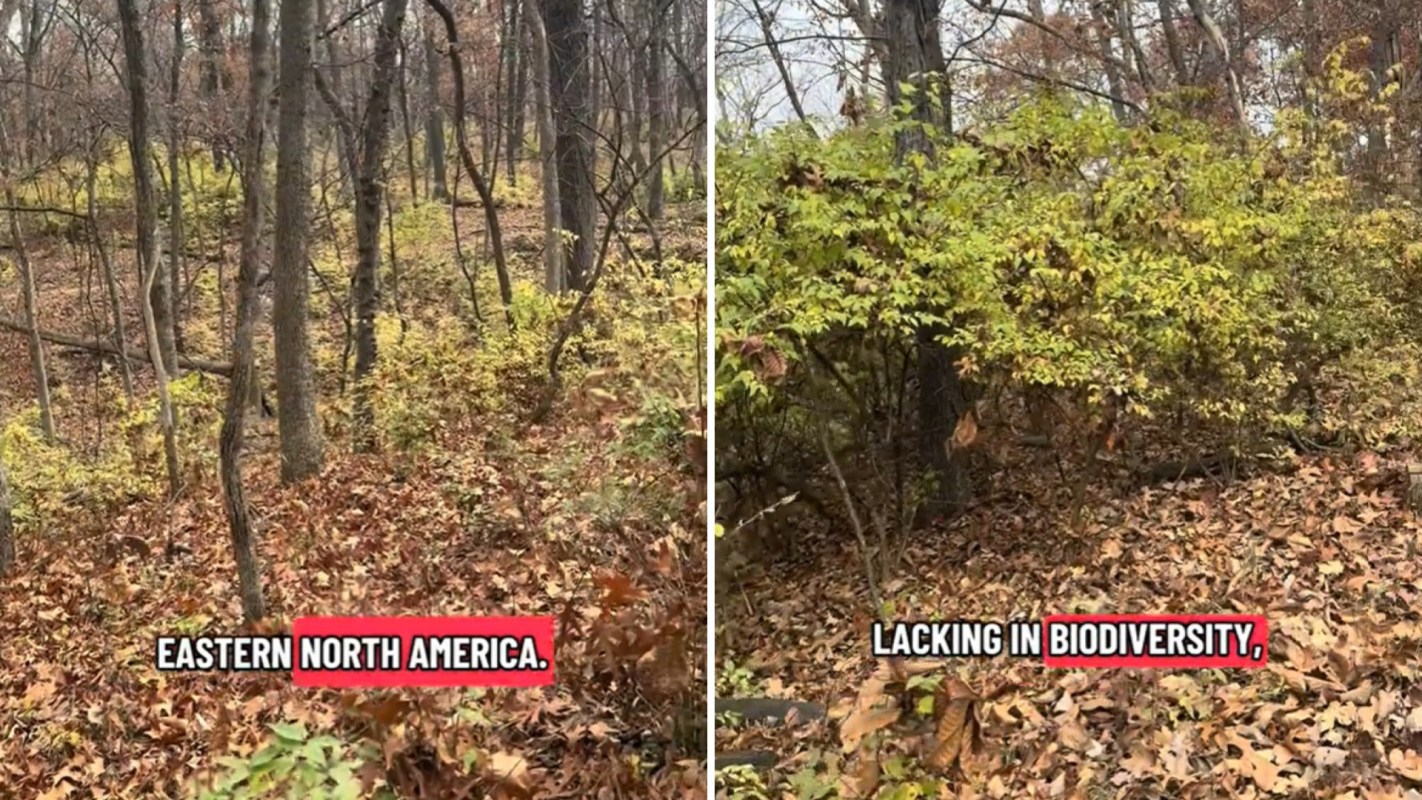
As leaves turn red, orange, and brown in the cold, a few misplaced patches of green identify the areas where one invasive plant is winning against local native foliage.
TikTok mom Leah (@ambiguousheadscarf) identified the problem — which one commenter called "my nemesis" — in a recent video.
@ambiguousheadscarf A meandering trail took us through very different parts of the same forest, and it was a stark reminder of why invasive species control is so important! One area was full of river oats, asters and goldenrods and the other was a sea of green.
♬ original sound - Leah 🌱✨
"Fall is the easiest time of year to identify the most prevalent invasive species in my neck of the woods — which might also be the most prevalent invasive species in your neck of the woods, especially if you live in Eastern North America," she explains. "And I'll give you a hint: It's everything green in this video. This is the Japanese Amur honeysuckle, also known as bush honeysuckle, that is currently taking over our forests except where it is controlled."
With this information, the footage at the beginning of her video is quite depressing. Thick green bushes fill much of the understory along both sides of the path where she is walking, obscuring the view between the trees.
However, there is a solution, as she demonstrates with her next clip.
"This is an excellent example of what our forests could look like with just a little bit of help," she says, showing a different section of forest. Without the thick bushes to block out sunlight, a variety of other plants shows through on the forest floor: river oats, asters, and goldenrods, according to the video description. "When we remove the invasive species from our ecosystems, we make room for our native species to grow and thrive here as they were intended to," she says.
TCD Picks » Quince Spotlight
💡These best-sellers from Quince deliver affordable, sustainable luxury for all




There are major benefits to promoting native species. They are healthy for soil and local wildlife; they help maintain a beautiful and balanced environment that will thrive for generations to come; and they also support local tourism, recreation, and sometimes even food production.
"Hands-off land management is just simply not an option unless we want all of our forests to end up looking like this: overrun with invasive species and completely lacking in biodiversity, affecting the entire food web, including us," Leah says.
|
What's the most you'd pay per month to put solar panels on your roof if there was no down payment?
Click your choice to see results and speak your mind. |
 $200 or more 💰
Get TCD's free newsletters for easy tips to save more, waste less, and make smarter choices — and earn up to $5,000 toward clean upgrades in TCD's exclusive Rewards Club.







