


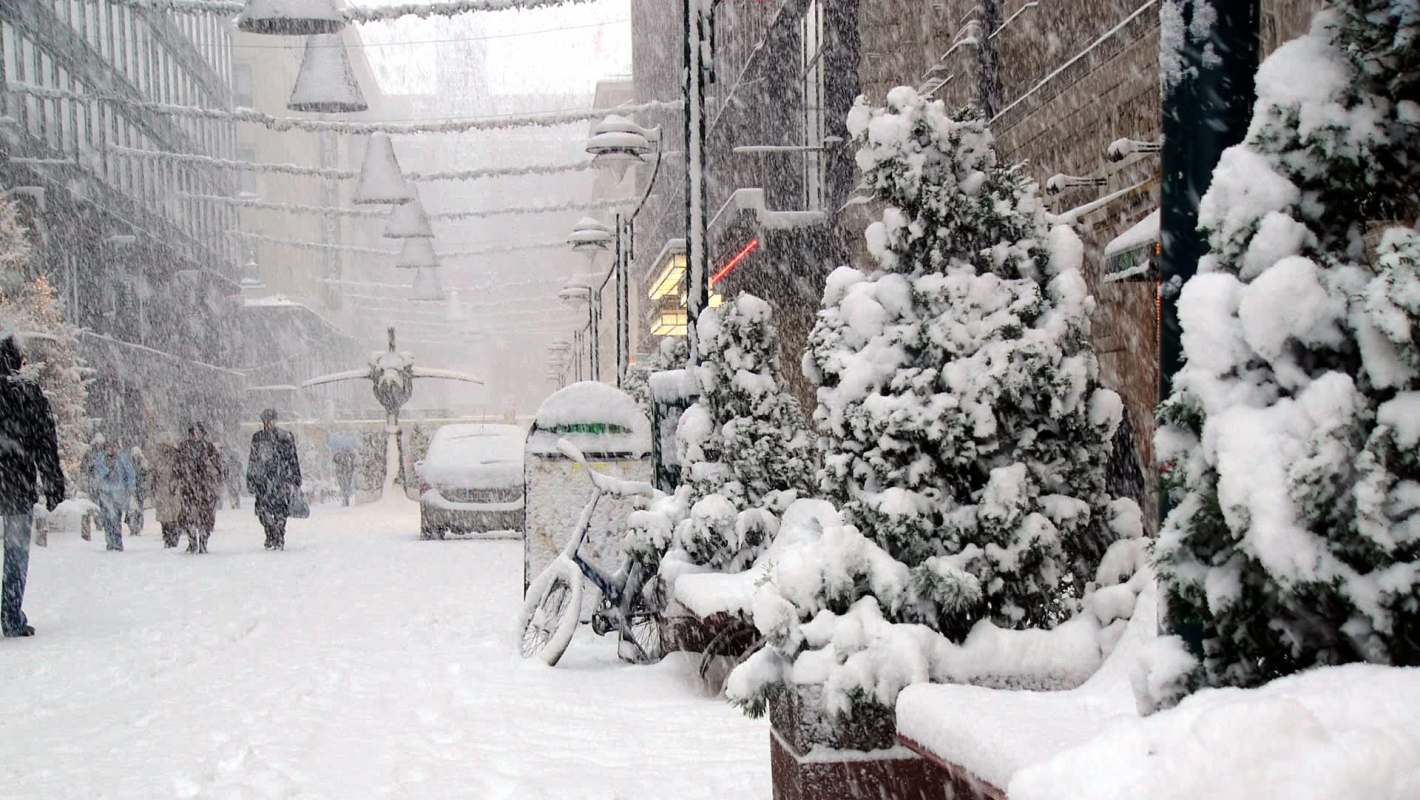
It will be frigid in Finland this week. Cold warnings have been issued for large portions of the country through Thursday. The cold forced the cancellation of flights at an airport in northern Finland that stranded thousands of tourists on Sunday.
Kittilä Airport is particularly busy this time of the year because the region it serves is popular with skiers. At one point, a leading ski resort reported that it had stopped running its chairlifts and gondolas because temperatures had dipped into the negative 30s Celsius (-22 F to -39.9 Fahrenheit).
This week's deep freeze in Finland is part of a weather pattern that has brought nasty winter weather, including heavy snowfall in spots, in parts of Europe.
Residents of Finland are certainly familiar with frigid weather. But the kind of cold the country is enduring this week is harsher than usual. The severe cold has even impacted the ability to de-ice aircraft.
The Finnish Meteorological Institute (FMI) forecasted temperatures dipping to nearly -40 Celsius on Monday in the town of Kittilä, located in northern Finland, per the Associated Press. That is the one temperature at which Fahrenheit is the same number as Celsius, at -40 Fahrenheit.
"At -40C, it's so cold Celsius and Fahrenheit stop disagreeing with each other," commented a Reddit user. "It's simply too cold."
TCD Picks » Quince Spotlight
💡These best-sellers from Quince deliver affordable, sustainable luxury for all




While cold weather is now making headlines in Europe, the latest global climate report highlighted warmer-than-average temperatures across the continent.
Europe had its second-warmest November on record, nearly four degrees Fahrenheit above average. It was also only around a third of a degree colder than the 2015 record, according to the National Centers for Environmental Information.
Many of Finland's weather stations experienced their second-warmest autumn on record, according to the FMI. Through November, Europe experienced its third-warmest year-to-date period on record.
It was the second-warmest January-November for the planet since global records began 175 years ago. The NCEI November global climate report calculated a 99.9% chance that 2025 will go down in the record books as one of the five warmest years on record. There's a "95% confidence interval of a second to third warmest year on record" for Earth.
|
How cold does it get where you live? Click your choice to see results and speak your mind. |
 Well below zero 🥶
 For the first time, a three-year temperature average has crossed a significant threshold set by a landmark treaty a decade ago. The temperature increase was driven in part by 2025's warm conditions and has prompted scientific concern.
Climate scientists point out that cold snaps, even severe ones like Finland is experiencing, can occur in a warming world. Our overheating planet is warming fastest in the Arctic, which can disrupt the jet stream and make it more wobbly. The jet stream can then ameander and plunge further south, carrying bitter-cold blasts of air to lower latitudes.
Scientists recently found that "Arctic amplification" has altered latitudinal temperature gradients (LTG), which are directly connected to the length of European summers. A reduction in LTG of just 1 degree Celsius would mean an additional 42 days of summer weather in Europe by the end of the century.
"For years, casual observers and anti-science pundits have pointed to snowfall and cold weather to question the scientific reality of human-induced climate change," noted the Union of Concerned Scientists. Such cherry-picked misinformation obscures the work scientists are doing to figure out just how climate change is affecting weather patterns year-round."

Get TCD's free newsletters for easy tips to save more, waste less, and make smarter choices — and earn up to $5,000 toward clean upgrades in TCD's exclusive Rewards Club.







