


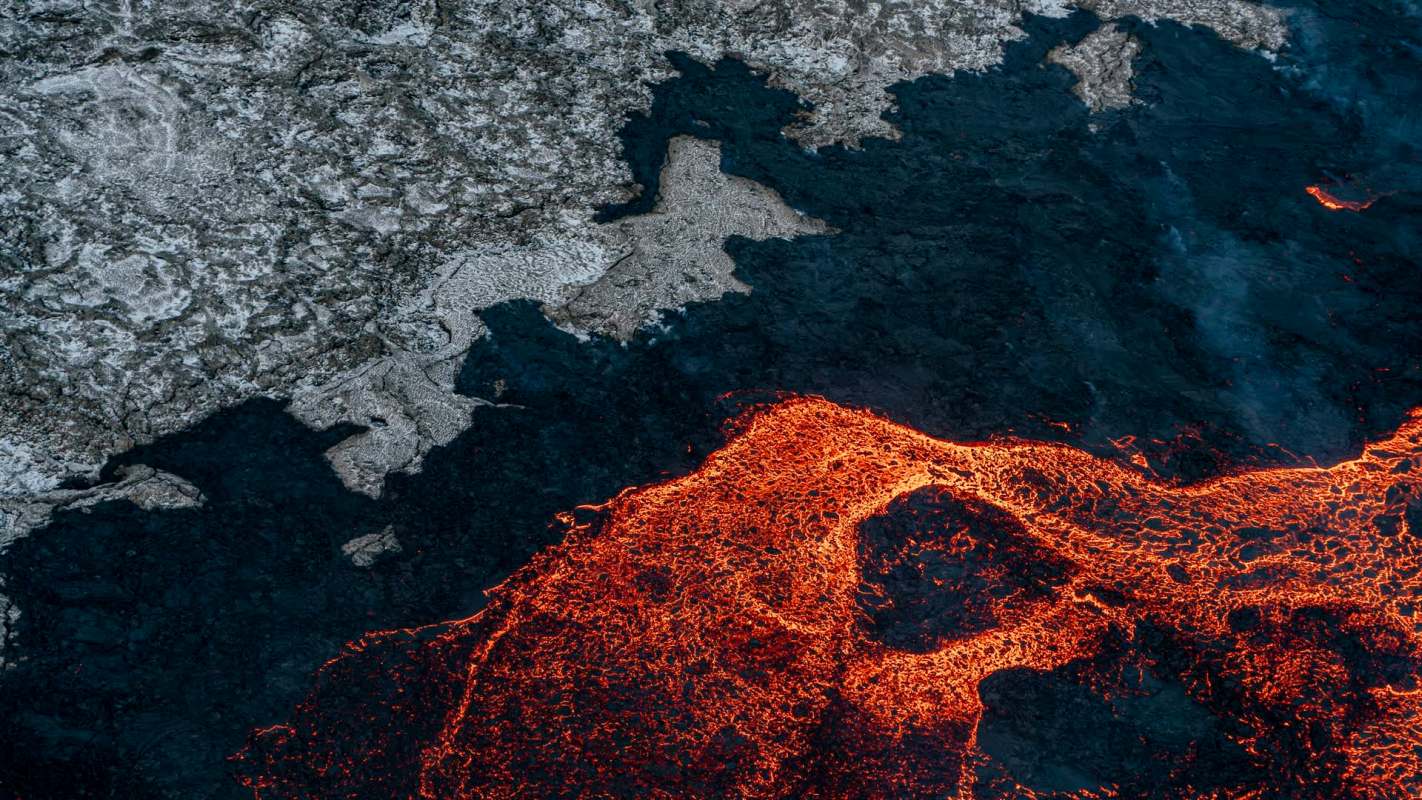
While the first thing you may think of with melting glaciers is rising sea levels, there's another hidden consequence: volcanoes. According to a 2020 study cited by CNN, there are about 245 volcanoes that are completely or partly covered in ice.
What's happening?
The ice puts pressure on the ground, preventing the volcano from producing as much magma. However, when the ice starts to melt, it releases pressure, allowing the ground to expand and more magma to be produced.
According to CNN, "Iceland's giant 'ice volcanoes' may be awakening after a decade of slumber." This happened after a series of earthquakes last January and again afterward.
These earthquakes are a sign of magma flowing under the Bardarbunga volcano, located under the Vatnajökull ice cap.
The caldera, or indentation, of the volcano spans 25 square miles and is full of ice. When this ice meets lava, it can be dangerous.
"When it last awoke in 2014, Bardarbunga produced Iceland's biggest eruption in more than 200 years, spewing out fountains of lava hundreds of feet high," per CNN.
TCD Picks » Quince Spotlight
💡These best-sellers from Quince deliver affordable, sustainable luxury for all




Scientists are still trying to understand the connection between the effects of a warming planet and ice volcanoes.
During the Ice Age, Iceland was covered in ice, but over a few thousand years, the ice vanished, and volcanic activity increased "30- to 50-fold," according to Michelle Parks, the Icelandic Meteorological Office volcano deformation monitoring coordinator, per CNN. This activity lasted about 1,500 years.
Parks and other scientists are trying to see if this will happen again.
Why are ice volcanoes concerning?
Ice volcanoes can also be found in Alaska, British Columbia, California, Russia's Kamchatka Peninsula, South America's west coast, and Antarctica, so it's an issue that would affect many people.
|
Should we bury dangerous air pollution deep within the ocean? Click your choice to see results and speak your mind. |
 Sure thing 👍
 According to geosciences professor Ben Edwards, "around 160 million people live within 60 miles of an ice-covered volcano, and roughly 200,000 live within 3 miles," per CNN.
What's being done about understanding ice volcanoes?
While scientists are studying volcanoes in Iceland, they are also looking at them in the Chilean Andes. The geology is different there because the tectonic plates are pushing the ice downward. These volcanoes are also closer to people.
University of Wisconsin, Madison, researcher Pablo Moreno-Yaeger is one of the scientists studying these volcanoes. He was able to decipher the dates of past eruptions from crystals.
While the ice can stop the magma from exploding, it's unclear how long it can withstand the pressure as planet-warming pollution melts the ice.
Moreno-Yaeger said, per CNN: "When we talk about climate change, we are always talking about chaos."

Get TCD's free newsletters for easy tips to save more, waste less, and make smarter choices — and earn up to $5,000 toward clean upgrades in TCD's exclusive Rewards Club.







