


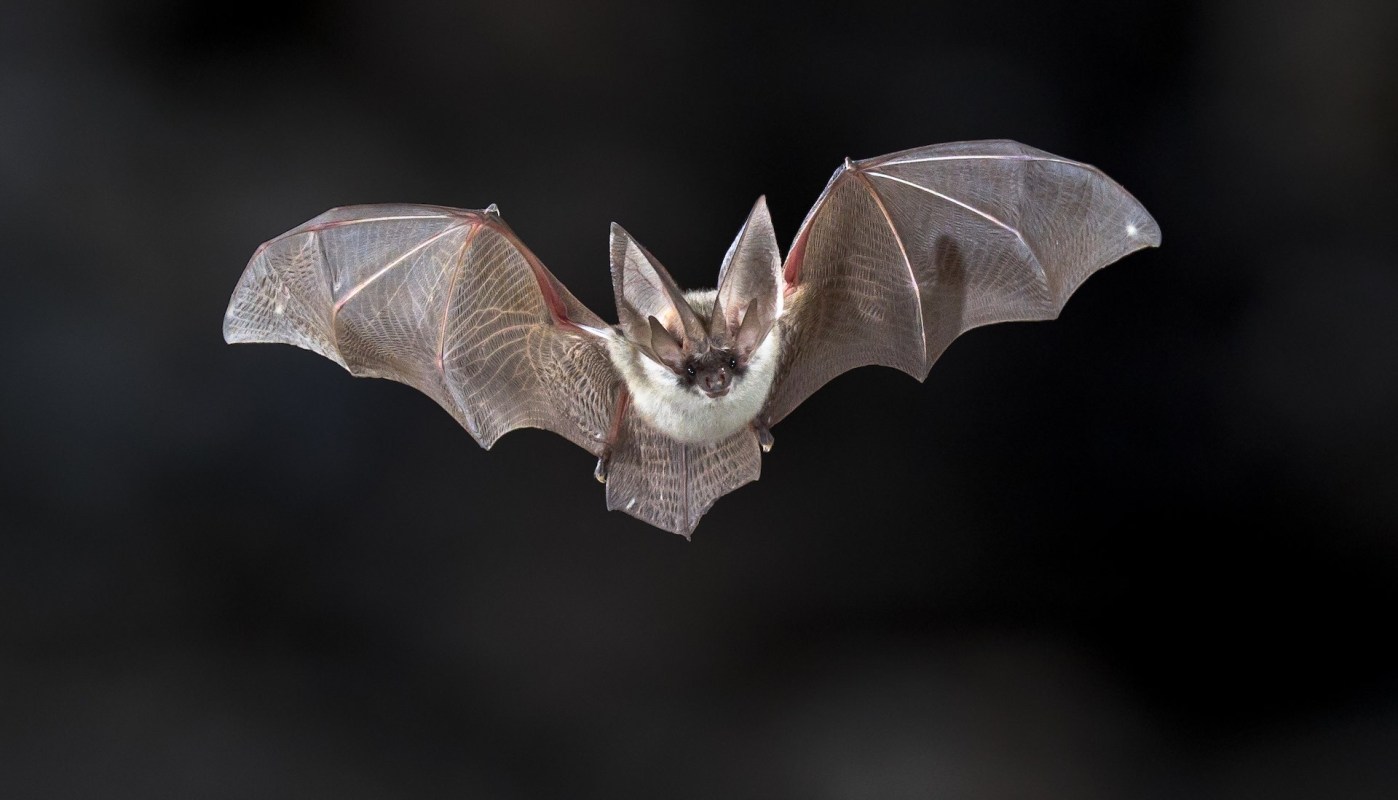
Researchers at the University of Georgia have found that six North American bat species can glow under ultraviolet light.
The findings were published in the journal Ecology and Evolution. Although scientists do not yet understand what gives them this property or why, this discovery is broadening global knowledge of biofluorescent species and may inform conservation and management strategies.
As CNN reported, the study's lead author, Briana Roberson, drew inspiration from earlier research published in 2019 on the biofluorescent ability of flying squirrels.
"That sort of set the world on fire," said Steven Castleberry, Roberson's coauthor, a University of Georgia wildlife ecology and management professor, per CNN.
In 2024, a study published in the Mammalian Biology journal found that the digits on the feet of the Mexican free-tailed bat glowed under UV rays, prompting Roberson to explore whether other bat species shared a similar trait.
Roberson and her team visited the Georgia Museum of Natural History in Athens, Georgia, to study 10 specimens of each of the following bat species: big brown bat, eastern red bat, Seminole bat, southeastern myotis, gray bat, and Brazilian free-tailed bat.
TCD Picks » Quince Spotlight
💡These best-sellers from Quince deliver affordable, sustainable luxury for all




The researchers found that the bats' wings and hind limbs produced a photoluminescent glow, which they presumed was genetic.
"It's ultimately some sort of mutation, and then that mutation somehow gets perpetuated because it's beneficial," Castleberry explained in a University of Georgia press release.
Understanding why these bats possess a biofluorescent ability may help scientists better understand how bats adapt to changing environments for improved survival and how to protect bat species — some of which play an important role in plant pollination.
The lesser long-nosed bat, which has seen a remarkable recovery over the past three decades, is a crucial pollinator for the blue agave plant used to make tequila.
|
Do you think we still have a lot to learn from ancient cultures? Click your choice to see results and speak your mind. |
 Definitely 👍
 Bats also play an important role in natural pest control, reducing insect damage to growing macadamia nuts by an average of 40%, as seen in a study published in the journal Ecological Applications.
Although scientists cannot explain why these specific North American bat species glow under UV rays, they are hopeful that further research can illuminate the unknown.
"It is most likely that this [luminescent] feature was inherited a long time ago by the ancestors to all modern mammals," explained Kenny Travouillon, a Western Australian Museum terrestrial zoology curator, per CNN.
"Why do they glow? We don't know. So continuing to do research on this topic is important."

Get TCD's free newsletters for easy tips to save more, waste less, and make smarter choices — and earn up to $5,000 toward clean upgrades in TCD's exclusive Rewards Club.







