


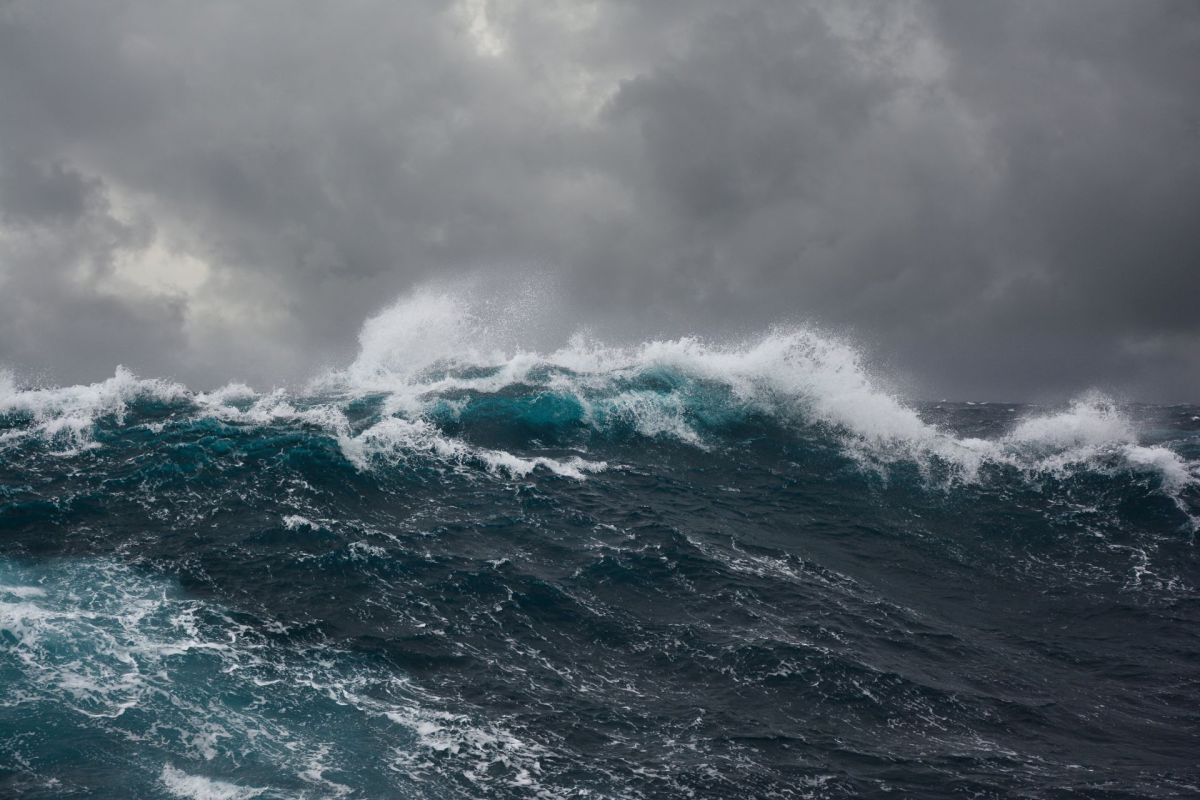
A new study has concluded that the collapse of a "prominent and powerful" ocean current would have serious impacts on Europe.
This marks the first time researchers have tested multiple climate scenarios to see how Europe's summer precipitation might respond if the important conveyor belt that transfers heat from the tropical Atlantic toward higher latitudes in the Northern Hemisphere fails.
"The Atlantic Meridional Overturning Circulation (AMOC) is expected to weaken or even collapse under anthropogenic climate change," wrote the authors of the study. "Given the importance of the AMOC in the present-day climate, this would potentially lead to substantial changes in the future projections of the impacts of climate change on regional weather, which is highly relevant for society."
The study, titled "Changing European hydroclimate under a collapsed AMOC in the Community Earth System Model," was conducted by scientists with the Royal Netherlands Meteorological Institute.
The researchers revealed that Southern Europe's recent hot, dry summers could become even more intense over the next 1,000 years if the AMOC collapses, leading to deeper droughts and longer dry spells in the region.
Europe had its warmest year on record in 2024. The continent also just had its fifth-warmest November on record, wrapping up its fourth-warmest fall, according to the Copernicus Climate Change Service's October global climate report.
TCD Picks » Quince Spotlight
💡These best-sellers from Quince deliver affordable, sustainable luxury for all




"The increasing drought problems expected in any case due to global warming would be made even worse by a major AMOC weakening, and the latter looks increasingly likely," warned oceanographer and climatologist Professor Stefan Rahmstorf, per Live Science. "If the AMOC shuts down, this would have consequences for at least 1,000 years to come — a huge responsibility for the decision makers of today."
The AMOC is a vital part of our planet's ocean circulation, driven by the overturning of water masses of different densities.
"The Atlantic Meridional Overturning Circulation is one of the most prominent and powerful surface-to-deep currents," explained the National Oceanic and Atmospheric Administration. "AMOC is a system of ocean currents that circulates water within the Atlantic Ocean, bringing warm water north and cold water south."
In a separate study on the AMOC published in 2024, scientists warned of an early warning signal that suggested the AMOC is on a "tipping course." If our overheating planet should trigger a collapse of the current, the ramifications would be felt worldwide.
|
How concerned are you about the plastic waste in our oceans? Click your choice to see results and speak your mind. |
 Extremely 😫
 "While research shows it is weakening over the past century, whether or not it will continue to slow or stop circulating completely remains uncertain," according to the NOAA. "If the AMOC does continue to slow down, however, it could have far-reaching climate impacts. For example, if the planet continues to warm, freshwater from melting ice at the poles would shift the rain belt in South Africa, causing droughts for millions of people. It would also cause sea level rise across the U.S. East Coast."

Get TCD's free newsletters for easy tips to save more, waste less, and make smarter choices — and earn up to $5,000 toward clean upgrades in TCD's exclusive Rewards Club.







