


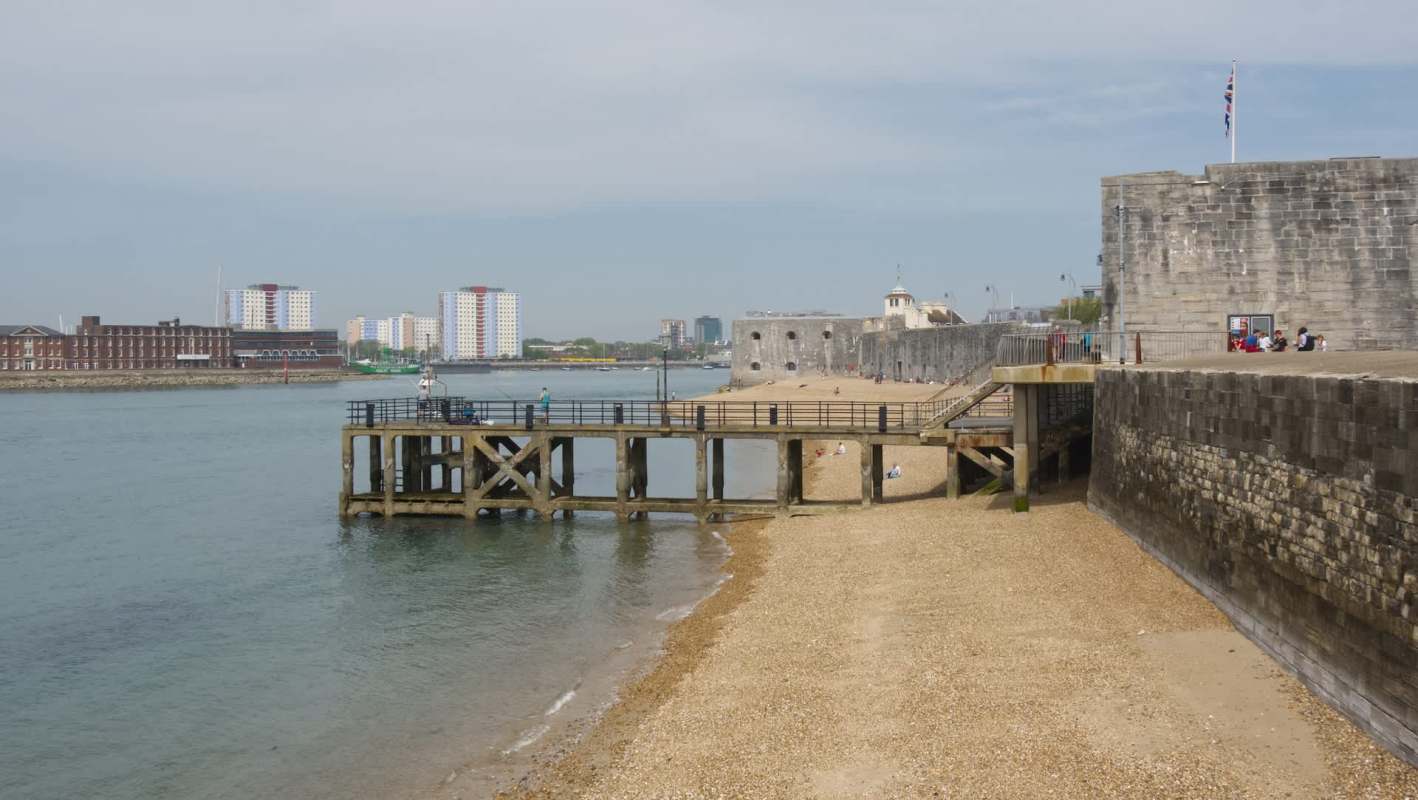
Officials ordered a round-the-clock effort to combat a growing threat along the coast of southern England.
What's happening?
According to the BBC, authorities in Portsmouth are doubling the width of a beach to help absorb wave action as part of the Southsea Coastal Scheme. A million metric tons (about 1.1 million tons) of shingle — or small rocks — dredged from the surrounding waters is being pumped in piles and then distributed by heavy machinery in a non-stop month-long operation.
A spokesperson for the effort explained that the shingle is sourced from approved zones off the coast of the nearby Isle of Wight. Any change to the beach's appearance will be temporary: "It may appear darker than normal but the beach will look the same once complete."
Ultimately, the measures are intended to safeguard thousands of at-risk homes and businesses from the effects of destructive storms and rising seas.
Why are rising seas so concerning?
As heat-trapping pollution generated by human activity accelerates glacier loss and exacerbates extreme weather events, rising sea levels and worsening coastal storms place communities at risk of flooding and erosion.
The United Kingdom isn't alone in taking steps to protect its coastlines from washing away. Shoreline armoring and beach nourishment — adding sand to eroding beaches — are being used in the United States too.
TCD Picks » Quince Spotlight
💡These best-sellers from Quince deliver affordable, sustainable luxury for all




Critics, meanwhile, argue that the measures are ineffective and expensive. Moreover, both can come with serious environmental costs.
What's being done to protect against coastal erosion?
It remains to be seen how effective the Southsea measures will be in the long run, with the potential for encroaching ocean waters to wash the shingle away as well. But there are some interesting innovations in the works and some natural solutions that could help too.
Incorporating materials such as plants and oyster shells in "living shorelines," for example, may help absorb wave action sustainably. Meanwhile, keeping tabs on the issues and advocating for a cleaner and more sustainable future is, of course, the optimal long-term move.
|
Do you think your city has good air quality? Click your choice to see results and speak your mind. |
 Definitely 🥰
💰Get TCD's free newsletters for easy tips to save more, waste less, and make smarter choices — and earn up to $5,000 toward clean upgrades in TCD's exclusive Rewards Club.







