


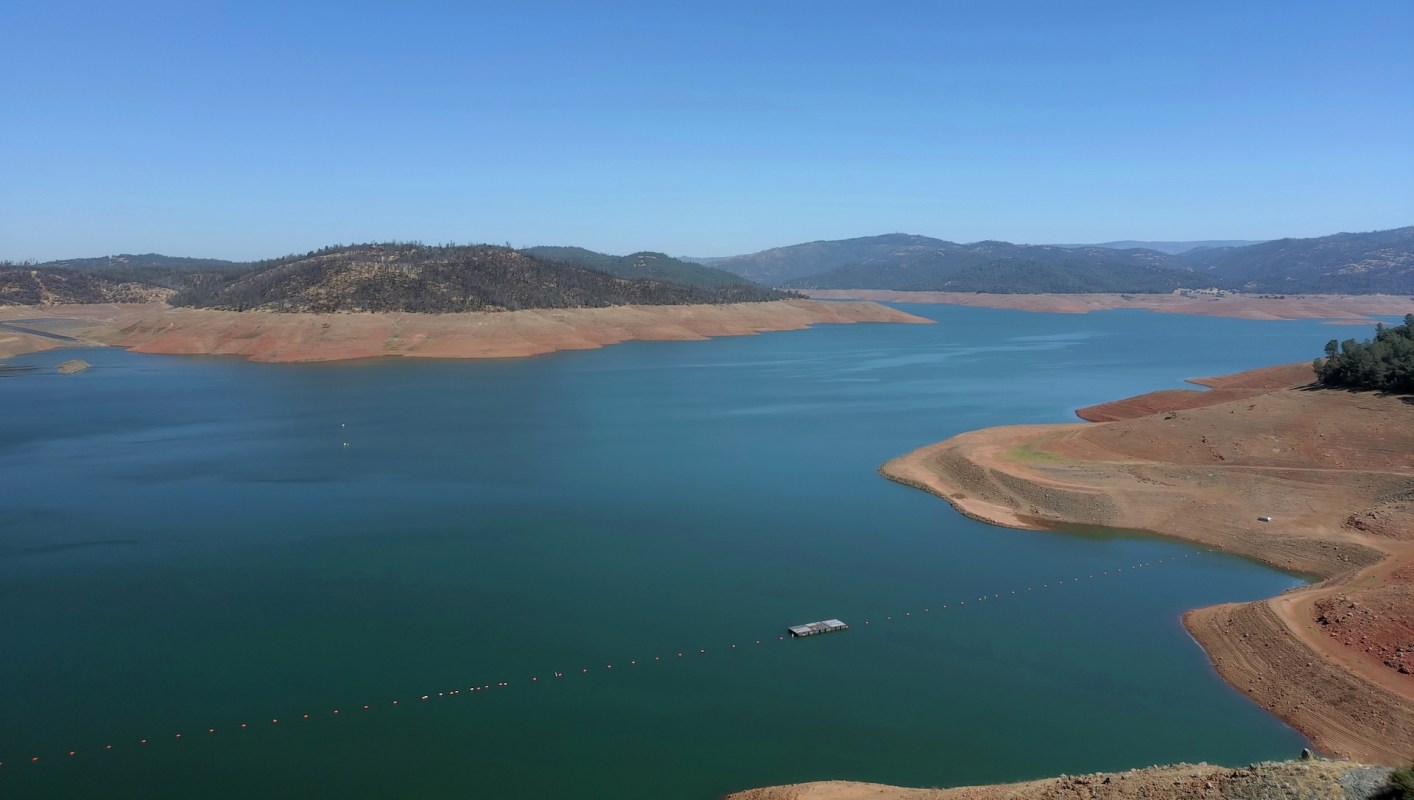
California's rainy season is here, and strong storms could help the state deal with potentially scalding summers.
All of California's reservoirs are currently fuller than the average for this time of year, according to the SF Chronicle.
While impressive storms — enough to delay flights and flood streets — first arrived in October, the timing wasn't right to significantly impact California's reservoirs. Early-season rain is usually absorbed by dry and thirsty summer soil, whereas later-season storms tend to flood into rivers and fill reservoirs.
California is currently being hit by two strong storm systems, with some areas receiving up to eight inches of rain over three days. For context, California receives an annual average of just 23 inches of rain, according to California's Office of Environmental Health Hazard Assessment.
Unlike the October rain, this storm is likely to turn into runoff, helping California build a stronger drought buffer for the upcoming summer.
"Reservoir levels are in a good space to help manage the coming year should conditions end up dry," said Michael Anderson, state climatologist with the Department of Water Resources, per the SF Chronicle.
TCD Picks » Quince Spotlight
💡These best-sellers from Quince deliver affordable, sustainable luxury for all




The state has a history of severe droughts, raging wildfires, and heat waves. Last year, the Palisades fire destroyed tens of thousands of acres of land, including over 6,000 homes. Although the fire was allegedly intentional, California's arid conditions — high temperatures, dry vegetation, and Santa Ana winds — helped it to rapidly spread.
California isn't the only state experiencing extreme weather events. Extreme weather — cold snaps, flash floods, storms, and heatwaves — is affecting homeowners across the country.
As California enters its rainy season, Anderson says weather conditions and reservoir levels could be harder to predict.
"La Niña conditions are highly variable for Northern California given the influence of the timing, pace, and scale of atmospheric rivers," Anderson said, per the SF Chronicle. "We will have to see how the winter unfolds."
|
Do you think America does a good job of protecting its natural beauty? Click your choice to see results and speak your mind. |
 Definitely 👍
💰Get TCD's free newsletters for easy tips to save more, waste less, and make smarter choices — and earn up to $5,000 toward clean upgrades in TCD's exclusive Rewards Club.







