



Sure, monoculture lawns can look nice — but have you ever seen a meadow?
A social media user proudly showed off their relatives' wild garden to r/NoLawns. "Meadowscaping to the max," the caption read.
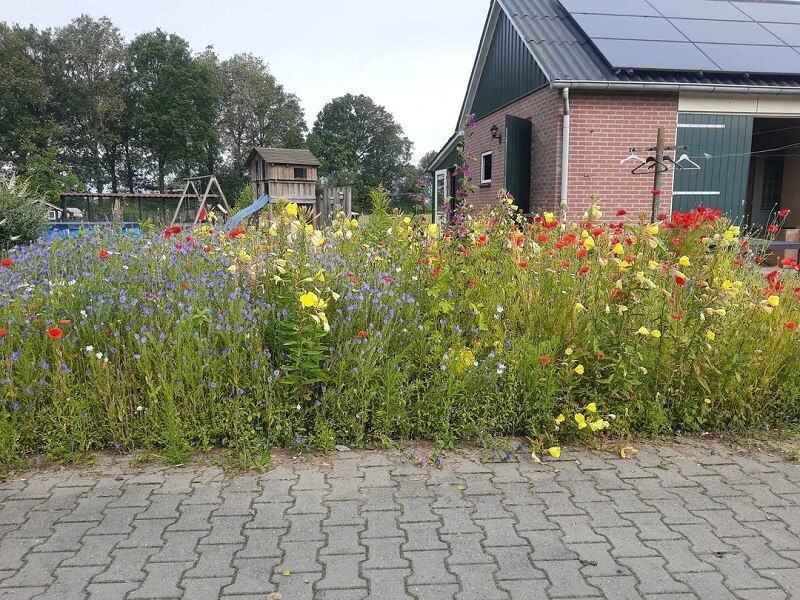

"My wife's sister and BIL [brother-in-law] have a patch of land they use for wild gardenscaping," they explained. "This is this year's result."
The patch bloomed with wildflowers, including red poppies, viper's bugloss, and evening primrose, most of which, according to a commenter, are native to the OP's home country.
So — why native?
Native plants are crucial to any ecosystem. They have evolved to grow in their region, making them much easier to care for than non-natives. That means much less watering, fertilizer, and money are necessary for them to thrive. According to the National Wildlife Federation (NWF), native plants are also less prone to pest problems and help keep the soil healthy. It's less work for you all around.
TCD Picks » Quince Spotlight
💡These best-sellers from Quince deliver affordable, sustainable luxury for all




You're not the only one who benefits from native plants. Pollinators, like bees, butterflies, and hummingbirds, rely heavily on them to survive. By planting a native lawn, the OP's relatives are providing a vital resource for their local pollinators.
This, in turn, helps humans on a global scale. Because of environmental changes caused by human activity, pollinator populations are declining. According to the U.S. Department of Agriculture, 35% of the world's food crops depend on pollinators to reproduce. If pollinators die out, global food supplies could drastically decline.
Not every native plant lawn or garden looks like a meadow, however. For example, some homeowners prefer clover lawns, which can be just as beneficial as wildflowers.
Ultimately, it depends on your region and personal preferences. Dedicating even a small portion of your yard to native plants can work wonders for wildlife and your wallet. To make your yard hospitable for wildlife, the NWF recommends starting with 70% native plants, with the goal of moving to 100%.
|
Would you be willing to let your yard grow wild? Click your choice to see results and speak your mind. |
 I already have 😎
 As for the meadow garden shared by the OP, commenters fell head over heels.
"Absolutely beautiful," one commenter said.
"This is so gorgeous!" another exclaimed. "I imagine coming home to it would be so cheerful!"

💰Get TCD's free newsletters for easy tips to save more, waste less, and make smarter choices — and earn up to $5,000 toward clean upgrades in TCD's exclusive Rewards Club.






