


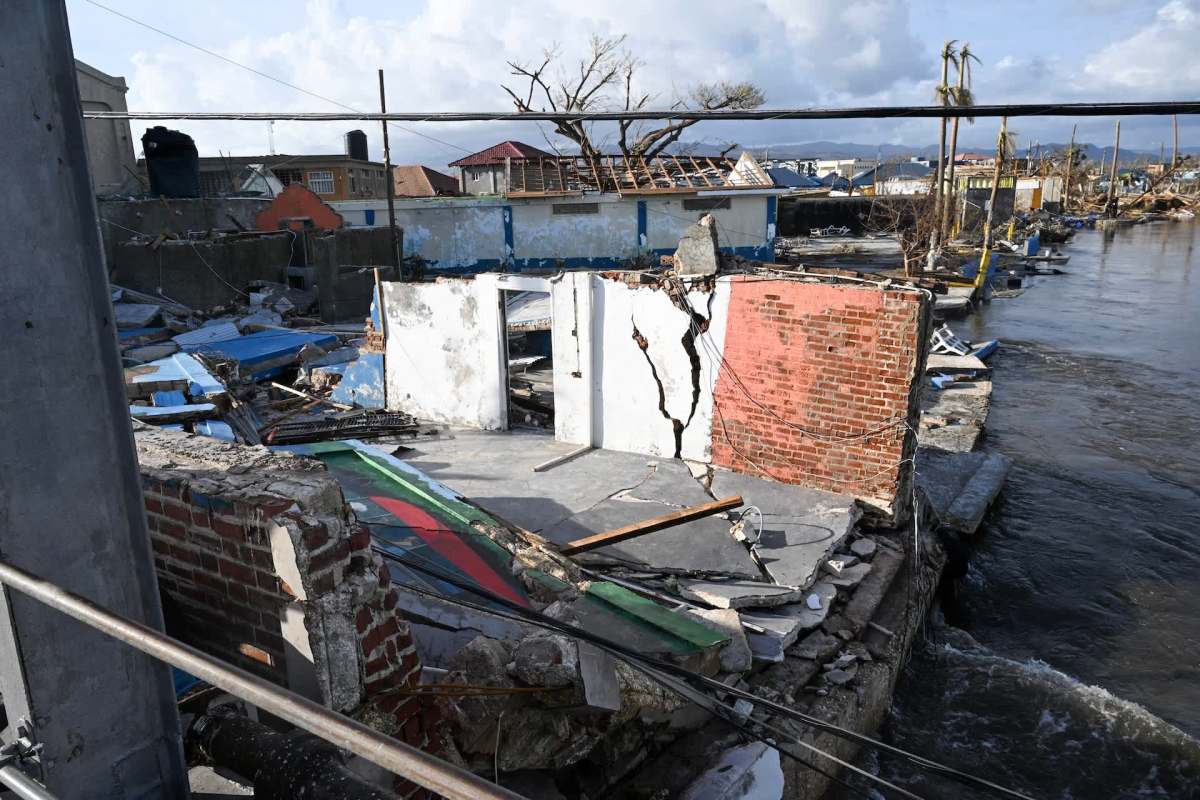
Hurricane Melissa was a monster. Scientists this week added yet another impressive record to the long list the storm already holds.
The U.S. National Science Foundation National Center for Atmospheric Research (USNSF NCAR) confirmed Melissa's winds hit a record-breaking 252 miles per hour, making it the strongest wind ever recorded by a hurricane. That incredible speed was measured about 700 feet above the ocean surface.
'The mind-boggling gust broke the previous record high wind reading set in the Western Pacific during Typhoon Megi in 2010, which was verified at 248 mph," reported Fox Weather.
Melissa's record-breaking wind was measured by a dropsonde that flew through the storm after being deployed by a NOAA Hurricane Hunter aircraft.
"GPS dropsondes measure vertical profiles of atmospheric temperature, pressure, humidity, and wind speed as they fall from the aircraft to the surface," explains NOAA. "They are equipped with a small parachute that slows their descent and maintains vertical orientation. The dropsonde transmits data by radio four times a second to the aircraft until it reaches the surface of the ocean."
NCAR developed dropsondes, testing the first in the mid-1960s. The first large field campaign implementation of the devices was in 1974, when hundreds of them were used for the Global Atmospheric Research Program's Atlantic Tropical Experiment. The modern version of dropsondes has been operational since 1995.
TCD Picks » Quince Spotlight
💡These best-sellers from Quince deliver affordable, sustainable luxury for all




Hurricane Melissa was the strongest hurricane to ever make landfall in Jamaica and one of the most intense Atlantic hurricanes on record. The storm was at Category 5 strength when it slammed into southwestern Jamaica near New Hope with maximum sustained winds estimated at 185 mph and a minimum central pressure of 892 millibars. The storm tied for the third-strongest landfall storm based on minimum central pressure.
The storm impacted nearly 1.6 million people on the island nation of Jamaica, killing 45 people. It is estimated that the storm took a total of at least 103 lives as it moved through the Caribbean and Atlantic Ocean during late October.
The immense power of Melissa renewed discussion among meteorologists about the need to either add a new category to the Saffir-Simpson Hurricane Wind Scale or develop a new scale entirely to account for hurricane impacts beyond wind speed, such as storm surge, rainfall, and tornadoes.
"Change is hard for any institution that's been doing the same thing for years," said Jennifer Collins, a hurricane researcher and professor in the University of South Florida's School of Geosciences. "But I'm fairly optimistic that now is the time."
|
Do you worry about the quality of the air inside your home?
Click your choice to see results and speak your mind. |
 Yes — often 😬
 "We now know many people make decisions based on the category messaging, so we need to ensure that we are communicating with a scale which is more realistic of the severity of the hurricane, considering other hazards which commonly occur, particularly from storm surge and rainfall flooding, which is considered in our scale," added Collins, the co-author of a study that recommends a change to how we measure the intensity of hurricanes.
Hurricane Melissa is another example of how our warming world is supercharging extreme weather events. Climate change boosted Hurricane Melissa's power, increasing peak winds by about 7% and eyewall rainfall rate by 16%, and made storms of its strength roughly four times more likely, according to new attribution studies.

💰Get TCD's free newsletters for easy tips to save more, waste less, and make smarter choices — and earn up to $5,000 toward clean upgrades in TCD's exclusive Rewards Club.







