


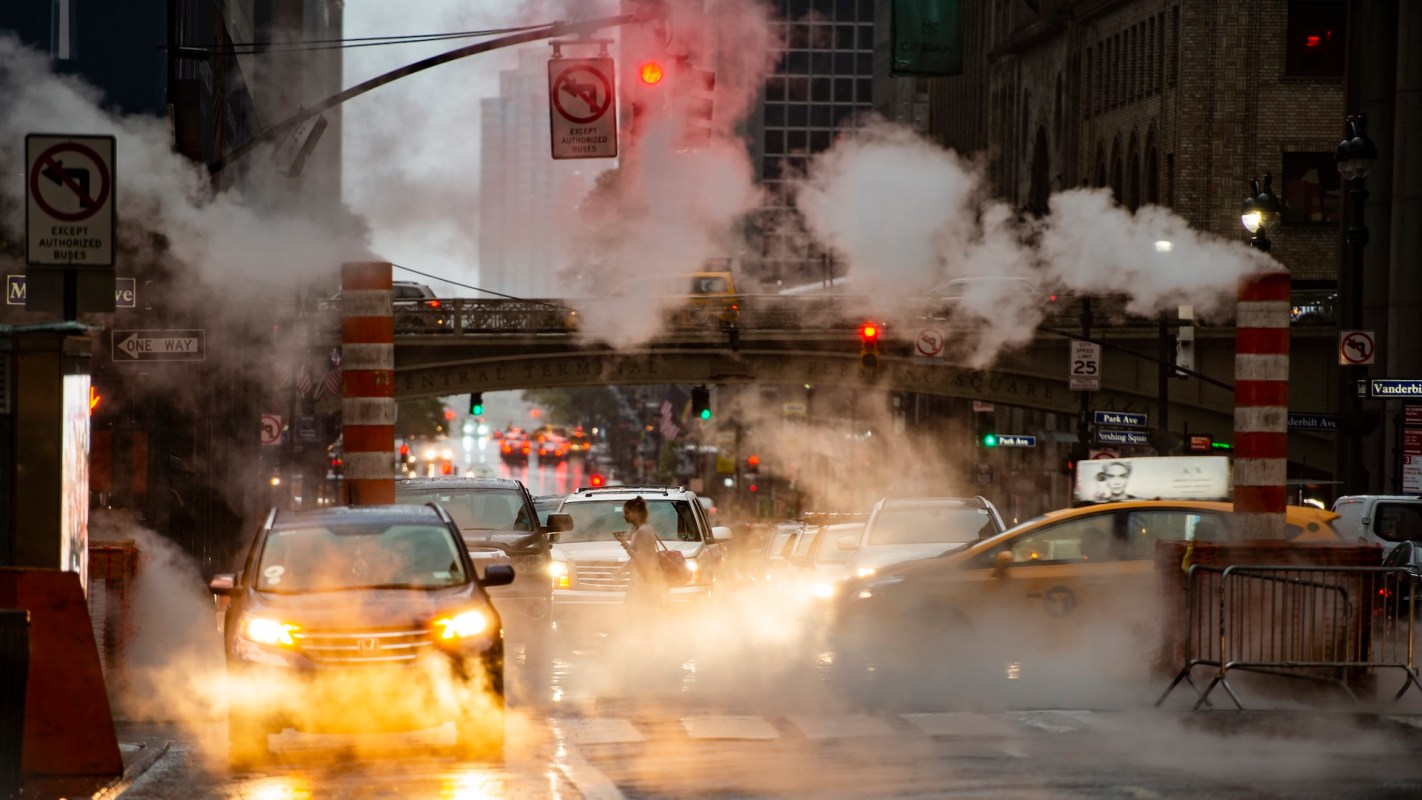
The burning of dirty energy sources is threatening the health of 1.6 billion people globally, according to new data.
What's happening?
A new interactive map from Climate Trace, a coalition of academics and analysts, is showing the real-time consequences of the burning of coal, oil, and natural gas for power generation and industry.
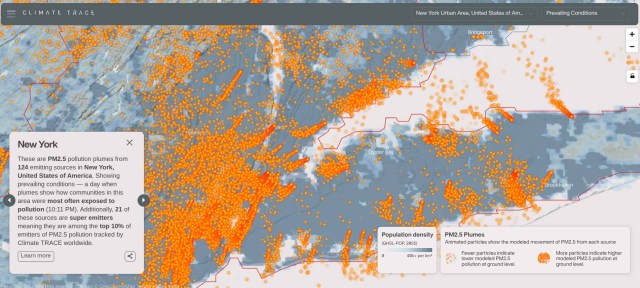
The Guardian reported that the tool shows that particulate matter, also known as PM2.5, an air pollutant that comes with serious health impacts when breathed in, and other contaminants are being released into the air near the homes of around 1.6 billion people globally.
About 900 million of those people are in the path of "super-emitting" industrial facilities such as power plants, refineries, ports, and mines.
Some of the urban areas particularly affected by these super emitters include New York in the U.S., Seoul in South Korea, Karachi in Pakistan, and Guangzhou in China.
"Now that we can clearly see how and where people are being exposed to this harmful pollution, our leaders must do something to reduce it," said former Vice President Al Gore, co-founder of Climate Trace.
TCD Picks » Quince Spotlight
💡These best-sellers from Quince deliver affordable, sustainable luxury for all




Why is this map important?
This map helps identify which communities are most at risk due to the burning of dirty energy sources.
According to the U.S. Environmental Protection Agency, exposure to fine particulate matter has been linked with a number of serious health impacts, including premature death in people with heart or lung disease, nonfatal heart attacks, irregular heartbeat, aggravated asthma, decreased lung function, and increased respiratory symptoms, such as difficulty breathing.
Meanwhile, another interactive air pollution map recently released by the Environmental Defense Fund exposes which U.S. communities are most vulnerable to petrochemical pollution. This map suggests that the highest dangers are clustered around historically marginalized communities.
The burning of dirty energy sources is also responsible for more than 75% of all planet-warming pollution, according to the United Nations, which notes that rising global temperatures could lead to more catastrophic weather, food scarcity, and an increase in certain diseases.
|
Do you feel like the air quality is safe where you live? Click your choice to see results and speak your mind. |
 Always 💯
 What's being done about air pollution from dirty energy?
Some countries are looking for ways to cut pollution with innovative new policies. For instance, Wales is banning most new roadway projects to cut down on toxic pollution. And Scotland is turning many urban neighborhoods into "20-minute cities," so residents have access to public transit.
You can do your part by making simple changes to your daily commute: ride your bicycle, take public transportation, and walk when possible.

💰Get TCD's free newsletters for easy tips to save more, waste less, and make smarter choices — and earn up to $5,000 toward clean upgrades in TCD's exclusive Rewards Club.







