


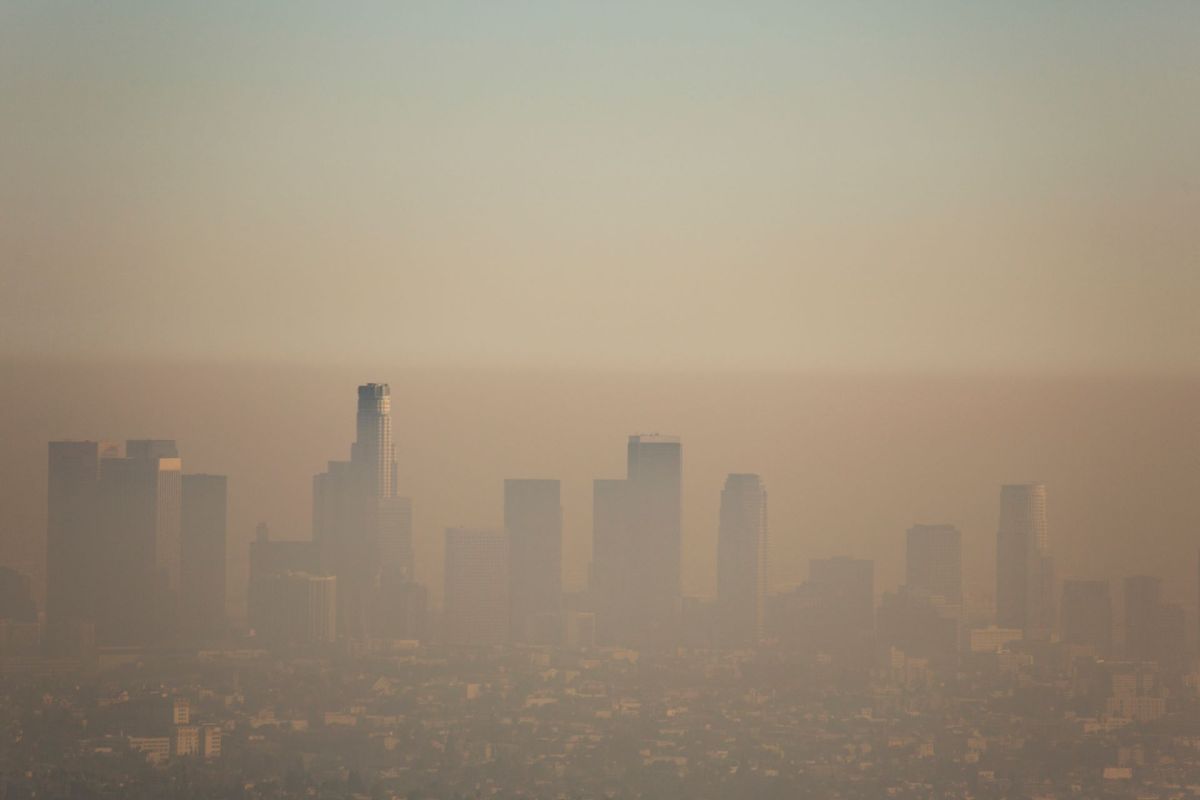
Air quality in America's largest cities has long been improving thanks to regulations on car emissions and other traditional pollutants.
However, new research from Colorado State University revealed that a combination of wildfire smoke, extreme heat, and urban pollution is creating a new set of challenges, particularly for communities in densely populated areas like New York City, according to Phys.org.
What's happening?
During the summer of 2023, CSU researchers collected continuous air samples from Long Island. They found that wildfire smoke from Canada, combined with pollution from cars, cleaning products, paints, and restaurants, is creating tiny particles that are often more harmful than the original pollution.
Professor Delphine Farmer said 90% of the particles in the city were affected by heat or wildfire smoke. That means hot days and smoke events make pollution worse.
Every day, human activities also add up.
Paints, cleaners, and solvents caused more than twice as much pollution as cars in some cases. Local restaurant pollution was less overall, but it could make air quality worse in certain neighborhoods.
TCD Picks » Quince Spotlight
💡These best-sellers from Quince deliver affordable, sustainable luxury for all




"We found that restaurants do have a big impact on their own local neighborhoods, but their associated aerosols are only a minor component of the total average load across the region," Farmer said. "Still, any worsening of those conditions from the arrival of wildfire smoke––for example––could lead to environmental health inequality for those areas that health policy makers will need to consider."
Why is this concerning?
Air pollution affects human health directly. Tiny particles can get into our lungs and raise the risk of heart disease, cancer, and dementia. People living in dense or poorer neighborhoods are often affected most.
These health impacts are felt immediately and can make everyday life harder.
Children, the elderly, and people with pre-existing conditions are particularly vulnerable, and communities already facing other challenges can experience a double burden of risk.
|
Do you feel like the air quality is safe where you live? Click your choice to see results and speak your mind. |
 Always 💯
 Over time, repeated exposure can reduce quality of life and increase healthcare costs, making clean air a matter of both health and social equity.
What's being done?
CSU researchers are continuing their work with the GOTHAAM Campaign, using a C-130 research plane to study air across New York, New Jersey, and Connecticut.
They track chemicals in the air to understand where pollution comes from and how it spreads. The goal is to give communities and policymakers better information so they can protect people's health and make the air cleaner for everyone.

Join our free newsletter for good news and useful tips, and don't miss this cool list of easy ways to help yourself while helping the planet.







