


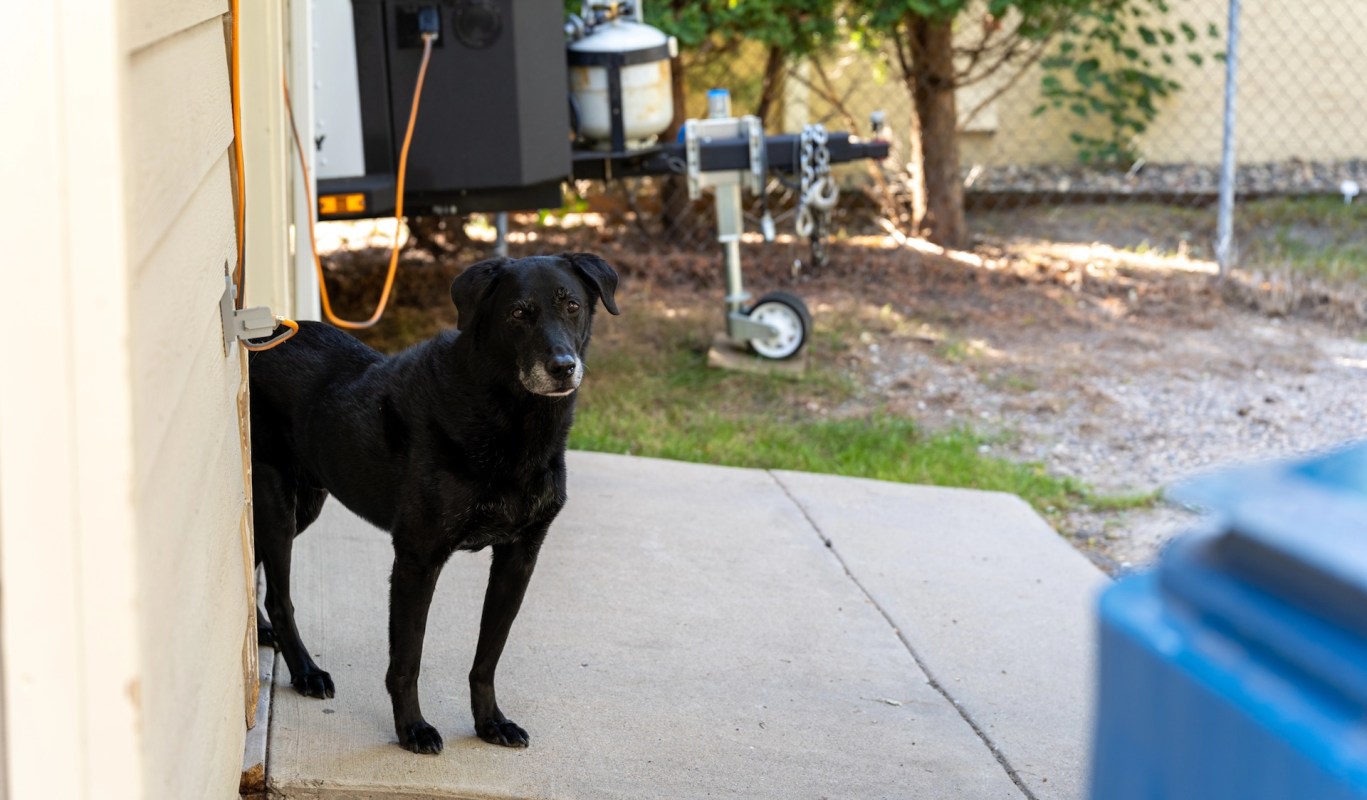
A quiet night in rural North Dakota took a wild turn when a homeowner returned home to find an unexpected visitor in his garage — a coyote cornered by his three dogs, Valley News Live reported.
The tense moment, captured on his phone, shows the growing overlap between human and wildlife spaces as animals search for food and shelter in shrinking habitats.
"That's a new one. I've been around quite a while and I've never seen one in the garage," Steve Ost told the outlet.
What's happening?
According to Ost, he arrived home just after midnight to a "holy commotion" in his garage. His three dogs had cornered a coyote that leaped onto a freezer for safety.
Acting quickly, Ost recorded the scene before retrieving a rifle and killing the coyote, a reminder of how startlingly close encounters with wild animals can happen in everyday settings.
Why are human-wildlife encounters concerning?
A study published in Science Advances found that such incidents, while alarming, will become more frequent. The researchers noted that this human-wildlife overlap will primarily be driven by human population growth instead of rising global temperatures, causing animals to move their habitats.
TCD Picks » Quince Spotlight
💡These best-sellers from Quince deliver affordable, sustainable luxury for all




Moreover, the same study found that the variety of species found in a given area is projected to decrease in African and South American forests.
Encounters like this one highlight a larger ecological pattern. Rising global temperatures, habitat loss, and urban expansion are driving animals to seek resources like food and water in human spaces, the BBC reported.
What's being done about human-wildlife encounters?
Initiatives like the World Wildlife Fund's Climate Crowd are helping communities find solutions to solve the root causes of human-wildlife conflict. For instance, in parts of Kenya, rainwater harvesting has reduced direct wildlife encounters, according to WWF.
Wildlife agencies in states like Minnesota are educating residents on coexistence through practical methods and tools to keep wildlife at a distance.
|
Do cats or dogs make for better pets? Click your choice to see results and speak your mind. |
 Cats 🐱
 One of these, per the city of Oakdale, Minnesota, is hazing, which involves the use of loud noises or noisemakers to deter urban coyotes from returning. The city of North Oaks also emphasizes securing trash and supervising pets outdoors. Furthermore, advisories warn against deliberate feeding, which can habituate animals to people.
Individuals also play a role in reducing human-wildlife conflict, whether through community efforts or through conversations that highlight how human activity affects wildlife and local ecosystems.
On a Valley News Live Facebook post sharing the news, reactions were mixed.
"The farmers are pushing them out of the fields with their harvesting," a user said.
"Yotes out here are a 'shoot on sight' thing. Any time, any place," another user chimed in.

Join our free newsletter for good news and useful tips, and don't miss this cool list of easy ways to help yourself while helping the planet.







