


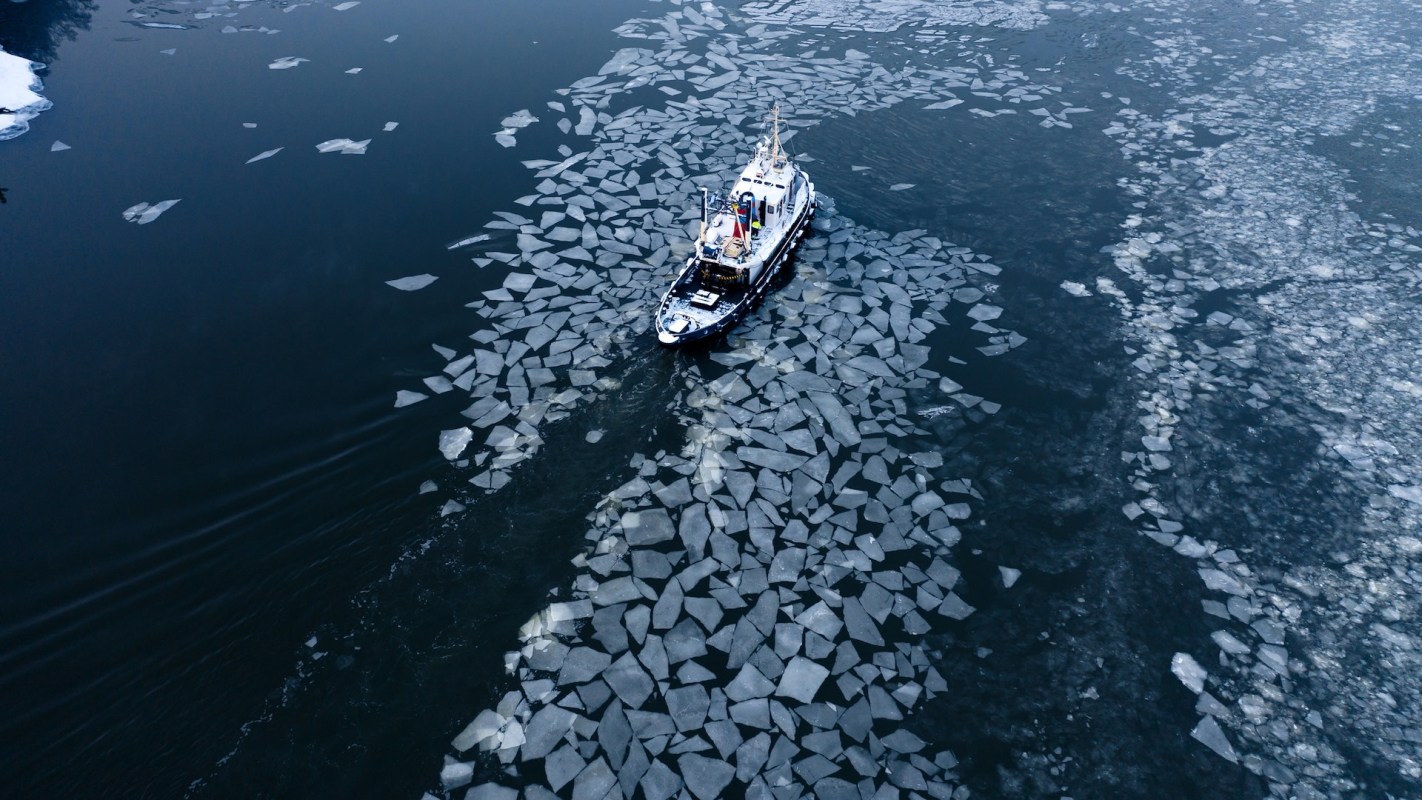
A research vessel in international Arctic waters near Russia unearthed a new development in the rapid melting of the ice caps that could have significant ramifications for the polar ecosystem.
What's happening?
A team of German scientists aboard the Polarstern found during a summer expedition that the algae that typically grows under sea ice was nowhere to be found, according to Spiegel International. The troubling discovery had a notable impact on their research — considering that biologist Morten Iversen was brought along specifically to study how the algae metabolized over the course of the season.
Iversen brought an artificial intelligence-powered camera on the expedition, looking to use it to count how much algae was present underneath each of the three floes, or ice sheets, the team was tracking. The plan was to measure the growth of the algae blooms over the course of the summer to establish how the species fluctuated in real-time.
Floe 1, which was a seasonal ice sheet that formed and melted annually, showed "zero" ice algae. Iversen was shocked but considered the possibility that the algae had separated from the ice because of early melting this year. Then Floes 2 and 3, which were older ice sheets, came back with the same results, and the team couldn't even find algae growing in nearby waters.
Why is the absence of algae in this region of the Arctic troubling?
Algae blooms are keystone species in the Arctic, providing a crucial food source for sea butterflies, amphipods, copepods, and other species. The blooms also filter a considerable amount of carbon out of the Arctic atmosphere, meaning their absence can expedite the already sped-up melting of ice caps.
Scientists for years have alluded to this outcome occurring once ice caps fully melt during summer, potentially prompting an ecological collapse in the region. The algae's premature disappearance baffled the research team despite previous studies' findings of declining populations under sea ice.
TCD Picks » Quince Spotlight
💡These best-sellers from Quince deliver affordable, sustainable luxury for all




What's being done about polar algae blooms' disappearance?
While the discovery is deeply concerning, Iversen was hesitant to say the situation would cause a total ecological collapse. His priority at the moment is analyzing sediment samples from 4,000 meters under the surface of the floes for signs of freshly sunken algae.
He also noted that in sediment trapped under the ice, there were signs of fecal matter from pteropods, which are small marine animals that filter bacteria from seawater. In that case, the ice-free future is already taking shape, showing less of an ecological collapse and more of an evolution.
"Nature always finds a way," Iversen noted.
|
Do you think America does a good job of protecting its natural beauty? Click your choice to see results and speak your mind. |
 Definitely 👍
Join our free newsletter for good news and useful tips, and don't miss this cool list of easy ways to help yourself while helping the planet.







