


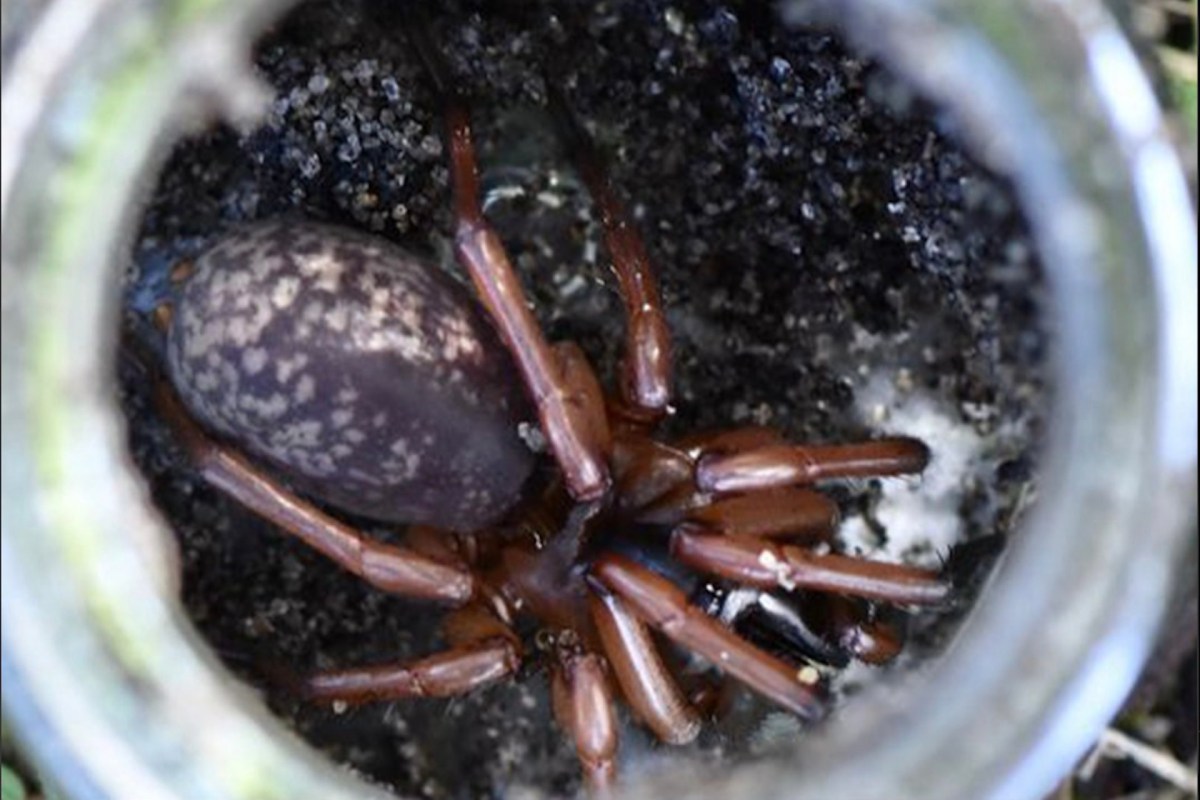
An Australian spider has reemerged after 30 years without a single sighting.
The Miami Herald reported that a Teyl trapdoor spider was spotted in a burrow outside of a research lab in Perth. The word Teyl comes from the native Aboriginal language, meaning "shiny stone" — an appropriate name, considering the arachnid's "gem-like" body.
Edith Cowan University's Dr. Leandra Mason and Kingsley Dixon, a botany professor at the University of Western Australia, were the researchers who discovered the rare spider.
"For almost 50 years I have worked in this bushland and who would have thought such an extraordinary discovery would happen right on our doorstep — literally," Dixon said in an Edith Cowan University release as referenced by the Miami Herald.
A pregnant female was collected for observation with the plan to release the mother and her babies to be monitored and studied for intel on conservation efforts and habitat management.
Similarly, other species thought to no longer exist have made remarkable resurgences. A rare, earless dragon that was thought to have gone extinct over 50 years ago was spotted in Victoria. Believed to be extinct for 86 years, De Winton's golden mole made an appearance in South Africa. The elusive Attenborough's long-beaked echidna was seen in the remote rainforests of Indonesia for the first time since 1961.
TCD Picks » Quince Spotlight
💡These best-sellers from Quince deliver affordable, sustainable luxury for all




These giant breakthroughs serve as a light of hope that some species thought to be lost may still be out there. It's also a signal to conservationists to prioritize protecting these endangered species' habitats, especially for those in non-protected areas.
Anytime an animal reappears after a long absence, it's typically a good sign of a balanced and functioning ecosystem. The trapdoor spider, for example, helps control insect populations and contributes to soil health. Conservation efforts are crucial to maintaining and protecting biodiversity.
In the press release, Mason was quoted as saying that this species, among others, is "in desperate need of protection."
In a call to action, Mason went on to say, as per the article, "Let this be a call to be humbled, to celebrate and protect the extraordinary life that continues — often unseen — in the smallest pockets of nature around us."
|
Do you think America does a good job of protecting its natural beauty? Click your choice to see results and speak your mind. |
 Definitely 👍
Join our free newsletter for good news and useful tips, and don't miss this cool list of easy ways to help yourself while helping the planet.







