


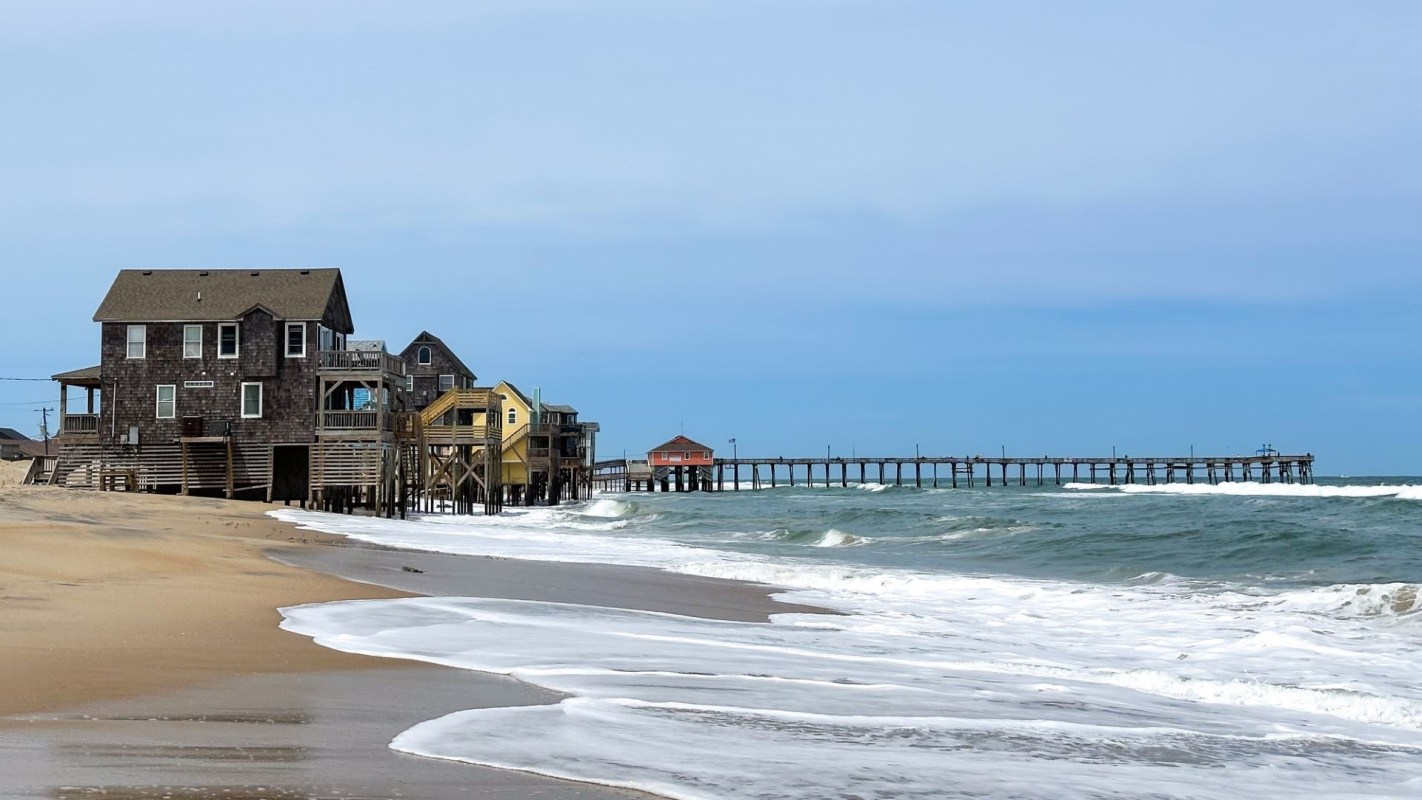
As Hurricane Erin forced evacuations along North Carolina's Outer Banks, one local man described having to move his entire house in response to rising seas and worsening storms, Fox Weather reported.
The massive undertaking involved moving the entire structure farther away from the fast-encroaching Atlantic Ocean.
"We were fortunate enough to have a double lot, so we could move the home back," Scott Twentyman, who owns a house in the coastal community of Rodanthe, explained to Fox Weather.
What's happening?
Despite the eye of Hurricane Erin having passed roughly 150 miles offshore in the Atlantic Ocean, the storm still brought dangerous winds and destructive storm surges to the North Carolina coast, forcing mandatory evacuations in some areas, according to the Tampa Free Press.
Experts had predicted storm surges of 3 to 6 feet in some areas, per the Free Press. Combined with wave action, this meant that water levels could reach as high as 10 to 15 feet above normal.
Video footage and photographs from North Carolina's Outer Banks showed waves crashing against coastal homes, causing property damage and erosion.
TCD Picks » Quince Spotlight
💡These best-sellers from Quince deliver affordable, sustainable luxury for all




With sea levels expected to continue to rise and storms predicted to increase in severity, Twentyman made the decision to uproot his entire house and move it further away from the ocean.
However, for homeowners not fortunate enough to own a double lot, such an option was not available.
"Hatteras Island is pretty much completely built out," Twentyman told Fox Weather, referring to the island in North Carolina's Outer Banks. "If you don't have that kind of a situation, you can't move your house back. You have nowhere to go.
"We were fortunate enough to have a double lot that we could move the house to."
|
Do you think your house could withstand a hurricane? Click your choice to see results and speak your mind. |
 No way 😨
 Twentyman's house was not the only structure in the area moved to distance itself from the rising seas. Even the Hatteras Lighthouse itself had to be relocated, Twentyman told Fox Weather.
Why does it matter?
For decades, scientists have warned that releasing large quantities of heat-trapping gases into the atmosphere would cause global temperatures to rise, in turn making extreme weather events like hurricanes more severe.
Additionally, rising temperatures contribute to sea-level rise in two ways. First, as global temperatures have increased, more than 90% of that excess heat has been absorbed by the world's oceans, according to Climate.gov.
As water absorbs heat, it expands through a process known as thermal expansion, which causes sea levels around the world to rise.
Second, higher temperatures have melted massive amounts of land ice, such as Alaska's glaciers or Greenland's ice sheet. When land ice melts, the resulting water runs off into the ocean, also contributing gradually to rising seas.
We aren't going to observe a massive change overnight since the ocean is so vast, but that's why the effects we do see are generally felt during major coastal storms, since storms already happen, and making them worse even by a little can move the needle from "minor damage" to "major damage."
What's being done about it?
In the short term, local communities can make themselves more resilient to rising sea levels and more severe storms by building sea walls and improving flood-mitigation infrastructure. Similarly, fortunate individuals such as Twentyman can move their homes further from the sea.
However, over the long term, the only way to slow rising sea levels and to stop storms from becoming more severe is to significantly reduce the amount of heat-trapping pollution entering the atmosphere.
To help make a difference, you can use your voice, vote for pro-climate candidates, and contact your elected representatives to demand political action.
Going a step further, installing solar panels on your home can drop your electricity bill to practically zero while also reducing planet-warming pollution.
Combining solar panels with a home battery system can make your home more resilient in the event of a power outage, giving you the peace of mind of knowing that you and your family will have power when you need it most.
EnergySage offers free tools that make it easy to compare quotes among vetted local solar installers while also ensuring that customers take maximum advantage of tax credits and other incentives, saving them up to $10,000. With federal tax credits for home solar expiring on Dec. 31 and projects typically taking months due to permitting needs, time is running short to take advantage.

Join our free newsletter for good news and useful tips, and don't miss this cool list of easy ways to help yourself while helping the planet.







